
Votre assiette optimisée
Emilie Steinbach brings her nutrition-focused publishing into the kitchen with recipes and organised menus.
Books worth discovering. Authors worth knowing.
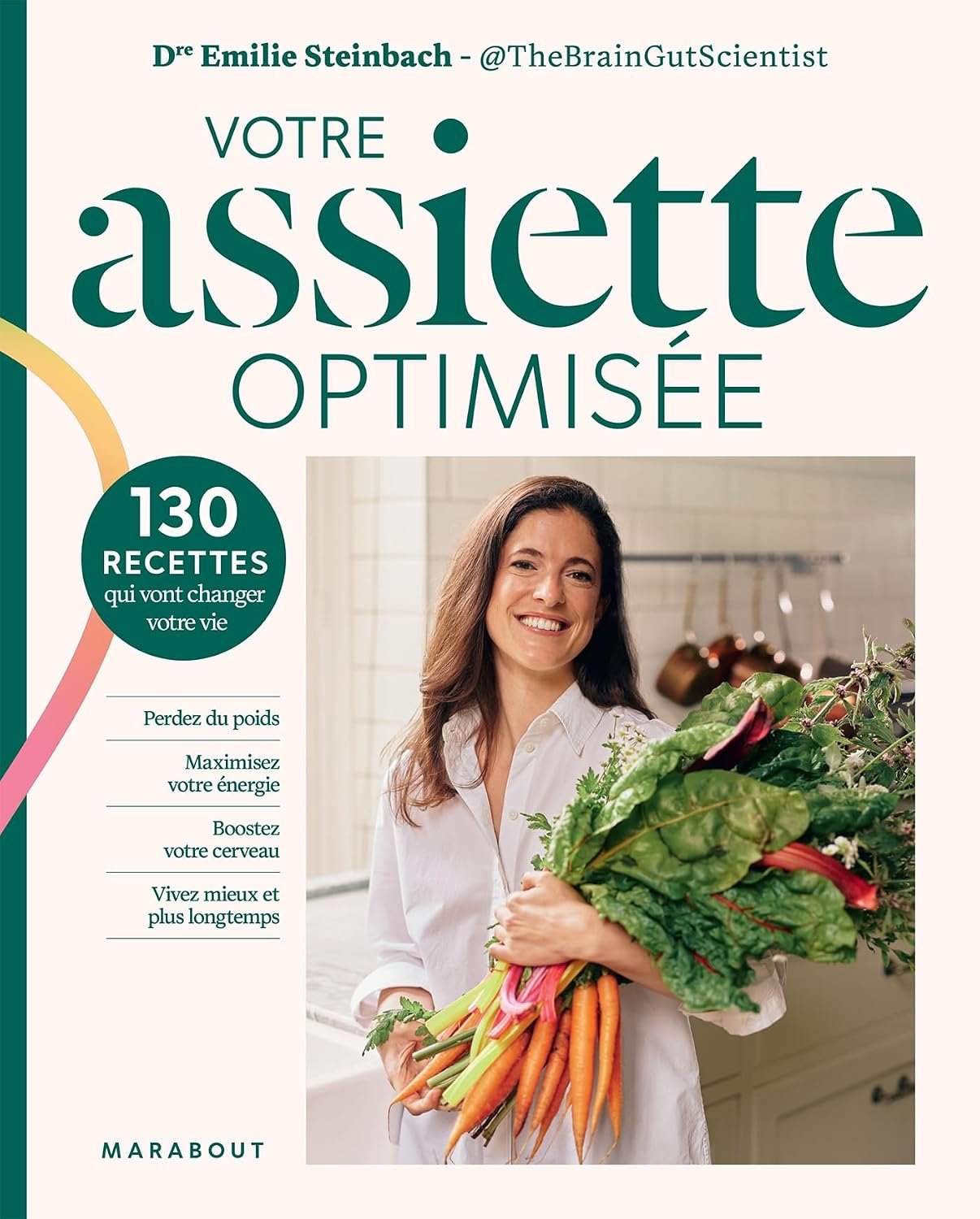
Votre assiette optimisée: 130 recettes qui vont changer votre vie by Emilie Steinbach is presented as a practical companion for planning and preparing meals. This sponsored feature looks at the book’s structure and intended use, rather than endorsing the health promises in its marketing.
An editorial introduction to the book, its premise and the story surrounding it.
A recipe answers what to cook. A menu plan addresses another difficulty: deciding how individual meals fit into a week. Votre assiette optimisée brings those two tasks together, presenting a collection of recipes alongside a framework for using them.
From collection to routine
Marabout describes a book containing 130 recipes: 84 centred on breakfasts, lunches and dinners, plus 46 alternatives for foods such as snacks and bread. It also advertises four weeks of seasonal menus, quicker versions of recipes and weekly batch-cooking guidance. These are descriptions of the book’s contents, rather than independently tested results.
The organisational element is a useful part of the premise. A cookbook may be opened for one dish or used to plan several meals at once. Those are different reading habits. Readers interested in the second approach can examine how much preparation a proposed week requires and whether the ingredients overlap in a way that suits their household.
What makes a practical fit?
Before adopting a cookbook as a routine, it helps to look beyond the number of recipes. Available time, equipment, shopping access and food preferences all affect whether a book becomes useful in a particular kitchen. A quick version can be appealing, but readers should still check what preparation is assumed and which ingredients need to be ready.
The same applies to meal plans. A printed schedule offers structure, while everyday life involves changing commitments and appetites. The practical question is whether a reader can adapt the book’s format without making cooking feel like another inflexible obligation. This feature has not kitchen-tested the recipes or timed their preparation.
Reading the nutrition framing
The publisher positions the recipes around nutrition and makes claims about possible benefits. This introduction does not establish that the book’s recipes produce particular effects on weight, cognition, sleep or longevity. The subtitle is part of the official title, not a promise made by the Journal.
Readers can assess how the book explains its reasoning, identifies supporting research and distinguishes general suggestions from individual needs. The author’s scientific background supplies context for the project; it does not make every advertised outcome automatic for every reader. The purpose here is to identify the book and describe its approach.
The author and the edition
Marabout identifies Emilie Steinbach as a doctor of integrative biology and a neuroscientist, and links this cookbook with her earlier Votre santé optimisée. The edition listed here has 304 pages, ISBN 9782501189590 and a publication date of 30 September 2026.
Readers seeking a French-language cookbook with menus and preparation options can use that information as a starting point. This sponsored feature is based on the published description and supplied cover; it is neither a recipe test nor individual dietary advice.
Consult Marabout’s official book page for the contents and edition record. Explore more nonfiction introductions in the MarketAnyBook Journal.
About the book.
Marabout lists publication on 30 September 2026, 304 pages and ISBN 9782501189590. The full subtitle is retained here as part of the book’s official identity, not as a guaranteed outcome.
This is a sponsored MarketAnyBook Book Feature based on supplied materials and verified public information. It is not a full-book review.
Found a book worth opening?
Books worth discovering. Authors worth knowing.
Return to the Journal →