
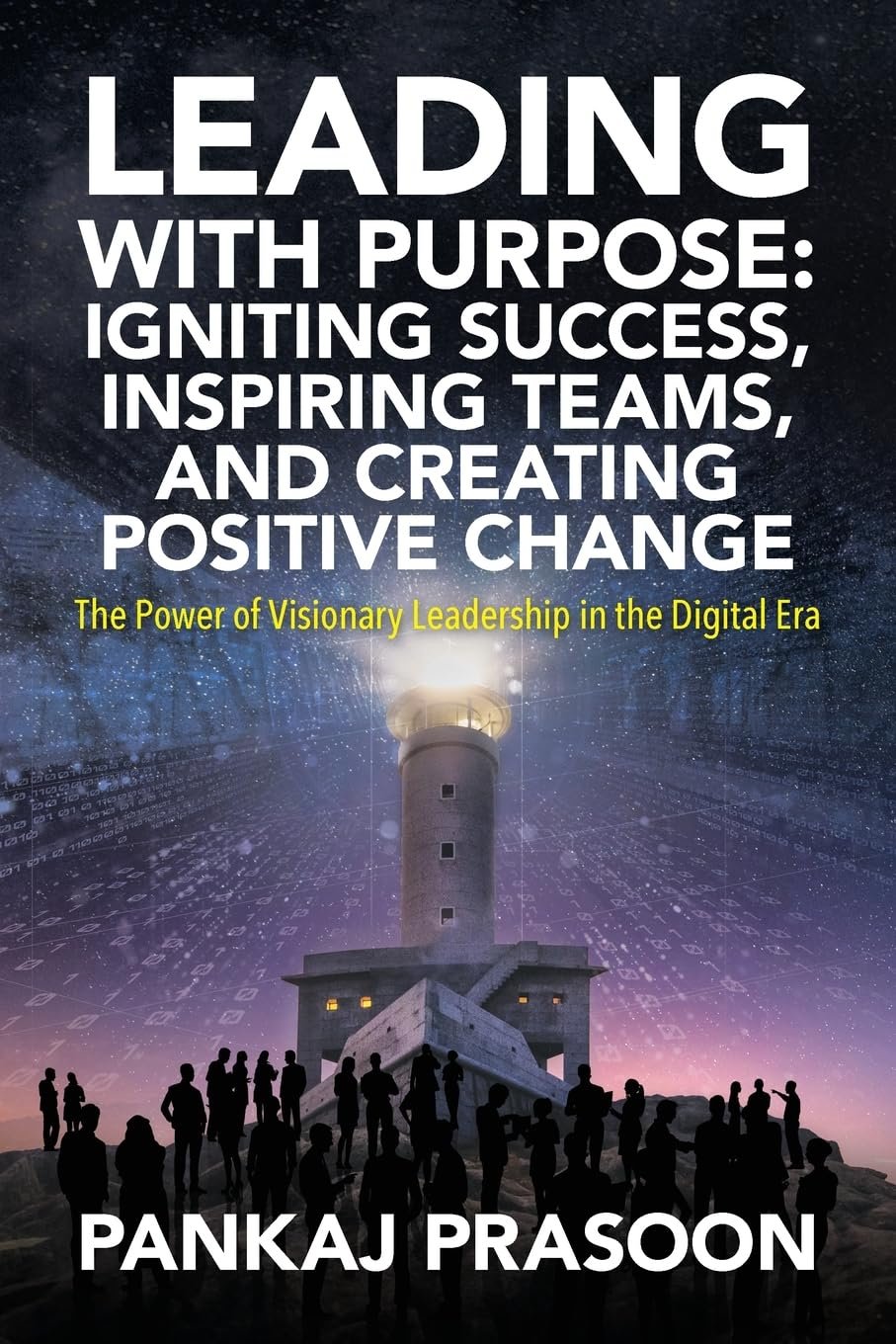
Leading with Purpose
A practical guide to purposeful leadership in the digital era by Pankaj Prasoon.
Books worth discovering. Authors worth knowing.
Leading with Purpose draws on two decades of global experience to outline how leaders can stay anchored amid change.
An editorial introduction to the book, its premise and the story surrounding it.
Pankaj Prasoon is a product leader, speaker, and author with more than twenty years of experience across technology and transformation. He has worked at organizations including Infosys, SoftwareOne, Microsoft, and LinkedIn, holding roles that span software engineering, enterprise systems, cloud transformation, and finance strategy. He holds an MBA from Cornell and is a member of the Forbes Finance Council. Leading with Purpose: The Power of Visionary Leadership in the Digital Era is one of his books. Public materials describe it as teaching aspiring leaders and current managers how to promote a motivated culture. The book addresses developing a growth-focused mindset, tools for self-reflection, defining values, and aligning leadership style with purpose. It is presented as offering actionable strategies drawn from the author’s experience. Prasoon has spoken on topics including leading through uncertainty, purpose as a compass, and the intersection of technology and human connection. He has described leadership as both an art and a craft that requires continuous practice, clarity of vision, and the ability to inspire others. The book is positioned for those who want to make a lasting impact by leading with empathy, accountability, and clear purpose. No invented case studies or outcomes are added beyond the verified public descriptions of the author’s career and the book’s stated focus. Readers interested in leadership guidance that connects purpose, technology, and practical frameworks may find the premise relevant. The work is one of several titles by the author that explore leadership, AI, and communication. Public profiles note his global experience across more than fifty countries and his emphasis on decoding intent in conversations. The feature remains grounded in these publicly available details about the author’s background and the book’s orientation toward purposeful leadership in a digital context. Additional context includes Prasoon’s keynotes on strategic AI, enterprise transformation, and building cultures where words have clear meaning. The book is framed as a call for leaders to step into their roles with a compelling purpose rather than as a collection of generic tips. This approach keeps the introduction limited to verified public information about the author and the volume.
Who this book may suit
This MarketAnyBook feature introduces Leading with Purpose through its published description and the author’s professional background. Readers looking for practical leadership books that address purpose, culture, and the digital era can use the available materials to decide whether the book matches their interests. It does not present itself as a full-book review. The recommendation is based on the clear premise of a technology leader’s guidance on purposeful leadership rather than on any claimed outcomes. Those interested in frameworks for leading through change and building motivated teams may find the description relevant. The work is presented as drawing on the author’s two decades of global experience in technology and transformation.
Pankaj Prasoon is a product leader, speaker, and author. He has worked at LinkedIn, Microsoft, SoftwareOne, and Infosys, holds a Cornell MBA, and is a member of the Forbes Finance Council. He has written on leadership, AI, and communication.
About the book.
Leading with Purpose is a leadership guide by Pankaj Prasoon that focuses on building purpose-driven cultures and leading effectively in the digital era.
This article is a sponsored MarketAnyBook Book Feature. It is based on supplied materials and verified public information. It is not presented as a full-book review.
Found a book worth opening?
Books worth discovering. Authors worth knowing.
Return to the Journal →