
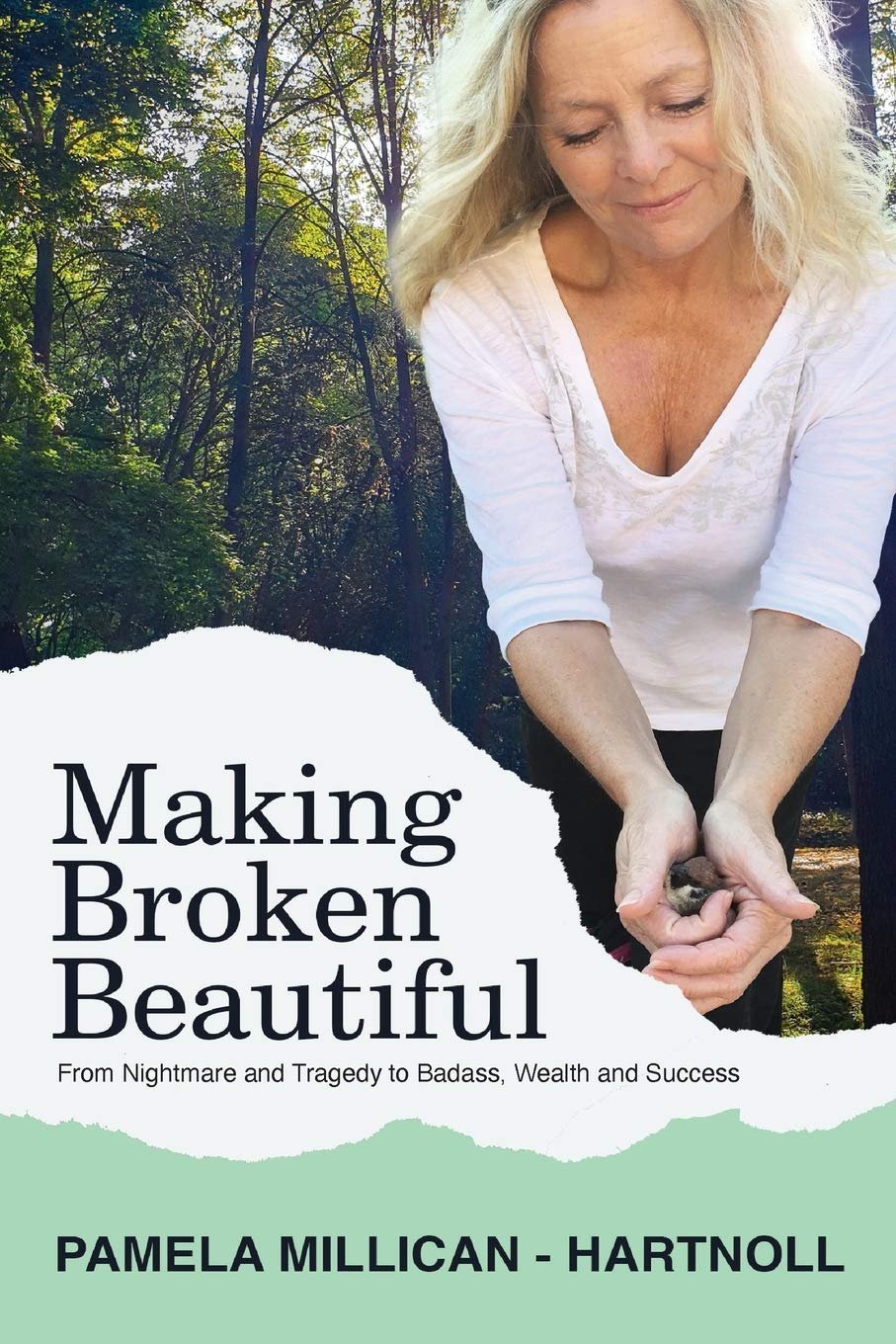
Making Broken Beautiful
A resilience memoir and personal-growth guide presents one woman’s effort to rebuild after serious hardship.
Books worth discovering. Authors worth knowing.
Pamela Millican-Hartnoll describes moving from painful experiences toward confidence and a career helping others face difficult life transitions.
An editorial feature careful to distinguish one author’s self-reported journey from a universal formula for surviving trauma.
The phrase making broken beautiful is emotionally risky. It can sound like an invitation to turn suffering into a pretty story or to insist that every painful event comes with a hidden gift. Pamela Millican-Hartnoll’s Making Broken Beautiful takes a more personal approach: she describes hardship in her own life, the beliefs it helped create and the deliberate work she says supported her rebuilding of confidence and direction.
The book is presented as a combination of life story and strategies for empowerment. Its available description emphasizes challenging negative beliefs, understanding harmful patterns and approaching life with determination. The author’s public website connects the project with her work as a coach and the idea of consciously resetting one’s course. This feature treats those statements as her reported experience, not as universal evidence that trauma can or should lead to success.
The danger of a too-simple recovery story
Resilience narratives often promise an upward line: a person is wounded, discovers hidden strength and emerges stronger. Real experiences rarely follow such clean geometry. Progress may involve grief, setbacks, support from others, changes in safety and circumstances that cannot be controlled through attitude alone. The responsible way to approach Millican-Hartnoll’s framing is to ask what may be helpful in a particular testimony without treating it as an obligation imposed on every survivor.
The book’s title places beauty next to damage, but that need not suggest that harm itself is valuable. Beauty could instead refer to the dignity of rebuilding a life afterward. That is a distinction worth holding in mind. Someone who has suffered does not owe others an inspiring ending. The author’s public materials foreground a determined personal response; each reader remains free to decide which parts are applicable to their own situation.
Beliefs acquired under pressure
One of the book’s stated concerns is the effect of negative beliefs shaped by other people’s behavior. This is an important starting point because repeated criticism, manipulation or rejection can change what a person expects from relationships and opportunities. A belief that once served as a way to avoid danger may persist after circumstances have changed. Recognizing that possibility can be a useful form of reflection even before anyone knows what action to take.
However, beliefs cannot be discussed apart from material conditions. A person may face real financial limits, unsafe environments or health challenges. Asking someone to reconsider a thought is not the same as providing safety or resources. The value of a self-development guide should be assessed partly by how it acknowledges that difference. The published description says the author shares tools from her experience; it does not independently demonstrate that those tools will work in every situation.
Agency without assigning blame
Empowerment language can help a reader imagine choices that once felt closed. It can also become unfair if it implies that the person who suffered simply failed to think positively enough. The balance is subtle. The first claim emphasizes what remains within reach; the second shifts responsibility away from those who caused harm. A careful reading of a story about surviving adversity should keep those positions distinct.
Millican-Hartnoll describes taking actions that allowed her to regain confidence after deeply distressing experiences. The meaningful editorial question is what she could choose, when she had access to those choices, and what other support made change possible. Her account may offer language to people trying to articulate their own goals. It should not be used to judge anyone whose path looks different, moves more slowly or requires professional assistance.
Personal narrative as a teaching method
Abstract instructions about courage tend to be forgettable. A lived story can make a difficult concept more tangible because it places decisions within a particular human life. The publisher-style description says the book proceeds through portions of the author’s experiences while presenting strategies she used. That combination lets readers connect reflection with context rather than receive a list of slogans detached from circumstances.
There are also limits to what one experience proves. An autobiography can illuminate possibilities, emotions and individual interpretations, but it cannot by itself establish what would happen to a large population following the same steps. That does not make the book irrelevant. It clarifies its genre. Making Broken Beautiful belongs in a conversation about memoir-informed growth and coaching rather than clinical treatment or generalizable research.
The work of changing a familiar story
People sometimes describe themselves through fixed labels: a failure, a victim, an outsider, someone who always makes the wrong choice. Such descriptions can become rehearsed truths even when they hide evidence of persistence and creativity. The guide’s announced focus on breaking limiting beliefs suggests an interest in those personal narratives. A practical reader might use this premise as a prompt to notice how often a harsh sentence about the self appears without examination.
Changing a story does not mean denying facts. An honest reflection can acknowledge harm and still resist the idea that harm defines the whole person. This is where the book’s title may feel more constructive. Beauty, in this sense, could mean complexity: a life is neither reduced to its wounds nor stripped of the evidence that they occurred. The source material encourages transformation, while the reader remains responsible for interpreting what transformation means.
Ambition, success and their limits
The wider subtitle in public book listings refers to success and wealth, which places the book within an achievement-oriented branch of personal development. That positioning may attract people looking for renewed professional confidence as well as emotional strength. Still, it is important not to promise business success or financial results. Opportunity, economic conditions, networks and chance all influence outcomes, often beyond any individual’s control.
For readers who are wary of exaggerated self-help claims, the most useful lens may be specific rather than sweeping. What practices does the author describe? Which are reflections on past experience? Which offer concrete steps a reader can evaluate? A sound response to motivational writing is neither automatic acceptance nor reflexive dismissal. It is a willingness to separate encouragement from evidence and choose accordingly.
Who might benefit from exploring the book?
Making Broken Beautiful may interest people who prefer personal storytelling alongside reflective prompts about identity and self-belief. Readers seeking a voice shaped by difficult experiences may find its combination of narrative and coaching more approachable than an impersonal manual. It is especially relevant to anyone examining how earlier judgments, whether imposed by others or internalized, influence present aspirations.
Those seeking trauma-specific therapy, safety planning or evidence-based treatment should treat the book as supplementary reading rather than a replacement for qualified support. This editorial feature does not claim to have independently verified every autobiographical incident or tested the author’s strategies. The worthy question the book raises is whether a person can honor what happened without granting those experiences permanent authority over everything that comes afterward.
A note on the author
Pamela Millican-Hartnoll presents herself publicly as an author and life coach, and her website discusses the relationship between Making Broken Beautiful and her approach to rebuilding after adversity. This note draws only on that public description. No invented client success stories or private biographical details have been added.
About the book.
The book combines the author’s account of adversity with exercises and strategies she says helped challenge negative beliefs and develop a sense of agency.
Independent MarketAnyBook book feature based on public bibliographic, publisher and author information. It does not claim firsthand reading, reproduce an unpublished manuscript or invent quotations. The book link uses the owner-provided destination.
Found a book worth opening?
Books worth discovering. Authors worth knowing.
Return to the Journal →