
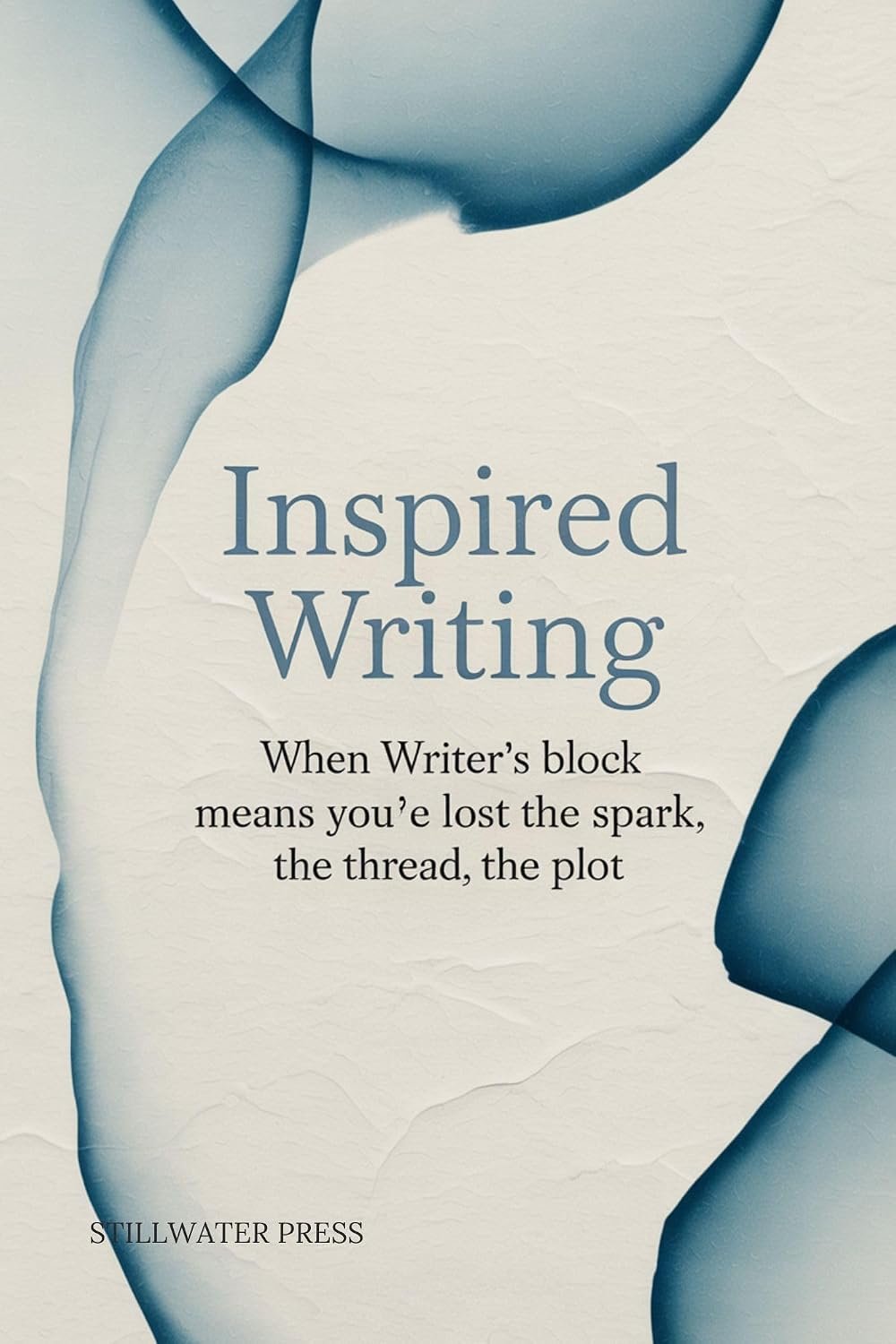
Inspired Writing
Norah Deay approaches writer’s block, distraction and burnout with the perspective of a working author with ADHD.
Books worth discovering. Authors worth knowing.
Sometimes losing the thread of a project is not a failure of imagination; it is a signal to reconsider how we work.
Norah Deay discusses her own experience with procrastination, ADHD and a changed approach to perfectionism while developing Inspired Writing, a writing-process guide.
When the spark does not arrive on command
Norah Deay’s Inspired Writing addresses a familiar creative predicament: a person wants to write but cannot find the energy, clarity, or steady attention required to continue. The owner-provided subtitle explicitly names writer’s block, the feeling of losing the thread or plot, ADHD, and creative burnout. In a first-person author post, Deay explains that she developed the book while reconsidering her own procrastination and the self-criticism attached to it. This makes the project more specific than a general promise to produce a novel quickly. Its stated subject is the uneven human process of returning to creative work when familiar methods no longer help.
The experience of losing a writing rhythm can have several causes. A project may lack a clear next scene; a writer may be physically tired; work and care responsibilities may consume attention; or the standard used to judge an unfinished draft may be impossibly high. A book that approaches writing from the perspective of ADHD and burnout can open up those possibilities without treating them as interchangeable conditions. Deay’s own account gives a useful personal context, but it is not a clinical diagnostic framework. Readers should understand the book as writing-process nonfiction, not a medical treatment plan.
Procrastination may hide several different problems
Procrastination is a tempting word because it makes every delay sound like the same moral failure. In practice, creative avoidance can mean uncertainty about a structure, fear of criticism, competing priorities, boredom with a section, or simple fatigue. Deay writes publicly about recognizing how ADHD changed her understanding of her work habits. Her response includes becoming less punitive toward herself. That offers a humane framing for writers who have learned to interpret every interrupted session as evidence that they lack discipline. The factual basis is her published experience, not a promise that changing self-talk will remove every challenge.
An effective reader question is not only why did I avoid the manuscript today, but what exactly felt hard to begin? It might be remembering where a character was, choosing between two plot directions, or deciding which sentence to write first. Naming the blockage can make it seem less like an absolute judgment on creative capacity. Those are practical reflections readers can bring independently to Deay’s book. This feature does not claim they appear as formal steps inside it. Their relevance comes from the book’s documented focus on losing the thread and finding a gentler approach to productive writing.
The difference between making and judging
Creative work often involves two modes that do not cooperate smoothly. Making a draft requires enough freedom to try imperfect ideas; judging a draft requires enough distance to identify what works. Writers can become stalled when they demand the accuracy of a final edit from a sentence that has barely begun. Deay’s first-person remarks about releasing some perfectionism point toward this tension. The book may therefore interest readers who have equated quality with constant self-monitoring. A healthier approach might leave room for rough pages as part of the process, though any precise exercise needs confirmation from the book itself.
Permission to be imperfect should not be confused with abandoning craft. Revision, consistency, and attention still matter. The distinction is in timing and kindness. A writer can take the work seriously without turning every unsuccessful session into a personal indictment. For people whose attention fluctuates, an adaptable routine may be more realistic than an unchanging quota; that is an interpretive possibility rather than a proven intervention. The title Inspired Writing suggests renewing the relationship between attention and imagination, not necessarily reaching a particular daily word count.
ADHD and the creative process
Deay specifically discusses knowing she has ADHD in relation to her writing. That autobiographical context should remain carefully attributed. ADHD is a neurodevelopmental condition with diverse experiences, and no two writers will encounter exactly the same challenges or benefits. A single author’s account can normalize a sense of difference or provide vocabulary for reflection, but it does not establish universal guidance. Readers seeking assessment or clinical advice should consult qualified professionals. The book is best introduced as a creative-work guide informed by lived experience rather than a clinical resource.
There is also no need to romanticize ADHD as a guarantee of unusual creativity or portray it only as an obstacle. Either claim would flatten a complex condition. A nuanced conversation leaves room for different experiences of concentration, novelty, deadlines, and fatigue. The phrase losing the thread is a particularly recognizable description for many writers, whether or not they have ADHD. In a story draft, losing context can feel like standing outside a room whose key one has misplaced. A book that takes that feeling seriously may help readers approach their work with curiosity instead of shame.
Burnout is not solved by louder encouragement
Creative burnout is named in the source title, and it deserves more care than a simple instruction to push through. A person can love a project and still lack the resources to carry it forward that week. The demands of employment, health, family, and ongoing stress shape the capacity to create. A useful book about renewed inspiration should be evaluated partly by whether it allows for realistic rest and changing priorities. The available sources do not give a chapter-by-chapter program, so this feature cannot state exactly how Deay addresses recovery. It can identify the subject as important and warn against treating relentless productivity as the only measure of creative worth.
The relationship between rest and craft is worth investigating because writing is both intellectual and emotional labor. A person must choose words, hold structure in mind, and tolerate uncertainty about whether a draft will succeed. Pressuring the self to create without pause can intensify resistance. Conversely, waiting indefinitely for ideal inspiration can make a project feel distant. The workable path for each writer may involve small entries back into the manuscript, changes in schedule, or outside feedback. Those possibilities are independent suggestions for readers thinking about the book’s topic, not falsely attributed techniques from unseen pages.
The thread, the plot, and the larger purpose
The full source title names three different creative absences: spark, thread, and plot. That sequence is suggestive. Spark can mean desire to begin. Thread can mean the connective line that makes one passage follow another. Plot can mean the larger causal shape of a story. A writer might possess one and struggle with another. Someone can feel enthusiastic about a character while having no idea where the chapter should go; another person may have a complete outline but lack the energy to use it. The subtitle’s vocabulary allows a feature to distinguish these problems without pretending to know the author’s exact lessons.
This distinction may make the book approachable for writers at different stages. An aspiring novelist is not the only person who loses a thread. A short-story writer, memoirist, blogger, or person preparing an essay can also confront creative disconnection. The Life Writing Series label suggests the book is part of a larger body of practical writing material, though a title alone does not verify the contents of every related volume. It is reasonable to recommend checking the series order and sample pages if a reader wants a specific kind of instruction.
Who should consider Inspired Writing
Inspired Writing is a strong thematic match for writers who struggle with restarting drafts, who recognize the cycle of procrastination and self-criticism, or who want to hear from a working author speaking personally about ADHD and creative pressure. It may be especially useful as a companion to reflection rather than as a promise of rapid publication. Readers seeking a detailed textbook on plot architecture, a standardized ADHD treatment, or guaranteed productivity results should be cautious about assuming those needs are covered. The helpful starting expectation is narrower and more humane: a conversation about the conditions that help or hinder the desire to write, and about being less harsh when the work becomes difficult.
Norah Deay and the verified perspective
Deay identifies herself on her website as an Irish author working across fiction and nonfiction, including short stories and cozy mystery. In an April 2025 post she directly discusses preparing Inspired Writing and learning to interpret her procrastination differently after recognizing ADHD’s relevance to her experience. Those primary-source details anchor this feature. Its broader reflections on writing habits are clearly presented as reading context rather than verified chapter summaries. The book’s central invitation is well supported: rethink what it means to be blocked, and approach the return to creative work with more attention to the writer as a person.
About the book.
Practical writing motivation and creative-process nonfiction. Norah Deay discusses her own experience with procrastination, ADHD and a changed approach to perfectionism while developing Inspired Writing, a writing-process guide. Source-based feature, not a firsthand review.
Independent editorial book feature; not designated sponsored. This article uses verified public descriptions and reasoned reading context; it does not claim a full firsthand reading. WordPress cover media fields await publisher automation.
Found a book worth opening?
Books worth discovering. Authors worth knowing.
Return to the Journal →