
Young, Gifted and Lost: A Collection of Poems
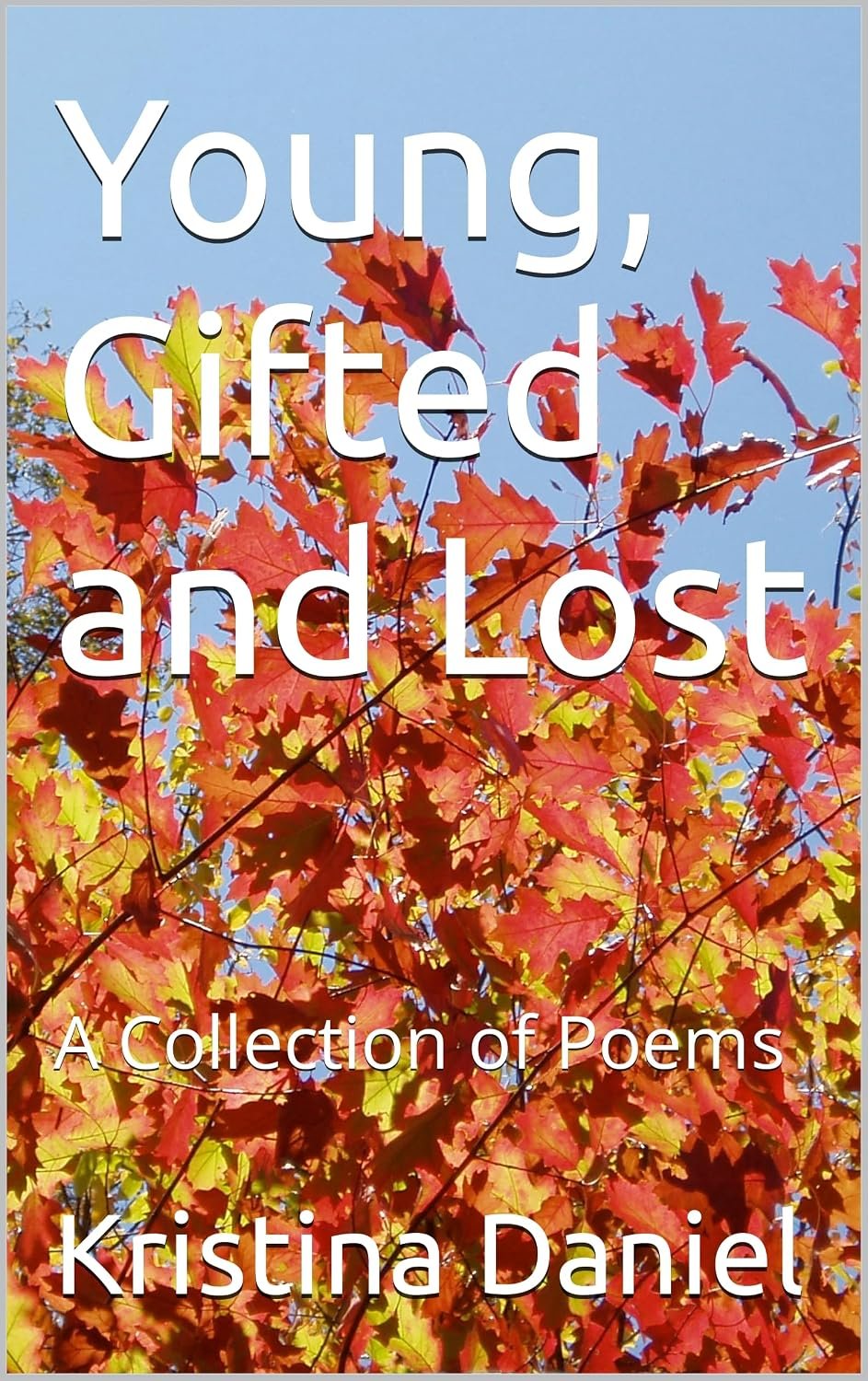
The title sets youthful promise beside uncertainty, while a vivid autumn-leaf cover introduces an independently credited poetry collection.
Books worth discovering. Authors worth knowing.
The title sets youthful promise beside uncertainty, while a vivid autumn-leaf cover introduces an independently credited poetry collection.
The cover and subtitle establish that this is a collection of poems by Kristina Daniel; no poem texts were available for close quotation or analysis.
A title made of confidence and uncertainty
Young, Gifted and Lost: A Collection of Poems places three emotionally charged words side by side. Young describes a stage of life. Gifted suggests potential, ability, or recognition. Lost unsettles both by implying that talent does not automatically supply direction. The title and subtitle are visible on the supplied cover, which credits Kristina Daniel; the queue independently identifies the same author and edition. What is not available is a reliable listing of the poems, an author commentary, or a sample sufficient to support close textual readings. This feature therefore focuses on the collection’s verified presentation and on how readers can approach the questions raised by its title. It does not invent poems about particular experiences or attribute autobiographical feelings to the poet. A strong poetry introduction can honor a book’s own words before they are known, inviting readers to discover how an apparent contradiction unfolds in the actual work.
What happens when ‘gifted’ meets ‘lost’
The phrase young and gifted can sound like a celebration. It may bring to mind the recognition of skill, ambition, or the possibility of creating something not yet seen. Adding lost changes the temperature. The result could be ironic, tender, questioning, wounded, or quietly defiant. We cannot know which tone Daniel’s poems use from the title alone. That uncertainty is precisely why the pairing makes a compelling entry point. Readers can ask whether the collection treats giftedness as a compliment, an expectation, a burden, or simply one aspect of identity. Does the feeling of being lost lead toward discovery, remain unresolved, or mean something other than being directionless? Those questions should be answered through actual lines, voices, and images, not through assumptions about the author’s life. The title creates a tension; a responsible reading lets the poems decide what it means.
The photograph of changing leaves
The jacket shows a tree filled with bright autumn leaves against a blue sky, with the title laid in large white lettering across the photograph. At the bottom appear the subtitle A Collection of Poems and the name Kristina Daniel. The image is vivid and recognizable, but its meaning is not fixed. Autumn foliage may suggest change, maturity, beauty, or departure; it might also have been chosen simply for its visual force. We cannot say the collection contains autumn poems, nature descriptions, or seasonal chapters without seeing them. Yet the design offers a useful comparison when reading begins. Do the poems dwell on transitions, or does the jacket create an atmosphere quite different from the text? The image could gain significance after reading or remain separate from the subjects explored. Both are legitimate outcomes. A cover is part of the reading experience without being evidence for unverified literary content.
Poetry allows a feeling to stay complicated
Unlike a straightforward plot summary, a poem may resist assigning one clear lesson to what it describes. A speaker can hold desire and disappointment in the same stanza, or let a striking image stand without explaining it. The title Young, Gifted and Lost is especially suitable for that kind of openness because its terms do not resolve one another. Giftedness does not cancel uncertainty; uncertainty does not prove the absence of talent. These are ideas one may bring to the reading, not documented themes from particular poems in Daniel’s collection. Once a preview or complete copy is available, the real task will be to notice how language works: are the lines brief or expansive, do images repeat, does the voice address someone, and where do turns in thought occur? Close reading begins with formal attention rather than projecting an imagined biography onto the author.
Do not confuse the speaker with the poet
The subtitle establishes this as a poetry collection, but it does not establish whether the poems are autobiographical. A first-person voice on the page can be a deliberate literary construction, a composite perspective, a fictional speaker, or a direct expression of lived feeling. A reader might feel a strong personal connection and still lack evidence to claim that the writer experienced the events described. This distinction is especially important with a title containing the word lost, which can tempt reviewers to invent a story of crisis and recovery. Such invention would flatten the work before it had a chance to be read. A better question is what the poem asks the audience to experience in its own present tense. The emotional truth of art does not require an unsupported claim about the private history of the person who made it.
Reading for rhythm as well as meaning
People often approach a collection searching first for its message. Poetry also rewards attention to sound, pace, and silence. When reading Daniel’s work, one can begin by speaking a poem quietly, pausing where punctuation and line breaks invite a breath, then reading it again without sound. Does the rhythm change the sense of the words? Does a repeated term gather new meaning across the page? These techniques are useful whether the poems rhyme, use free verse, or move among several formal styles; the actual forms remain unverified here. A reader can also notice where a poem refuses to answer a question. The desire to paraphrase every stanza immediately may be less helpful than recording a vivid phrase and returning after another reading. That patience keeps the work’s texture in view.
The collection as a conversation among separate pieces
A poetry book is more than a single poem with a long title. Even when individual works have distinct subjects or speakers, their sequence can affect the overall reading experience. Opening and closing poems may establish different expectations; images can echo across distant pages; shifts in tone can revise what seemed certain earlier. None of these structural features has been confirmed for this edition. They are specific things a reader can investigate once the text is available. One practical approach is to mark the emotional register of each poem with a short, provisional word, then look back for patterns without forcing a unified moral. Another is to record which lines seem to speak to the book’s title and which resist it. If the sequence does form an arc, the reader can demonstrate that with evidence. If it does not, the diversity itself may be important.
Questions for a book-club or solo reading journal
A discussion of Young, Gifted and Lost could begin with the cover and title but should quickly become anchored in chosen poems. Which specific image lasts after the page is closed? How does a line break change emphasis? Do some poems name feelings directly while others approach them through objects or places? Is there a difference between the speaker’s language and the reader’s interpretation? A group can compare responses without announcing that one reaction is the author’s intended message. Readers may also enjoy choosing one poem that complicates their first impression of the title. Because the poems were not available for this feature, no line or stanza is presented as a quotation. These questions are offered as practical tools for an honest first encounter with the actual collection, not as claims that certain passages exist.
Who may want to read the collection
Readers who enjoy poetry and titles built around identity, possibility, and uncertainty may find Young, Gifted and Lost worth exploring. The subtitle confirms its form as a collection of poems, and the autumn-leaf cover gives the edition an inviting visual presence. Those are meaningful reasons to seek a preview, not proof that the poems are about nature, youth, mental health, or a specific personal experience. Someone looking for a particular style, subject, or content suitability should inspect sample pages first. For open-minded poetry readers, the strongest promise here is the opportunity to test the title’s apparent contradiction against language written by Kristina Daniel, rather than against the story a reviewer might have invented from four words.
Kristina Daniel and the limits of this spotlight
The owner-supplied queue and cover identify Kristina Daniel as the credited author of Young, Gifted and Lost: A Collection of Poems. No independently verified author biography, poem list, or detailed editorial synopsis was available to support broader claims. This is a limited-source book introduction, not an assessment based on a full firsthand reading. An author-approved synopsis or a short authorized preview would allow a later feature to discuss formal choices and recurring motifs with proper evidence. For now, the accurate path is to preserve the author credit, the exact edition link, and the distinction between what the book visibly promises and what only reading can reveal.
About the book.
Limited-source poetry spotlight. The collection form, title and cover are verified; no individual poem, lyric, theme or autobiographical claim is invented. Research-based editorial feature, not a firsthand review.
Independent, limited-source book feature based on the exact queue record and verified cover presentation, not on a claimed full reading. The available evidence did not support a detailed plot or poem-by-poem review; the commentary labels questions as questions. Cover placeholders await owner Python processing. Editorial review is recommended before publication.
Found a book worth opening?
Books worth discovering. Authors worth knowing.
Return to the Journal →