
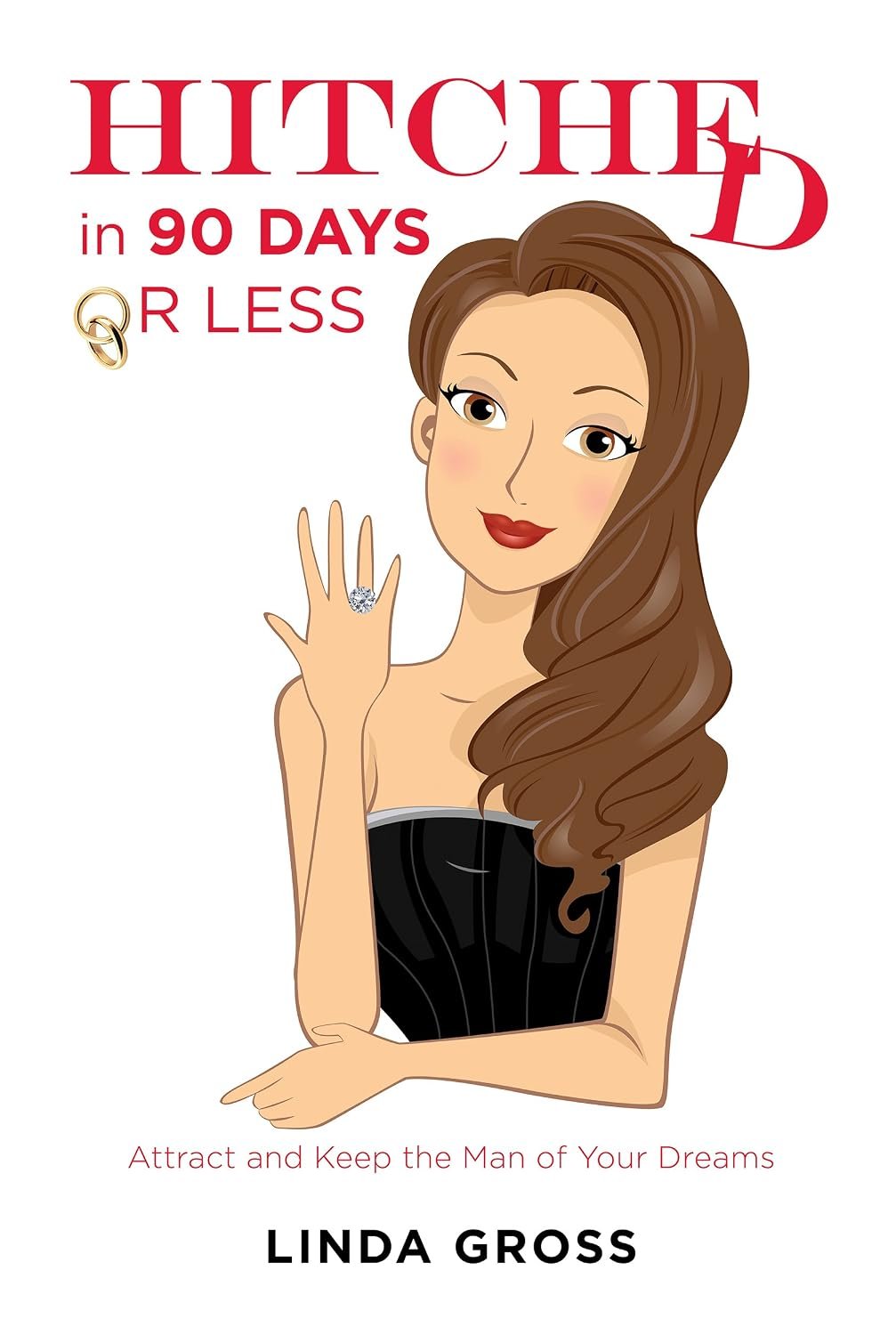
Hitched…in 90 Days or Less
A provocative dating guide invites readers to examine relationship habits while keeping expectations and personal boundaries in view.
Books worth discovering. Authors worth knowing.
A provocative dating guide invites readers to examine relationship habits while keeping expectations and personal boundaries in view.
Hitched.
A Provocative Promise in a Dating Guide
Hitched…in 90 Days or Less announces its ambitions in a title designed to catch anyone tired of disappointing dates. Linda Gross’s subtitle, Attract and Keep the Man of Your Dreams, places the book firmly in relationship self-help, with a focus on women seeking lasting romantic partnership. Promotional descriptions frame the guide around identifying patterns that interfere with connection and changing the way a person approaches dating. The ninety-day language should be understood as the book’s motivational promise, not an independently established timetable for meeting a compatible partner. Real relationships depend on two people, changing circumstances, safety, trust, and mutual willingness. With that qualification, the book can still serve as a useful point of discussion about dating intentions. Its strongest public-facing question is not how to guarantee a relationship by a deadline, but how to examine one’s habits while refusing to abandon personal standards.
What the Author Says She Is Addressing
Gross’s own public description speaks to readers who have spent years single, who feel stuck in repetitive dating experiences, or who suspect their own choices have become obstacles. Her framing is direct, sometimes intentionally provocative. She wants readers to notice behavior they might otherwise explain only through bad luck. That kind of self-examination can be productive when it leads to clearer communication, firmer boundaries, and greater awareness of compatibility. It becomes less useful when it implies that the absence of a partner is evidence of a personal defect. Those are important distinctions for modern readers to bring to this title. A relationship guide has to leave room for personal autonomy as well as self-reflection. It cannot know what every reader has experienced, and it should not ask anyone to compromise safety or accept disrespect simply to meet a numerical target.
Patterns, Expectations, and Choice
Dating advice often begins with the observation that human beings repeat familiar patterns, even when those patterns do not serve them well. The book’s public pitch refers to removing self-sabotaging behavior, an idea that deserves careful unpacking. A useful exercise might be to separate what is truly under personal control from what is not. Someone can practice asking honest questions, being open about intentions, and paying attention to how a date treats other people. They cannot make another person act responsibly or create compatibility through effort alone. Readers may find it worthwhile to approach Gross’s advice with that distinction in mind. Reflection is valuable because it expands options, not because it guarantees a romantic outcome. The most constructive interpretation of self-improvement treats a person as worthy of respect before, during, and after the search for partnership.
Timing Is Not the Same as Readiness
The ninety-day claim is memorable precisely because it turns an uncertain process into a tidy interval. It can prompt focused action: perhaps deciding to meet new people, learning to say what one wants, or recognizing when a relationship is not reciprocal. But urgency can also encourage people to ignore a mismatch. A calendar cannot measure emotional safety, reliability, shared values, or whether two lives can support a healthy commitment. An independent feature therefore should not present the book as a tested pathway to marriage within three months. Rather, its timeline can be read as a device for making intentions visible. Readers may ask what three months of more purposeful choices would look like, without attaching self-worth to an arbitrary result. That reframing preserves the impetus to act while leaving the outcome where it belongs: in the realm of human relationships, not countdowns.
Gender Advice in Context
Gross has promoted herself as a writer and commentator on differences between men and women, and contemporary readers may recognize that some of her framework reflects an older era of broadly gendered dating advice. Claims about what every man or every woman wants warrant scrutiny. Individual people differ in personality, cultural setting, orientation, expectations, and ways of communicating. Research about populations cannot substitute for listening to a particular partner. Readers can engage with a guide’s practical suggestions while declining assumptions that do not fit their lives. One useful way to evaluate any advice is to ask whether it encourages empathy in both directions. Does it invite honesty, mutual consent, and respect for boundaries? Or does it describe partnership as a contest to be won through tactics? These questions allow the book to enter a productive conversation without granting every promotional claim the status of universal truth.
Listening as a Dating Skill
Behind the marketing language sits a straightforward challenge: becoming more deliberate about interpersonal communication. An interest in a potential partner is not the same as understanding that person’s priorities. Readers might use the book as a prompt to think about how they ask questions, how quickly they form expectations, and whether they notice signs of incompatibility. Listening is especially important because it makes room for surprise. Someone’s goals may be different from the ones a dating manual predicts, and that difference need not signify failure. In practical terms, respecting an answer matters more than finding a clever line that overrides it. These points are editorial reflections suggested by the guide’s theme rather than a claim that Gross teaches each particular exercise. The broader subject is a long-established one: intentional relationships depend on both self-knowledge and curiosity about another person.
Applying Advice Without Losing Agency
A self-help title works best as something to examine, test cautiously, and adapt rather than as an authority over the reader’s decisions. A person who is contentedly single may find no need for this advice. Someone seeking partnership might appreciate a fresh vocabulary for patterns that have become frustrating. Another reader may reject the book’s timetable but still find its emphasis on agency motivating. Whatever the reaction, it helps to set clear boundaries around the material. No guide can justify pressuring another person, ignoring red flags, or measuring someone’s life by marital status. The subject is also sensitive to cultural pressures placed on women, particularly assumptions that partnership is the ultimate proof of success. A critical reading can separate the desire for connection from the belief that a deadline must validate it.
The book’s decade-old publishing context is important because public conversations about gender and dating have continued to evolve. Readers may now bring a sharper interest in consent, equal partnership, emotional labor, and the way dating technologies influence expectations. Rather than dismissing the book because its promotional language comes from a particular period, it is possible to compare its stated assumptions with present-day values. Does an instruction support direct communication or encourage strategic performance? Does it recognize the choices of both partners? Is a proposed standard reciprocal? Such questions are useful tools for selecting advice without adopting an entire system. They also shift the focus away from winning a romantic outcome and toward building a relationship in which each person can participate freely.
A Relationship Book to Read Critically
Hitched…in 90 Days or Less is best approached as Linda Gross’s particular voice in the crowded world of dating guidance. The verified bibliographic record establishes its title, author, 2014 publication context, and self-help premise. It does not establish that the book’s methods produce its headline outcome. Prospective readers will get more from it by considering the questions raised than by treating the clock as a promise: what kind of connection do I want, what are my nonnegotiable boundaries, and what would more purposeful dating look like? Those questions remain relevant even if the reader disagrees with aspects of the author’s approach. A book built around an emphatic title can be a useful starting point for reflection, so long as the person reading it remains free to decide which ideas deserve a place in their own life.
About the book.
Relationship self-help and dating advice. A provocative dating guide invites readers to examine relationship habits while keeping expectations and personal boundaries in view.
Sponsored book feature. Independent research-based commentary based on publicly available book details; not a claim of first-hand full-text review. The designated cover placeholder will be resolved by the owner’s publishing automation.
Found a book worth opening?
Books worth discovering. Authors worth knowing.
Return to the Journal →