
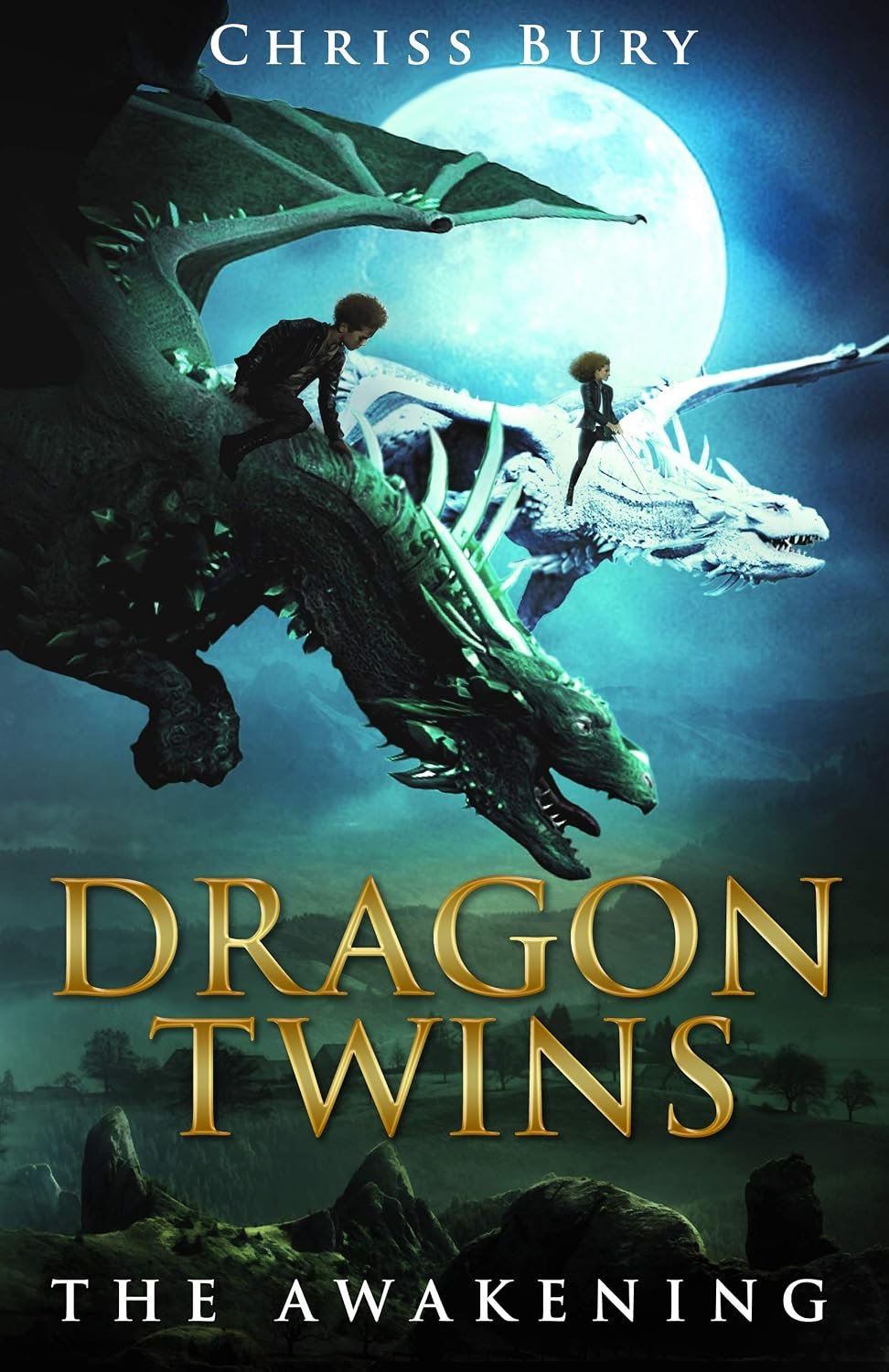
Dragon Twins: The Awakening
Orphaned Ambrose discovers unusual powers and a missing twin, turning a lifetime of dragon stories into an urgent quest.
Books worth discovering. Authors worth knowing.
Orphaned Ambrose discovers unusual powers and a missing twin, turning a lifetime of dragon stories into an urgent quest.
Chriss Bury’s Dragon Twins: The Awakening opens with Ambrose, a boy who remembers a dragon at the scene of the crash that killed his parents.
A Boy Whose Impossible Memory Will Not Leave Him
Chriss Bury’s Dragon Twins: The Awakening opens with Ambrose, a boy who remembers a dragon at the scene of the crash that killed his parents. Adults and classmates regard his belief as strange, and his fascination with dragons makes him an outsider. Public descriptions identify a pet gecko named Simon as one of his reliable companions. The fantasy begins, then, with a familiar emotional challenge: what happens when a young person is certain about an experience nobody else accepts? Ambrose’s difficulty is not presented merely as a quirky preference for mythological creatures. His conviction is bound to family loss and his struggle to make sense of a painful memory. That is a strong foundation for a middle-grade or young-teen adventure because the supernatural mystery matters to his identity before it becomes a matter of battling villains. The audience is invited to question alongside Ambrose what he knows, what he hopes and what he has yet to discover.
A Birthday That Breaks the Rules
On Ambrose’s thirteenth birthday, the story’s premise changes sharply. He experiences unusual strength and a perspective that seems to connect him to someone else’s sight. Then a dragon attack turns what had been dismissed as fantasy into a danger he must face directly. The official-style summary and independent review connect this awakening to the discovery of a long-lost twin sister. A birthday is an especially effective point of transformation in a coming-of-age tale because it places new responsibility beside the hopes and vulnerabilities associated with growing older. Ambrose is no longer simply trying to persuade others that dragons exist. He must decide how to act in a world where the impossible has become immediate. The change does not automatically solve his loneliness or grief. Instead it gives those feelings a larger frame, suggesting that understanding his past will also require courage in the present.
Why a Twin Changes the Story
The discovery of a twin sister introduces more than another fantasy character. A sibling who shares part of one’s origin may hold answers to questions about family, belonging and the life that existed before separation. For Ambrose, who has been raised without his parents, that possibility carries emotional weight. The series description makes the search for his sister central to his quest, but this article avoids inventing scenes of their first meeting or the exact reasons they were separated. The reader should encounter those answers through Bury’s narrative. Twins in adventure fiction can make questions of identity especially vivid: how alike are two people who share a history, and how different might their experiences have made them? The theme fits Ambrose’s awakening because extraordinary powers do not erase ordinary concerns about trust and recognition. Finding another person connected to his past may become as important as learning what his abilities can do.
A Gecko Beside the Dragons
The presence of Simon the gecko is a small but memorable detail in the public synopsis. In a story populated by massive creatures and magical danger, a tiny companion can create a welcome sense of scale. Ambrose’s care for Simon also establishes tenderness before he enters a conflict that could become defined by strength alone. A friendship with an animal may be especially meaningful to a boy who feels dismissed by classmates. It offers continuity while the rules of his world change around him. The story does not need to treat Simon as a symbol for this detail to matter to readers. Younger audiences often connect strongly with recognizable acts of loyalty: protecting a pet, keeping a promise or finding comfort with a familiar companion when other relationships are difficult. The contrast between the gecko and the dragons helps make Bury’s fantasy feel accessible even when its stakes become extraordinary.
The Threat of Morfran
The longer public book description identifies Morfran as an evil dragon threatening the human world, while wicked wizards complicate Ambrose’s race to discover his destiny. These elements provide a classic fantasy escalation: an individual’s question about his parents becomes entangled with a danger extending beyond one family. The transition has a narrative logic. If Ambrose has newly awakened powers and an unusual connection to dragons, the threat demands that he learn what those abilities mean. Yet the most interesting heroic stories do not measure success solely by whether the villain can be defeated. They also ask what a protagonist is prepared to protect and whom he learns to trust. The book’s description supports that larger question without supplying a final outcome. This feature preserves the suspense and avoids announcing which characters survive or how the conflict resolves. Readers attracted by high-stakes fantasy will find the advertised ingredients, but the personal dimension may be what gives them a reason to care.
Bullies, Doubt and a Sense of Self
An independent review emphasizes Ambrose’s isolation and the bullying tied to his belief in dragons. That detail distinguishes the setup from a story in which a confident young hero simply receives a magical assignment. Long before the quest, Ambrose is negotiating the everyday pressure of being different. There is an important difference between telling a child to ignore everyone and giving a character opportunities to learn judgment. Not every doubtful person in ordinary life is an enemy; not every strongly held belief is true. In the fictional world of Dragon Twins, however, Ambrose’s conviction is eventually supported by the arrival of an actual dragon. The pleasure of that reversal is easy to understand: a boy who has been mocked for his imagination discovers that his perspective contains something others overlooked. The book can therefore appeal to readers who like adventures about courage, but also to those who recognize the need to be seen and heard.
A First Book and a Wider Realm
Dragon Twins: The Awakening is identified in bibliographic sources as the opening installment of Bury’s fantasy series. A later title, Journey to Afiria, continues the twins’ adventures. Knowing that the story has a broader world may help readers decide how they want to enter it, though it is not a reason to speculate about particular cliffhangers. The first book’s premise already includes enough for a complete orientation: an orphan, disputed memories, an unexpected transformation, a missing sibling and a dragon antagonist. It suggests an adventure that moves beyond familiar surroundings and challenges the assumptions that shaped Ambrose’s early life. Bury’s award and reader listings place the work among younger fantasy audiences. Parents and educators considering it can use those descriptions as a starting point while checking the book’s language, themes and reading demands for an individual child.
The Adventure Behind the Awakening
The book is likely to appeal most to readers who enjoy dragons, secret family histories and protagonists who grow into unfamiliar responsibilities. Its source descriptions offer enough concrete detail to distinguish it from a generic fantasy: Ambrose has a pet gecko, a memory others doubt, new powers on his thirteenth birthday and a twin sister he must find while facing Morfran. Those are verifiable premises, not claims based on a private full-book reading. The imagination at work is especially accessible because its largest revelation grows out of a personal uncertainty. A reader need not share Ambrose’s obsession with dragons to recognize the desire to understand one’s history and be accepted by others. The Awakening promises the adventure of crossing into a larger world while keeping that longing close to its center. Whatever its eventual resolutions, the premise invites readers to imagine how bravery might begin in someone who has spent years being told he is wrong.
About the book.
Middle-grade and young-adult dragon fantasy adventure. Orphaned Ambrose discovers unusual powers and a missing twin, turning a lifetime of dragon stories into an urgent quest.
Sponsored book feature. Independent research-based commentary based on publicly available book details; not a claim of first-hand full-text review. The designated cover placeholder will be resolved by the owner’s publishing automation.
Found a book worth opening?
Books worth discovering. Authors worth knowing.
Return to the Journal →