
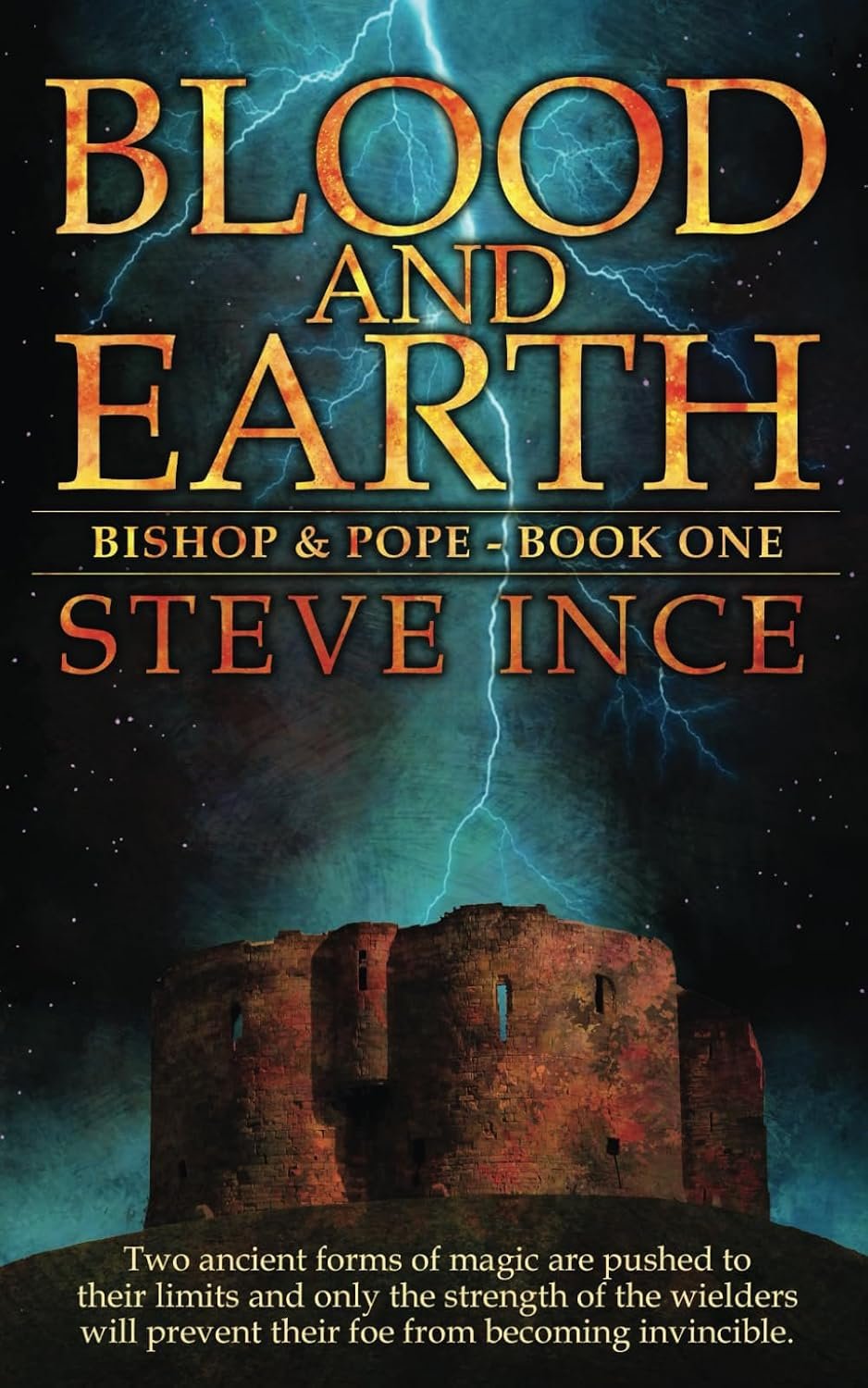
Blood and Earth
Two magicians, Faye Bishop and Joshua Pope, confront a returning dark wizard and a dangerous device in the historic city of York.
Books worth discovering. Authors worth knowing.
Two magicians, Faye Bishop and Joshua Pope, confront a returning dark wizard and a dangerous device in the historic city of York.
S.
Two Magicians in a City With a Long Memory
Steve Ince’s Blood and Earth begins from an urban-fantasy premise anchored in a very real place: the historic city of York. The public synopsis identifies Faye Bishop and Joshua Pope as powerful magicians caught in an unbreakable trap and haunted by their past. A dark wizard with the unnerving habit of returning from death threatens everything they care about. The pair must discover what he plans before he reaches a device capable of making him invincible. That compact description establishes a blend of supernatural peril and investigative urgency.
York is a particularly suggestive setting for such a story. Its long visible history allows the fantastic to feel as though it has been concealed beside ordinary life rather than arriving from a wholly invented continent. The synopsis does not establish which streets or historic structures appear in particular scenes, so those details should not be manufactured. But the general effect of setting is clear. Urban fantasy draws strength from the gap between what inhabitants believe they know about a place and what the genre permits to remain hidden within it. York gives that uncertainty an unusually layered atmosphere.
Bishop and Pope: An Unusual Partnership
The protagonists’ names, Faye Bishop and Joshua Pope, also appear in the series designation: the first Bishop & Pope novel. That emphasis signals a partnership at the story’s center. Rather than placing a lone chosen hero against a distant evil, the premise makes two capable magicians responsible for uncovering a threat. Cooperation can generate drama as readily as conflict. Strong characters may agree about the danger while disagreeing about methods, trust or the weight of past mistakes. The summary’s reference to a shared haunting past suggests a history worth discovering, though its exact shape remains a matter for the novel.
The idea of an unbreakable trap adds another pressure. Powerful protagonists are often most interesting when their competence proves insufficient by itself. If Bishop and Pope cannot simply overpower a problem, they must investigate or reconsider what they thought they knew. That encourages a mystery structure inside the urban-fantasy framework. The reader’s attention moves between immediate danger and the unanswered question of how an apparently impossible situation could have arisen. It is a setup that allows both character and magical rules to matter without reducing the plot to a contest of increasingly spectacular abilities.
A Villain Who Refuses to Stay Dead
The antagonist’s ability to rise from the dead is the clearest supernatural threat identified in the public synopsis. Repeated return changes the emotional meaning of victory. Defeating someone once is not enough if the same enemy can reappear to exploit whatever weaknesses remain. The threat can become exhausting as much as frightening, particularly for people who already carry painful history. Ince’s advertised conflict makes the villain’s persistence central to the stakes, but it does not disclose the mechanism of resurrection or the exact encounters that establish it.
This is where the book’s dark atmosphere can meet its investigative character. A villain who seems impossible to eliminate must be understood before being stopped. The protagonists need more than strength; they need information. The question shifts from how to win a confrontation to how to change the conditions that make confrontation endless. Urban fantasy often uses supernatural rules to dramatize familiar problems of recurrence: an old danger returns, an unresolved mistake intrudes on the present, or a history believed buried refuses to remain silent. Here those parallels are available as interpretation, not assertions about undisclosed plot scenes.
The Device That Could Make Power Absolute
The public description also identifies a device the dark wizard seeks, one that would make him invincible. This object supplies a clear deadline and changes the scale of the conflict. A resurrecting antagonist is already difficult to confront; one with permanent immunity might become impossible to resist. The protagonists must discover the plan before the object is acquired. Readers can therefore expect investigation under time pressure, the possibility of competing explanations and a widening sense that one mistake could alter the balance between hostile and protective magical forces.
A powerful artifact is familiar fantasy machinery, but its function matters more than novelty. It creates a reason for separate strands to converge. The past that haunts Bishop and Pope, the villain’s return and the properties of the device may not be unrelated. The existing synopsis does not say how they fit together, and revealing invented connections would do the story no favors. What it does establish is a set of questions that readers can carry through the novel. Who knows about the device? Why has it remained beyond the antagonist’s reach? What would the heroes have to risk to prevent its use?
Real History and Hidden Magic
Urban fantasy asks readers to hold two explanations of a city at once. York can be approached through streets, archives, buildings and ordinary community life, while the fiction adds magical activity that residents may not recognize. In a historical-feeling setting, the supernatural need not replace the real world; it can sit alongside its accumulated stories. The result is a sense of depth: beneath a modern routine may be old allegiances, secret practices and consequences that have survived longer than the characters realize.
Those generic possibilities should not be confused with documented scenes. The author and bookseller descriptions establish York, magic, the protagonist duo and the dangerous antagonist, not a detailed inventory of hidden orders or enchanted landmarks. This feature is therefore concerned with the genre’s effect and the book’s verified narrative promises. Readers who know York may enjoy imagining how familiar places can be transformed by a fantasy lens. Readers who have never visited it may enjoy discovering a city that carries its own distinctive weight without needing the author to invent an entire landscape.
A Game Writer Turns to Long-Form Fiction
Steve Ince’s official project list identifies him as both author and cover illustrator for Blood and Earth, described as a 2020 urban-fantasy novel. It also documents substantial work in videogame writing and related creative roles. His background is relevant because game narratives frequently ask creators to think about character motivation, rules, pacing and the consequences of decisions. Those demands have parallels in fantasy fiction, where an invented magical system must remain coherent enough for suspense to carry meaning.
That background does not permit speculation about specific narrative techniques within the novel. A writer’s experience in games does not prove that a particular scene is structured like a quest or that every character follows interactive-fiction logic. It does, however, make the move into fantasy prose interesting. Here the author controls the rhythm of revelation and the reader’s access to information across a complete narrative. A duo of heroes, a recurring antagonist and a dangerous object provide a strong basic architecture for such storytelling. Ince’s cross-media career offers context without replacing an analysis of the book’s actual text.
Haunted by More Than a Wizard
The synopsis’s reference to the protagonists being haunted by their past should not be overlooked. It suggests the threat is not entirely external. Supernatural villains can often be fought at a distance; memories shape the decisions a person brings to every confrontation. A pair of experienced magicians might hesitate at the wrong moment, disagree over trust or recognize a pattern because of something they have lived through before. The blurb withholds details, preserving room for the book to reveal what this history means.
For readers, that withheld information is part of the attraction. A fantasy mystery becomes more involving when discovery changes the protagonists’ self-understanding as well as their tactical options. The word earth in the title may evoke both the ground under an ancient city and the realm the characters stand to lose; the word blood suggests cost, kinship or danger. These are interpretive possibilities rather than verified plot keys. Their ambiguity helps create atmosphere. The advertised conflict is anchored enough to be compelling without sacrificing every surprise in advance.
Readers Who Enjoy Magic With Consequences
Blood and Earth should appeal to readers of contemporary supernatural thrillers who like their fantastical threats accompanied by investigation and character history. The York setting promises local texture, the Bishop-Pope partnership provides two focal points, and the undead antagonist gives the narrative a danger that cannot be dismissed by a single victory. The hunt for an invincibility-granting device adds urgency while leaving the exact magical mechanics for the actual book to disclose.
This introduction is grounded in the author’s own project record and published synopsis, not an independently verified full-text review. It makes no claim about the final confrontation or the quality of a twist readers have not yet experienced. Its promise is clearer and more useful: Ince’s debut Bishop & Pope installment brings capable but burdened magicians against a recurring dark force in one of England’s most historically resonant cities. The central appeal is the collision between old secrets and present danger, with two people forced to face both before time runs out.
About the book.
Faye Bishop and Joshua Pope, powerful magicians in York, are caught in an apparently unbreakable trap and haunted by history; a dark wizard who rises from death seeks a device that could make him invincible.
Editorial book feature, not paid sponsorship. Research-based commentary from named public sources, not a first-hand complete-book review. The cover placeholder will be resolved by the owner’s publishing automation.
Found a book worth opening?
Books worth discovering. Authors worth knowing.
Return to the Journal →