
Beyond Dream
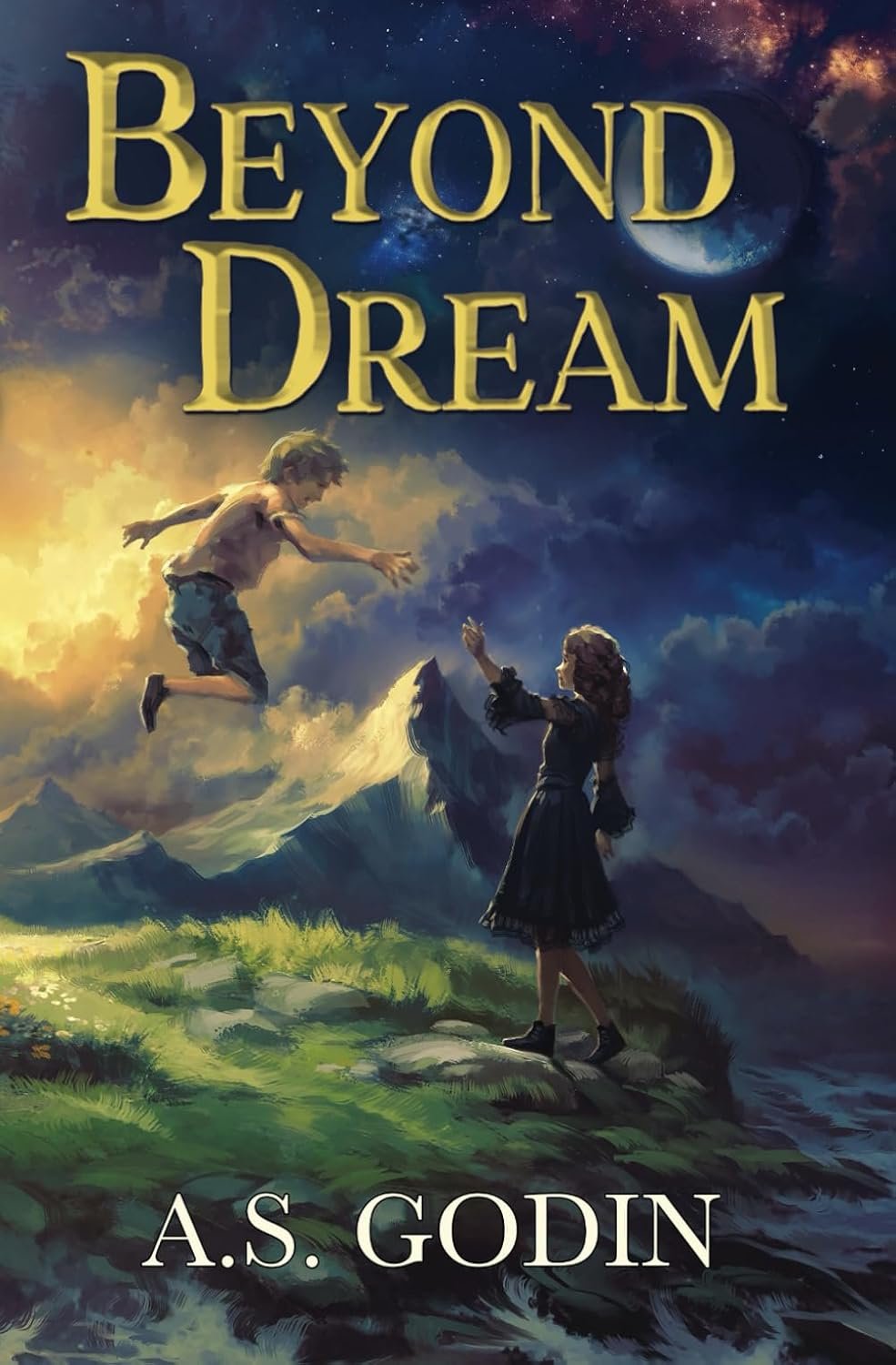
Maera, daughter of the King of Nightmare, breaks a sacred rule and binds her fate to a lost sleeper named Theodore.
Books worth discovering. Authors worth knowing.
Maera, daughter of the King of Nightmare, breaks a sacred rule and binds her fate to a lost sleeper named Theodore.
S.
The Daughter of Nightmare Wants a Different Life
A. S. Godin’s Beyond Dream opens its fantasy from the perspective of someone who already belongs to an extraordinary world. Maera is the daughter of the King of Nightmare, yet she feels out of place among people who seem to understand their roles. Publisher and bookseller synopses describe her desire to find a purpose of her own. This is an inversion of the common portal-adventure setup. The reader meets not a human entering a magical realm, but an inhabitant of a frightening dream-world who doubts whether the position she inherited explains who she is.
The distinction is immediately attractive. Being the child of a ruler could suggest certainty, status and power. For Maera, it appears to come with expectations she cannot comfortably inhabit. Her surroundings are strange to an outside reader, but her emotional problem is familiar: everyone else seems to have a place while she remains unsure of her own. The setting of Nightmare transforms that ordinary fear of not belonging into an atmospheric landscape. The world may be built from terrors, but the protagonist’s deepest uncertainty concerns identity and the life she wants to choose.
A Sleeper Who Does Not Know How to Escape
The other central figure is Theodore, a sleeper lost in Nightmare and fleeing the creatures that hunt him. He possesses unusual abilities, though the synopsis withholds their full nature. More importantly, he seems unaware that confronting fear may be connected to escape. His instinct is to run. That instinct makes sense in a realm full of threats, but the premise suggests movement alone will not resolve the problem. Theodore must eventually learn something about the landscape and himself that cannot be discovered solely by avoiding danger.
Bringing Theodore and Maera together creates a productive contrast. He wants a way out; she wants a reason to remain herself within the world she inhabits. The same place is prison to one and home to the other, even if it is not a comfortable home. They therefore enter their alliance with different priorities. Maera may understand customs Theodore cannot recognize, while his hidden abilities could reveal possibilities that her society overlooks. The publisher’s description does not provide their full relationship arc, but it establishes why each may challenge the other’s assumptions.
The Rule No One Should Break
Nightmare has one especially important prohibition: never disrupt a sleeper’s dream. Maera breaks that rule unintentionally when curiosity draws her toward Theodore. This is the turning point that binds their stories. A single mistake makes the daughter of a powerful ruler responsible for consequences that may extend across her world. The rule introduces a sense of moral and magical structure without requiring a complicated catalogue of invented spells. The reader knows that a boundary exists, that crossing it is serious and that Maera has already crossed it.
Rules in fantasy do more than create obstacles. They express a society’s understanding of danger and control. A prohibition may protect something genuinely fragile, or it may preserve the authority of those who define what is permitted. The public synopsis does not state which interpretation applies here, so readers have a useful question to carry into the book. Why must dreams remain undisturbed? What is it about Theodore that makes his disruption particularly consequential? The uncertainty gives weight to Maera’s choice, even though she did not intend to provoke the crisis.
A Dangerous Alliance
Once Maera and Theodore become connected, their interests can no longer be considered separately. The promotional material calls their partnership dangerous and suggests that a mistake could unravel the world around them. This gives the relationship stakes larger than an ordinary friendship built through a shared journey. Helping Theodore might expose Maera to penalties within her own society; protecting herself might leave him at the mercy of the terrors he cannot face alone. Neither possesses complete knowledge of the problem.
The alliance can also unsettle assumptions about who the frightening beings in the story are. Maera is the King of Nightmare’s daughter, but the book’s premise does not present her as a simple villain. Theodore is a vulnerable sleeper, yet he may possess extraordinary power. These contrasts encourage readers to look beyond labels. A creature born into a realm of fear may be capable of compassion, and someone apparently powerless may become central to the balance of that realm. Fantasy allows such reversals to be literal, giving ethical choices a strong imaginative shape.
Fear as Both Setting and Challenge
A land called Nightmare makes fear tangible. The description mentions terrors pursuing Theodore and a realm whose stability may be threatened. Rather than requiring every obstacle to be explained psychologically, the genre turns fear into an environment through which characters must travel. The conceit invites readers to examine how a person responds when avoidance no longer works. But this is a fictional adventure, not a therapeutic instruction to expose oneself to distress or danger. Real mental health decisions require personal judgment and, when appropriate, professional support.
Within the story’s symbolic framework, the relationship between running and confronting fear is compelling. Theodore’s instinct to flee keeps him in motion, yet may also prevent him from understanding what pursues him. Maera’s uncertainty about her place in Nightmare may be another form of avoidance, though the synopsis does not establish that as an explicit diagnosis. Readers can consider how both protagonists encounter futures they cannot control. The realm gives those feelings scale and visibility, offering a fantasy journey with emotional questions recognizable outside the genre.
The Price of Choosing a Purpose
Maera’s quest to define her own role is more interesting because she is born into an established hierarchy. A child of royalty can inherit position without inheriting conviction. The kingdom may offer a clear explanation of what she should be, while her curiosity keeps suggesting that the explanation is incomplete. The incident with Theodore forces her into a decision whose consequences cannot be undone merely by returning to the habits of her earlier life. In this sense the fantasy’s outward adventure may also be a story about the cost of individual agency.
The phrase finding your purpose can sometimes sound like a self-help slogan. Godin’s scenario gives it narrative friction. Purpose is not simply the reward for positive thinking; it emerges from a mistake, an obligation and a relationship with someone whose fate is now intertwined with Maera’s. The publicly available description makes clear that friendship may itself be dangerous. That is a promising complication. A protagonist can learn what matters to her through an attachment that unsettles the very world she has been taught to accept.
The Author and the Book’s Editions
Publisher listings identify A. S. Godin as the author and record the novel through Godin Books in paperback and ebook forms. Public author biography connects the name with Alecia Godin, an artist and writer who describes a long interest in creating stories and inspiration drawn from dreams. That biographical note is particularly relevant to a fantasy set inside Nightmare. It explains something about the author’s imaginative interests without establishing that individual scenes came from particular real-life dreams.
Edition records vary in dates and page counts, with catalogues noting a 2024 paperback and a 2025 digital release. A reader should use the exact linked listing to determine the format they are buying rather than assume every record describes an identical edition. The important common ground is the story’s named protagonists and the central law against disturbing sleepers. The synopsis gives enough reliable substance for a focused feature, while holding back the details that a reader might want to discover by opening the book itself.
Why Friendship Could Be the Greatest Risk
For readers, the relationship offers a counterweight to a landscape of terrors. Fantasy becomes emotionally engaging when danger makes the characters’ choices meaningful. Maera and Theodore may have different fears and different hopes, but cooperation asks them to recognize each other as more than the roles their worlds assign. Readers of dream-world adventures and character-driven fantasy can look for the moments when that recognition changes what each believes possible. The public synopsis promises high stakes without disclosing the final form of their shared decision.
A Story About Facing What Waits Beyond Sleep
Beyond Dream is positioned for readers who enjoy unusual fantasy realms, hidden abilities and protagonists whose inner doubts connect to outer danger. Its strongest hook is the collision of two quests: Maera seeks a purpose in the place she has always known, while Theodore seeks a way out of a place he never meant to enter. The broken rule ensures that neither can solve the problem in isolation. A world associated with terror becomes the backdrop for an unlikely bond that could transform everything.
The novel’s premise invites reflection on courage without promising fearlessness. Both figures have reasons to hesitate, and the journey appears to demand that they act before they understand every consequence. That is a persuasive foundation for fantasy adventure. Readers need not know the story’s ending to recognize the appeal of watching characters move from avoidance and uncertainty toward a more deliberate choice. Godin’s imaginative world makes a familiar challenge newly visible: learning that the future cannot be discovered merely by running from the things we fear.
About the book.
Maera seeks purpose in the land of Nightmare, where disturbing a sleeper’s dream is forbidden. When she disrupts Theodore’s dream, she risks destabilizing her world; his mysterious abilities and pursuit by terrors give their alliance high stakes.
Editorial book feature, not paid sponsorship. Research-based commentary from named public sources, not a first-hand complete-book review. The cover placeholder will be resolved by the owner’s publishing automation.
Found a book worth opening?
Books worth discovering. Authors worth knowing.
Return to the Journal →