
Kindreds
Orphaned sixteen-year-old Lilah must decide whether Joey’s secret carnival world offers belonging—or another dangerous loss.
Books worth discovering. Authors worth knowing.
For Lilah, the promise of finding a kindred spirit arrives at the very moment trust is most difficult.
S.
When Belonging Becomes a Risk
At sixteen, Lilah has already lost the stability most teenagers are still learning to take for granted. B. B. Russell’s Kindreds introduces her after the death of her family, as she enters foster care and faces the exhausting task of starting over. The bookseller’s synopsis makes one reunion especially important: Joey, who knew her deceased twin brother, happens to live next door to her new foster family. He brings a connection to a life Lilah fears losing altogether. Yet that apparent comfort is not simple. Joey carries a secret involving Nolianna, a mysterious carnival world operated by foster children, and Lilah must decide what it means to follow him into a place she cannot fully understand.
The setup gives the familiar invitation to a magical realm unusually grounded stakes. Portal fantasies often begin with a restless protagonist yearning for adventure. Lilah has more immediate needs: safety, continuity, trust and a sense that the people she loved still matter. The possibility of Nolianna is therefore not merely exciting. It appears in the same emotional space as a need to belong. That can make an extraordinary opportunity difficult to judge. When a world promises to welcome the excluded, the central question is not simply whether it exists but what conditions it places on belonging.
The Echo of a Brother
Joey’s connection to Lilah’s twin brother is a small premise detail with enormous emotional weight. A friendship carried from a lost person’s past can feel like a living bridge. For someone mourning a sibling, it may offer stories and memories that no new acquaintance could supply. Russell’s description establishes this history, but it does not tell us exactly how each character processes grief. That is worth preserving. Grief is neither a predictable sequence nor an automatic bond, and a careful feature should not assume that Lilah and Joey respond to loss in the same way.
What readers can recognize immediately is the complicated attraction of familiarity. Joey has a relationship to Lilah’s earlier life, yet he also introduces something she has never known. He simultaneously represents memory and change. Romance in that situation can be charged with questions of trust: is Lilah drawn to the boy before her or to the safety his connection with her brother seems to promise? Is Joey protecting something important when he keeps a secret, or withholding information she needs? The premise does not supply final answers. It does give the two characters more to negotiate than an ordinary teenage crush.
Inside the Promise of Nolianna
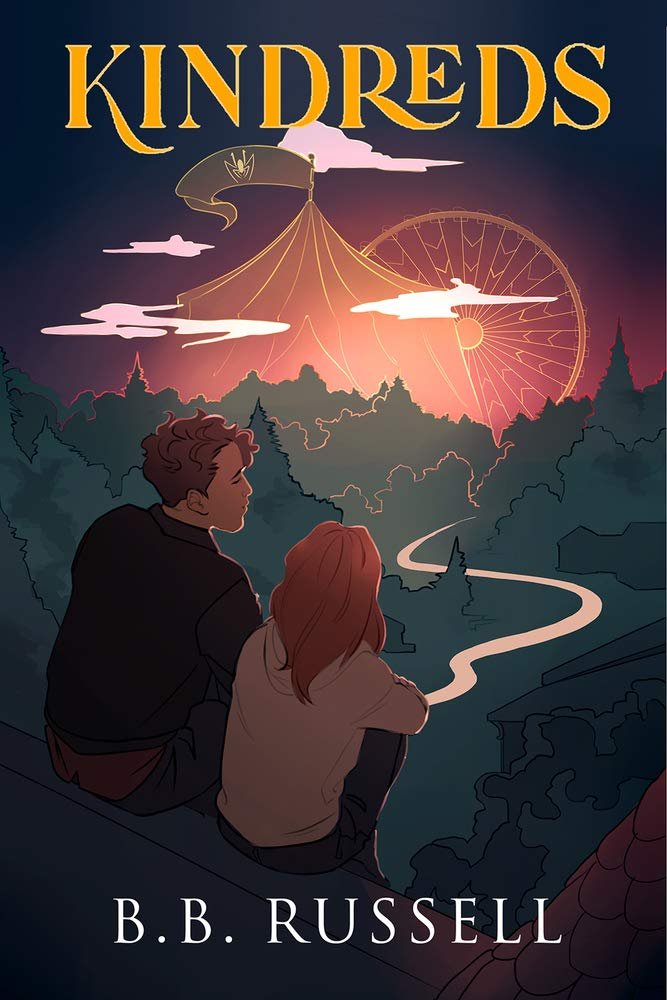
Nolianna is described as a secret carnival world run by foster children and actively seeking new members. That is striking imagery. A carnival suggests temporary escape, improbable spectacle, movement and a carefully staged experience. Foster care, in contrast, invokes real questions of stability, agency and community. Bringing the two together creates a fantasy environment where the promise of found family may be inseparable from the risk of manipulation. The description warns that Lilah’s instincts do not entirely trust what she is being shown. No invented tour through its attractions is needed for the setting to intrigue.
A place organized by young people might sound liberating compared with adult institutions that have failed them. Yet any community, however idealistic its outward presentation, can reproduce hierarchies of influence and pressure. Russell introduces Sebastian as the future leader of Nolianna, and he takes an interest in recruiting Lilah. His position complicates the apparent freedom to join. It is one thing to discover a hidden world and decide to explore it; it is another to be wanted by someone with power over that world. The narrative tension grows from the uncertainty about how free Lilah’s choice really is.
Heart and Head Are Not Enemies
The publisher’s framing asks whether Lilah should follow her heart or listen to warning signs. In lesser hands, that could become a neat lesson about how feelings are dangerous and logic is always correct. The situation described here is richer. Lilah’s wish to remain close to Joey is not foolish; she is reaching for warmth after profound loss. Nor is her suspicion necessarily an act of disloyalty. Being able to question a place that offers acceptance may be essential to keeping agency. Both impulses arise from a legitimate desire to be safe without shutting herself away from love.
Young-adult fantasy is particularly suited to conflicts of this kind because adolescence involves testing the boundaries of inherited judgment. Lilah cannot simply depend on adults to decide what Nolianna means, especially in a story where the secret world is dominated by other young people. Readers may be interested in how she learns to distinguish attention from care, secrecy from intimacy and a collective invitation from genuine consent. Those are editorial questions opened by the official premise, not a description of scenes or resolutions that have been independently checked.
Why the Author Chose This Terrain
Russell has explained in an author interview that Anne of Green Gables helped inspire the idea of kindred spirits. She also draws on her professional experience as a social worker with people who have encountered loss and foster-care systems. The interview makes clear that the novel combines experience and imagination rather than presenting one person’s literal history. That context is important. Kindreds is fantasy, but its imaginative setting connects to an awareness that children may long for relationships that feel secure and chosen. The desire for home is not a decorative character trait; it gives the fantasy world its emotional force.
Of course, fantasy should not be mistaken for a documentary account of foster care. A secret carnival realm is an invented device, and Lilah’s circumstances do not represent every young person’s experience. Still, writing from an awareness of institutional and personal loss can help a novel ask better questions. The presence of grief in the setup does not remove the possibility of humor, romance or thrilling discovery. It gives those pleasures context. A moment of delight may matter more to a protagonist who has been asked to surrender so much of her former life.
The Danger of a Beautiful Offer
There is a special tension in stories where the apparent refuge may also be the threat. Lilah does not receive a simple summons from an openly malicious force. She is invited toward friendship, affection and perhaps the chance to belong to a community of people with experiences resembling her own. The stronger that emotional offer is, the harder it becomes to investigate its flaws. Readers understand why Joey’s secret deserves attention, yet they may also understand Lilah’s reluctance to risk losing him by asking too many questions.
Sebastian’s role adds a second pull. A future leader who specifically wants Lilah in Nolianna introduces pressure beyond the private relationship. The setting moves from a secret shared by two teenagers to a broader question about who controls the terms of membership. The synopsis raises the danger that Lilah and Joey could disappear for good. That is enough to establish real peril, without disclosing who acts, how the danger unfolds or what choice resolves it. The story’s tension lies in watching trust become an active decision rather than a feeling granted by proximity.
Who Should Enter This Carnival?
Readers drawn to young-adult fantasy about found family, first romance, grief and difficult choices have strong reasons to consider Kindreds. The novel promises a hidden world with an arresting visual identity, but it also asks whether escape is worth the cost when the route out is controlled by others. Lilah’s situation makes each promise of welcome more complicated than it first appears. Her need for connection is real; so is her responsibility to notice dangers that affection might obscure.
The author interview and detailed public synopsis provide substantial grounds for discussion, while leaving the actual narrative’s discoveries intact. Russell’s imaginative contribution is to attach an uncanny carnival to a recognizable emotional problem. How can someone who has lost home and family learn to trust again without giving away the right to choose? Kindreds invites readers into that question through Lilah, Joey and Nolianna, asking them to consider what genuine belonging demands from the people who offer it.
About the book.
Newly orphaned Lilah moves into foster care, meets Joey, her deceased twin brother’s childhood friend, and discovers Nolianna, a secret carnival world organized by foster children. Sebastian’s recruiting interest introduces danger as Lilah weighs affection against warning signs.
Sponsored book feature. Research-based commentary from named public sources, not a first-hand complete-book review. The cover placeholder will be resolved by the owner’s publishing automation.
Found a book worth opening?
Books worth discovering. Authors worth knowing.
Return to the Journal →