
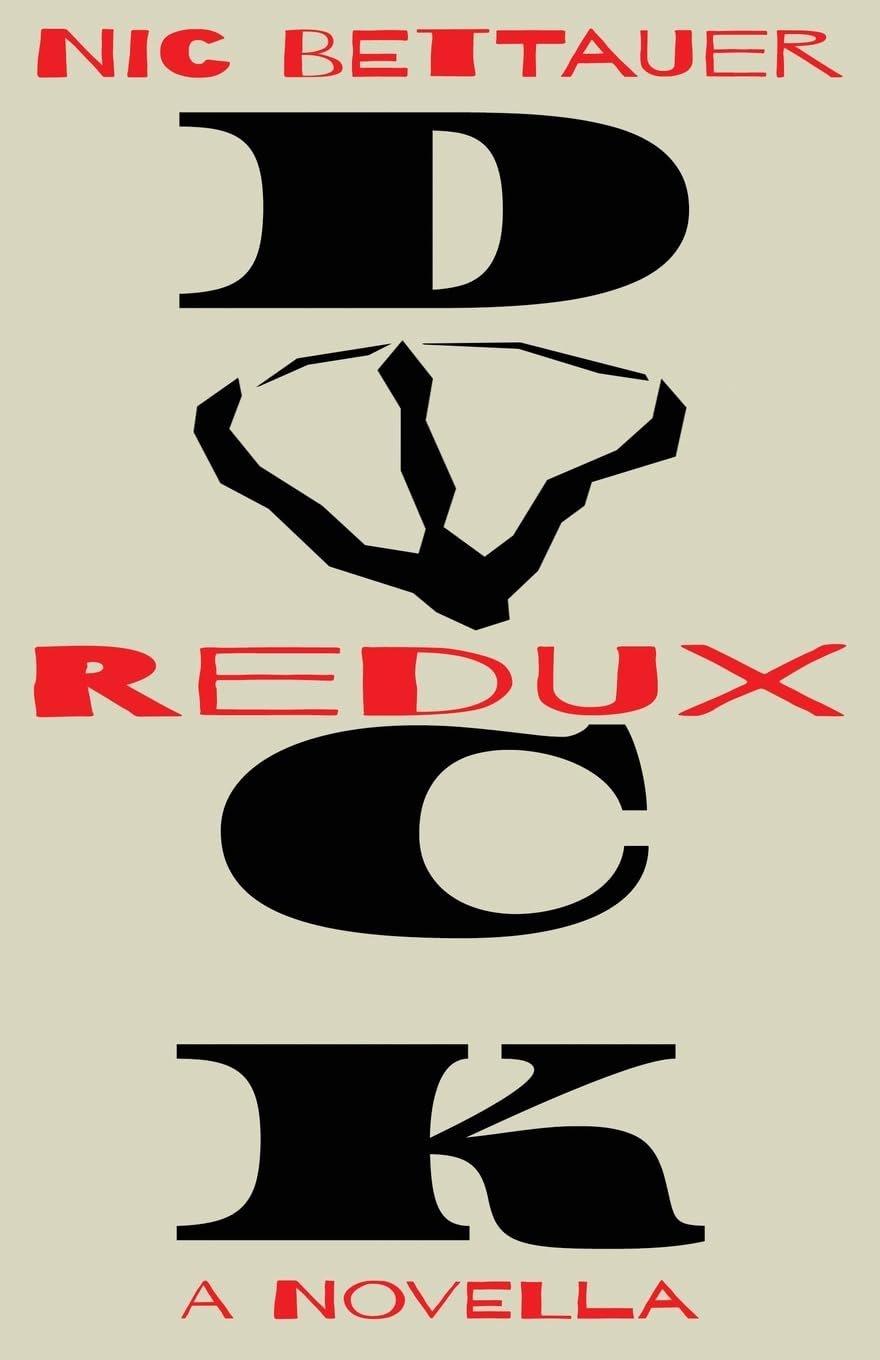
DUCK redux
In Nic Bettauer’s DUCK redux , the central conceit is both absurd and humane: the publicly available publisher description tells of a duck saving a man’s.
Books worth discovering. Authors worth knowing.
In Nic Bettauer’s DUCK redux , the central conceit is both absurd and humane: the publicly available publisher description tells of a duck saving a man’s.
Evidence-conscious literary criticism, not a claim of firsthand full-text reading.
In Nic Bettauer’s DUCK redux, the central conceit is both absurd and humane: the publicly available publisher description tells of a duck saving a man’s life. That premise could be a comic miniature, an allegory about interdependence or an invitation to confront pain by approaching it from an unexpected angle. The author describes the work as connected to an earlier film and to experiences of helping people in crisis. The idea of a creature considered ordinary becoming someone’s rescuer gives the narrative a striking moral reversal.
A small intervention in a damaged world The publisher’s summary begins from a society struggling with decency, service and grace. These are large abstractions. The duck offers a way to bring them back to the scale of a particular life. Rescue stories often foreground extraordinary heroes, but here the agent of change is an animal whose presence can expose what people have failed to notice. The contrast may be comic, yet it carries a serious question: why does an unexpected act of care surprise us so much?
Bettauer’s public description links the book to her work as a volunteer crisis counselor in Los Angeles and calls the project a meeting of allegory and memoir. It also references her 2005 feature film DUCK, whose cautionary future setting has been reconsidered for the present day. That history makes the word “redux” more than an aesthetic flourish. To return to a story after two decades is to test whether earlier anxieties have changed shape, become more urgent or acquired new meanings.
Humor as a difficult kind of seriousness A story concerned with loss and social decline might easily harden into a lecture. The deliberately incongruous animal protagonist provides another tonal possibility: humor as a means of staying open to difficult experiences. Humor need not trivialize suffering; it can create enough distance for readers to recognize its contours. The interesting test is whether such lightness grows from affection for vulnerable lives, rather than being used to avoid their particulars.
The book’s reported connection to crisis counseling offers a reason to attend to its treatment of care. Helping someone through distress is rarely a single grand gesture. It can be the accumulation of attention, boundaries, listening and the willingness to remain present without claiming to fix another person. The premise of rescue by a duck may make the idea memorable, but the ethical measure is how fully the human subject is allowed to exist beyond the rescue itself.
Returning to an earlier story A revised or revisited creative work can be compelling because a writer’s perspective has changed. Readers familiar with the film may be interested in what the new medium makes possible: prose can linger in interior reflection where film might rely on a look or a gesture; the contemporary setting can invite different interpretations of social breakdown. The available descriptions do not establish specific narrative changes, however, and it would be unsound to claim a scene-by-scene relationship between the two works.
There is also a risk inherent in allegory. If every character or incident exists solely to represent a social position, the reader may feel managed rather than moved. The most effective allegorical writing retains the unruly individuality of its fictional lives. An improbable duck can carry great emotional weight if the world around it remains particular enough to matter. The question is not whether the premise is realistic, but whether it is emotionally exact.
The unlikely ethics of an animal hero A duck cannot plausibly explain its motives in the language of a human rescuer, and that limitation may be the source of the premise’s ethical power. Help sometimes arrives without an elaborate declaration of goodness. In allegory, the gap between what a creature does and what an observer makes of it can open a space for humility. The human character may receive something he did not believe possible, while the reader is asked to reconsider the boundaries of companionship. The critical task would be to decide whether the novel preserves that mystery or resolves every symbol too neatly.
The book’s relationship to crisis counseling also gives the act of saving a life a difficult resonance. Counselors and volunteers cannot guarantee outcomes, and their work often involves supporting someone without becoming the centre of that person’s story. A responsible fictionalization of crisis care would resist the idea that compassion is measured only by dramatic rescues. It might attend instead to the ordinary continuity of presence, to care that is effective even when it does not appear heroic. Bettauer’s statements suggest that such experiences inform the work, but the exact treatment remains a matter for the text.
Why return to the same idea? The existence of an earlier film raises the question of whether an artwork may change its political meaning when history changes around it. A future once presented as a warning can come to feel like a description of the present. This does not make the original prediction literally correct; it alters the emotional position of the audience. Returning to a story can therefore be less about repeating familiar material than about asking what the same figure now reveals. The odd dignity of the title <em>DUCK redux</em> lies in that wager: the bird may be recognizably the same, while the world in need of rescue looks uncomfortably different.
A qualified invitation <em>DUCK redux</em> may appeal to readers interested in compassionate allegory, philosophical fable and writing that makes room for grief without surrendering all hope. Its combination of whimsy and difficult subject matter is less likely to satisfy someone seeking a purely comic animal tale. Those who know the earlier film have an additional line of inquiry, but knowledge of that film should not be presumed necessary without checking the book.
The publisher and author statements provide a strong account of intention but not a substitute for reading the complete work. What can be said is that the book begins from a worthwhile paradox. In a world that professes to value heroism, it asks readers to consider a kind of salvation so modest and unexpected that its meaning might otherwise go unnoticed. That is a fertile basis for a humane work of fiction.
About the book.
The title, contributors, routing category, original retailer link and unique Drive image file were checked against the live queue. The review is based on publicly available evidence and original editorial analysis.
This is an unsponsored editorial book review. This research-based critical review interprets the verified book listing and available external descriptions; it does not claim a complete reading.
Found a book worth opening?
Books worth discovering. Authors worth knowing.
Return to the Journal →