
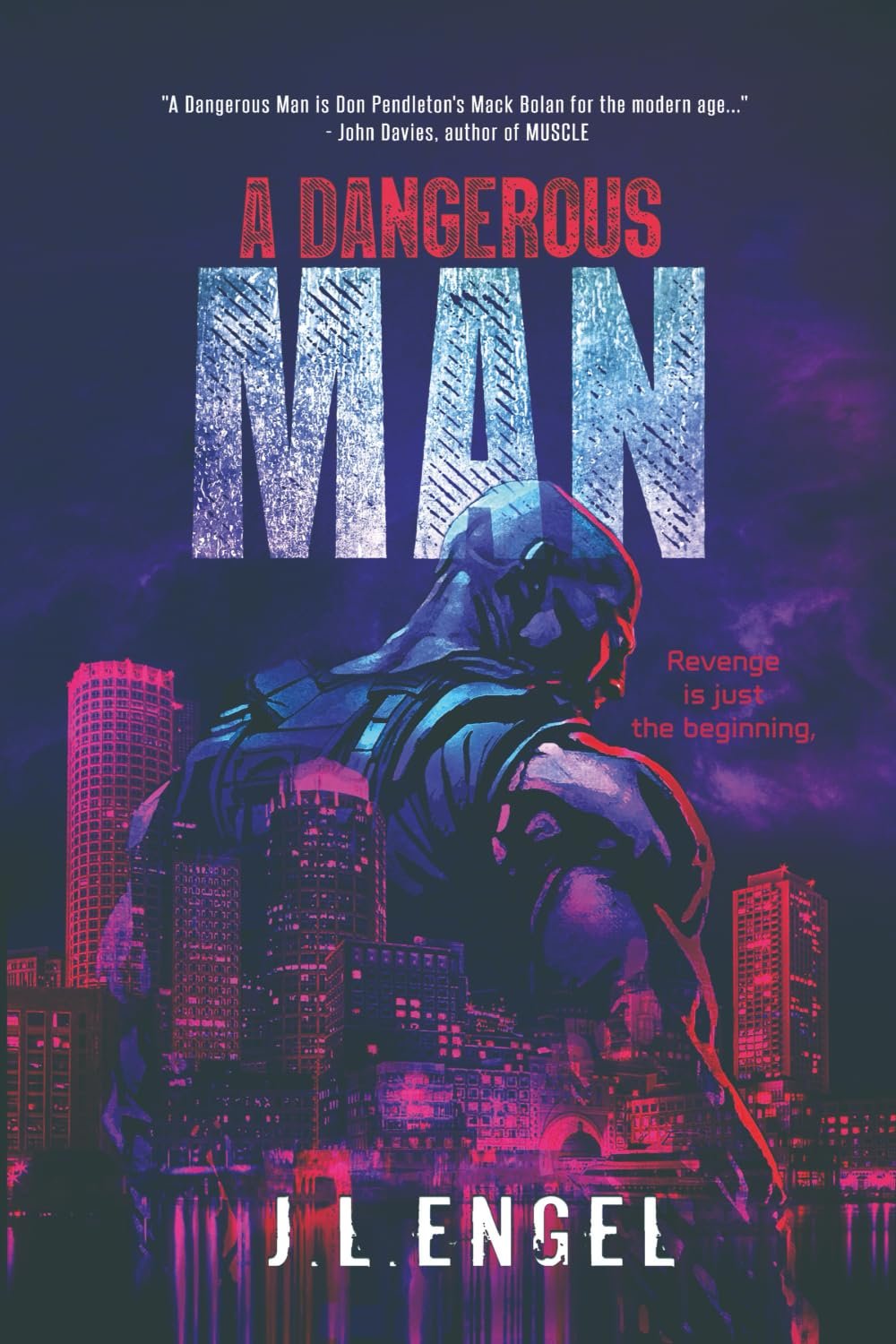
A Dangerous Man
The revenge thriller has a persistent ethical problem: it wants us to fear violence and to enjoy watching violence delivered with absolute certainty. J. L. Engel’s.
Books worth discovering. Authors worth knowing.
The revenge thriller has a persistent ethical problem: it wants us to fear violence and to enjoy watching violence delivered with absolute certainty. J. L. Engel’s.
Evidence-conscious literary criticism, not a claim of firsthand full-text reading.
The revenge thriller has a persistent ethical problem: it wants us to fear violence and to enjoy watching violence delivered with absolute certainty. J. L. Engel’s A Dangerous Man approaches that contradiction directly. In an interview, Engel describes a former black-operations agent seeking vengeance after his family is destroyed by a trafficking network. He also speaks of testing whether actions normally condemned can be made righteous by their motives. The central attraction, then, is not merely the intensity of a pursuit but the dangerous ease with which justice and punishment can begin to resemble each other.
A private war against a vast crime According to the author, the protagonist is a trained former operative and much about his identity is intentionally held back. His final campaign targets a Russian crime syndicate implicated in human trafficking. That setup gives him unusual capacity for action while withholding the public accountability expected of law enforcement. In the grammar of thrillers, such a figure promises ruthless efficiency; in the grammar of ethics, he presents a problem. Who authorizes him to act, and what becomes of truth when only revenge can satisfy him?
The subject of trafficking must be handled carefully because its real-world gravity is easily transformed into narrative shorthand. An effective thriller should not allow people harmed by exploitation to exist solely as permission for a hero’s violence. Engel says the premise arose from anger over crimes against children and other vulnerable people. That motivation deserves to be understood on its own terms, but it does not settle the artistic question of how victims and survivors are represented within the fiction.
The attraction of an unstoppable figure In discussing a late stage of the story, Engel imagines his avenger becoming almost uncanny to the criminals he pursues, like a relentless horror figure whose role has been reversed. It is an evocative description of genre borrowing. The novel does not merely offer a capable protagonist; it takes the suspense-film image of the unstoppable pursuer and asks audiences to experience it from another moral angle. The device can be potent because viewers accustomed to fearing the monster may briefly welcome his arrival.
That reversal also carries a danger for the narrative. If the protagonist cannot be impeded, opponents may cease to feel like characters and begin to resemble targets. Suspense then becomes a question of when rather than whether an event will happen. One way a story can sustain depth is by giving the pursuer something force cannot resolve: memory, grief, moral doubt or the consequences of his choices for other people. The interviews establish the author’s interest in morality, but do not permit a definitive judgment about how convincingly the whole novel develops it.
What revenge cannot repair A family’s destruction creates a wound for which killing the perpetrators is not a literal remedy. Revenge fiction is powerful precisely because it dramatizes the desire for a symmetry that reality cannot provide. The danger is not only that a protagonist crosses a line; it is that an audience begins to mistake line-crossing for emotional healing. Engel’s stated project seems aware of that knot, and the best approach to the book is to keep the question alive rather than offer approval or condemnation in advance.
The author has also described secondary characters who are drawn into the central man’s campaign. Their presence could be crucial. To bystanders, associates and rivals, a solitary mission of justice may look much less simple than it does inside its architect’s mind. A book willing to preserve those differing perspectives can turn familiar action material into an argument about agency and responsibility.
The problem of empathy in action fiction An avenger who seems almost superhuman can be exhilarating from a distance, yet the reader’s closeness to him creates a different demand. If we know too little about his grief, he may function only as a force of punishment. If we know too much, his motivation may become a blanket excuse for whatever he does. The author’s decision to conceal parts of the protagonist’s identity suggests an interest in managing that balance. The critical question is whether withholding produces meaningful ambiguity or simply the aura of an unbeatable hero.
The same dilemma shapes the portrayal of antagonists. Human trafficking is a devastating reality, and a fictional crime syndicate can serve as a concentrated object of rage. But an indiscriminate portrait of evil may allow the protagonist’s methods to escape scrutiny. The novel’s stated desire to ask whether wrongdoing can become right through motive has real force only if readers are permitted to feel the difficulty of an answer. Moral uncertainty should affect the structure of the story, not appear merely as an attractive description beside the action.
The readers’ responsibility There is a difference between enjoying a violent thriller and endorsing the decisions of its characters. Art provides a space in which terror, anger and the fantasy of perfect retribution can be explored without being enacted. An author can create an extraordinarily effective punitive figure and still encourage readers to recognize what such a figure would cost in life. Engel’s interviews identify his deep anger at exploitation and his wish to encourage awareness of the harm. Those intentions are significant context, but a final review must ask what the novel actually permits readers to think once the excitement of the chase is over.
For whom the danger is worth following Readers who like hard-edged vigilante thrillers, covert-operations figures and morally charged action will recognize the terrain. It is not a light treatment of its subject: the premise involves trafficking, bereavement and severe violence, and prospective readers should consider those themes before choosing it. The book is also not a documentary account of anti-trafficking work; moral urgency in fiction does not make fictional methods a guide to real-world justice.
This assessment draws on the author’s public accounts of the premise, not a first-hand reading of the full novel. A Dangerous Man is most interesting in the question its title refuses to answer neatly. A man may be dangerous to criminals and dangerous in a broader moral sense at the same time. A credible revenge story must leave us able to consider both truths, even when the action urges us to choose only one.
About the book.
The title, contributors, routing category, original retailer link and unique Drive image file were checked against the live queue. The review is based on publicly available evidence and original editorial analysis.
This is an unsponsored editorial book review. This research-based critical review interprets the verified book listing and available external descriptions; it does not claim a complete reading.
Found a book worth opening?
Books worth discovering. Authors worth knowing.
Return to the Journal →