
WHERE SHADOWS BREATHE AND TRUTH SLEEPS
The past is rarely confined to the people who lived through it. In A. Gavazzoni’s Where Shadows Breathe and Truth Sleeps , the public author description.
Books worth discovering. Authors worth knowing.
The past is rarely confined to the people who lived through it. In A. Gavazzoni’s Where Shadows Breathe and Truth Sleeps , the public author description.
Evidence-conscious literary criticism, not a claim of firsthand full-text reading.
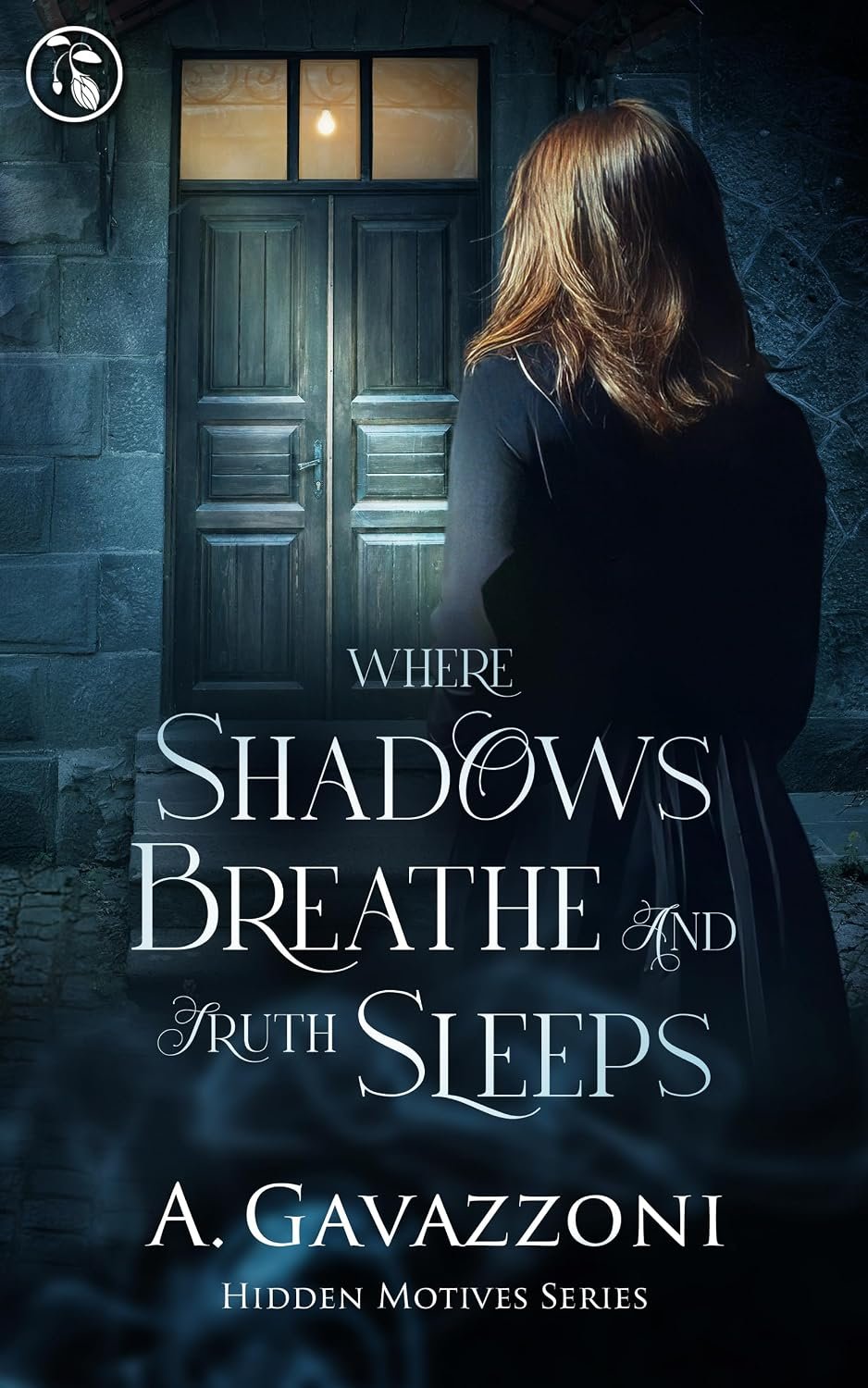
The past is rarely confined to the people who lived through it. In A. Gavazzoni’s Where Shadows Breathe and Truth Sleeps, the public author description returns psychiatrist Simone Bennet to an apparently recovered life while pulling her back toward the people who assaulted it. That contrast—professional routine and private aftermath, stability and unresolved terror—gives the fourth Hidden Motives book its strongest dramatic possibility. Suspense here need not depend only on a new danger; it can grow from the painful fact that danger already survived can continue to shape the present.
A life resumed, not necessarily healed Gavazzoni’s author website describes Simone returning to her psychiatric practice, teaching at a university and rebuilding intimacy within her marriage. She also visits MacDougall Prison to understand Peter Hay, who abducted her and her daughter, and Edward Reynolds, a former partner and accomplice. Further inquiry leads her toward histories connected to both men. This is a concrete and psychologically charged scenario: the person seeking answers is also a professional trained to examine human behavior. Her expertise may help her investigate, but it cannot make her personally immune to fear or to the distortions of memory.
Psychological thrillers often place an apparently rational protagonist against experiences that unsettle her confidence in interpretation. A psychiatrist character carries the genre’s problem in a particularly concentrated way. She is expected to recognize patterns in others, yet may struggle to decide which of her own reactions offer insight and which arise from injury. The public materials establish the situation, not the accuracy of the novel’s clinical depiction; a full review must still assess whether psychiatric work is portrayed responsibly.
The ethical charge of investigation Simone’s decision to visit imprisoned offenders is a more unsettling dramatic gesture than simply fleeing a threatening figure. She actively approaches what harmed her. Such a choice asks what knowledge can do for someone after violence: can an explanation provide a measure of control, or can investigation become another bond to the past? A novel that takes that question seriously can move beyond the mechanics of clues into the limits of comprehension itself.
The title pairs two personifications, breathing shadows and sleeping truth. Neither image describes a verified event, but together they express the central uncertainty of this genre. Information may exist without being accessible, and a threat may remain active even when its source is contained. The result is a tension between what can be established and what can be trusted. Such phrasing is evocative, though only the narrative can demonstrate whether the atmosphere is sustained rather than merely advertised.
Intimacy and danger The author explicitly describes Simone rediscovering sensual experiences in marriage. This places romantic and erotic material beside psychological suspense. The combination can be complex. Intimacy might function as evidence of renewed agency and pleasure after trauma, but a story should be careful not to treat a survivor’s sexuality as proof of recovery or as a simple cure for harm. Readers may find the interplay emotionally compelling, yet the treatment of consent, power and vulnerability deserves serious attention when the whole book is available.
This is the fourth volume of a continuing series. Returning readers may bring knowledge of Simone’s earlier experiences, relationships and professional identity that cannot be reconstructed from a product summary. New readers should expect some accumulated history. A fourth book earns its place not only by escalating danger but by changing the meaning of earlier events. It is therefore important to read its advertised revelations in relation to the series rather than judge the isolated synopsis as a self-contained plot.
The clinical gaze and its limits The psychiatrist protagonist may be uniquely equipped to notice inconsistencies in an offender’s account, but clinical knowledge does not turn someone into an infallible detective. A novel that grants Simone too much certainty could undermine the psychological complexity it promises. Conversely, one that treats her professional training as irrelevant might waste the premise. The richest possibility lies in making her expertise useful while recognizing that professional roles are not shields against grief, fear or personal attachment. This balance would be particularly important if the story draws on recognizable diagnostic language.
The prison visits also alter the traditional geometry of pursuit. Simone chooses to enter an institution where the offenders are contained, while the effects of their actions remain outside those walls. Physical custody therefore does not guarantee emotional safety. The novel’s investigation into their pasts may operate as a search for causal clarity, but explanation and absolution are not the same thing. A detailed account of why someone harmed others need not excuse the harm, and a credible psychological thriller should be alive to that distinction.
The challenge of a fourth installment Long-running suspense series often face an escalation trap: every new volume seems required to make earlier events look trivial by comparison. Yet a fourth novel can be more mature if it narrows its attention to consequence instead of continually increasing the body count. The public description’s concern with Simone’s life after captivity supplies a way to avoid pure escalation. Existing relationships, professional ambitions and intimacy can be changed by knowledge rather than simply threatened by another antagonist. Readers invested in the series will likely ask whether the new inquiry deepens the previous books or only reopens their wounds for dramatic convenience.
A review of the full work would also need to consider how the book balances erotic suspense against trauma. Romantic tension can be meaningful when characters retain consent, autonomy and contradiction. It becomes less persuasive when psychological distress is reduced to an atmospheric accessory. The source material establishes the coexistence of these genres, leaving their artistic and ethical integration as a question for the pages.
A qualified critical welcome Readers of mature psychological suspense, romantic thrillers and series narratives about the long consequences of violence are the obvious audience. The publicly established premise includes abduction, murder, imprisonment and sexual themes; those are relevant considerations for readers with sensitivities. This review does not claim knowledge of the ending or an assessment of the complete prose, despite the substantial author-published synopsis.
Where Shadows Breathe and Truth Sleeps is most compelling at the level of its central question: when people have been publicly contained, why can their actions still have such power over someone who survived them? That question promises more than a contest between detective and villain. It asks what truth can change—and what it cannot—after suffering has already entered a life.
About the book.
The title, contributors, routing category, original retailer link and unique Drive image file were checked against the live queue. The review is based on publicly available evidence and original editorial analysis.
This is an unsponsored editorial book review. This research-based critical review interprets the verified book listing and available external descriptions; it does not claim a complete reading.
Found a book worth opening?
Books worth discovering. Authors worth knowing.
Return to the Journal →