
Parenting with Self-Compassion
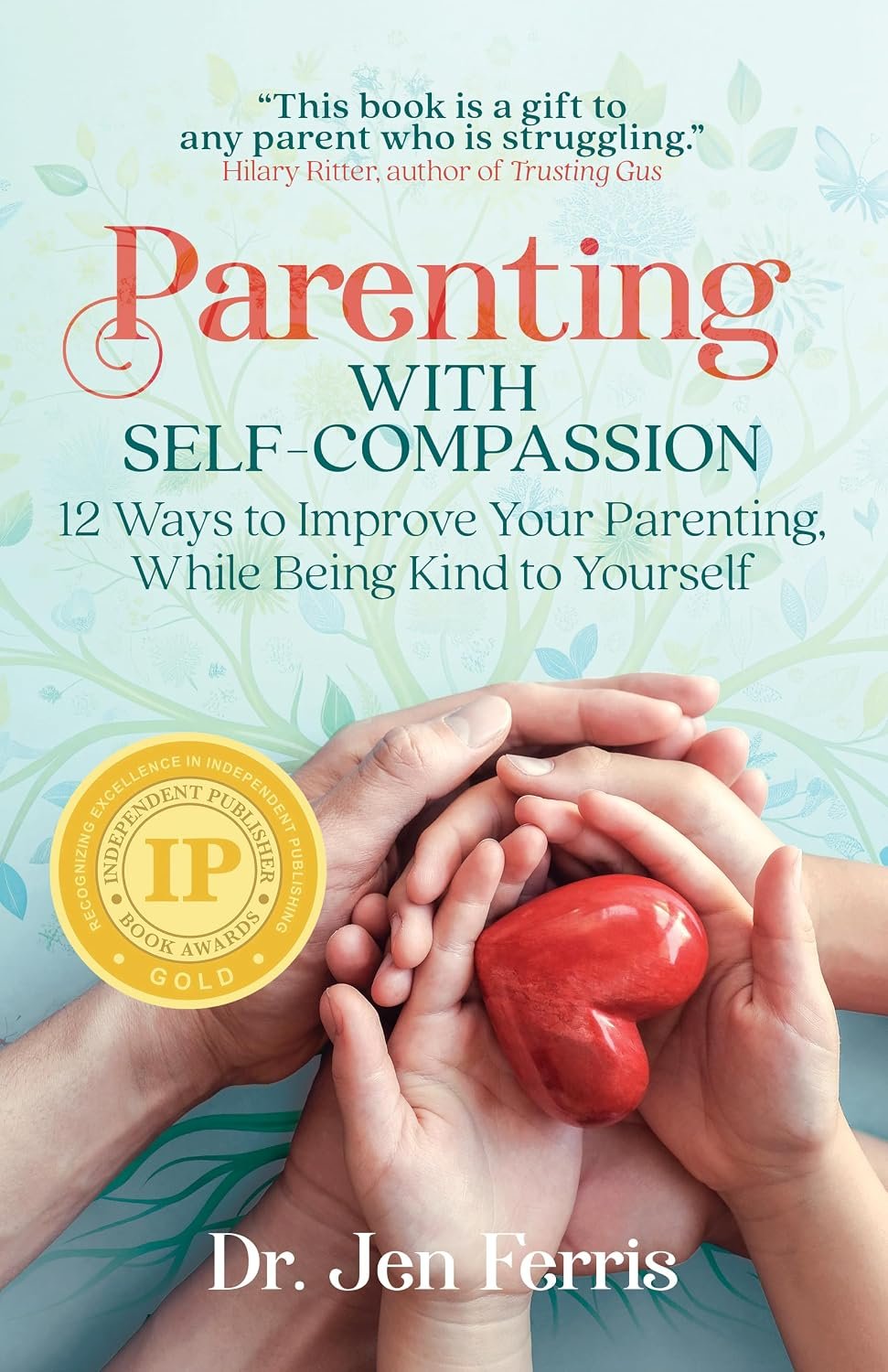
A tired parent usually needs one thing that parenting books often withhold: permission to be human while trying to care well for somebody else. Dr. Jen Ferris’s Parenting with Self-Compassion is organised…
Books worth discovering. Authors worth knowing.
A tired parent usually needs one thing that parenting books often withhold: permission to be human while trying to care well for somebody else. Dr. Jen Ferris’s Parenting with Self-Compassion is organised around twelve practical approaches to improving family relationships without making parental self-criticism the fuel of change. Public descriptions…
Book-specific criticism, grounded in what the available sources support.
A tired parent usually needs one thing that parenting books often withhold: permission to be human while trying to care well for somebody else. Dr. Jen Ferris’s Parenting with Self-Compassion is organised around twelve practical approaches to improving family relationships without making parental self-criticism the fuel of change. Public descriptions identify perfectionism, asking for help, choosing battles, empathy, discipline, screens and time for the parent as recurring subjects. Ferris has also discussed the argument in a recorded parenting interview.
The argument beneath the advice
Many parenting manuals assume that better behaviour begins with stricter personal management. Ferris starts at a different point. If a parent regards every moment of impatience as evidence of failure, the resulting shame can narrow the very attention needed to respond thoughtfully. Self-compassion, as framed in the advertised material, is not a declaration that mistakes are harmless. It is a way of observing them without becoming trapped in self-accusation. The distinction matters: the child still needs limits, repair and safety, while the adult needs enough steadiness to offer them. This is a credible conceptual promise, although its effectiveness cannot be validated from a summary alone.
Discipline, punishment and repair
One of the disclosed topics is the difference between punishment and discipline. That division is often announced too easily, as though the right vocabulary solves hard family disputes. The useful work lies in examples: what does a parent do after shouting, after a child refuses a request, or when two legitimate needs compete? The book is said to include short reflections and approaches such as parent time-outs. Its practical value will depend on whether those exercises recognise the constraints of long workdays, limited support and children with different temperaments. A rule that works only for an unhurried household is not universally useful advice.
Realistic help rather than perfect calm
Ferris’s discussion of screens acknowledges a modern source of conflict where simple prohibitions rarely address the whole problem. What children need from technology differs with age, access, school expectations and safety; parental anxiety can easily masquerade as a universal rule. The self-compassion lens should invite practical flexibility rather than a second standard of perfection. Likewise, the advice to ask for help is significant only if it recognises that support is unequally available. The promise of a brief, readable book suits pressured caregivers, but brevity must not flatten circumstances into interchangeable examples.
Where its authority comes from
In an interview, Ferris describes her experience as a former child-development professor and as a parent whose own expectations proved insufficient for the reality of family life. Such dual perspective can make advice less remote, although experience alone does not establish the success of every technique. A professional review would look for clearly differentiated evidence, sensible qualifications and an awareness of how developmental needs change across childhood. The public contents list supports describing the scope of the book, not certifying all its methods as science-backed.
The limits of parental optimisation
An implicit demand runs through much contemporary parenting culture: every day should be an opportunity to refine one’s techniques. Such a demand can make family life feel like a permanent assessment. Ferris’s self-compassion argument potentially challenges that economy of improvement by asking parents to notice the conditions in which they make decisions. A difficult bedtime, a rushed breakfast or a disagreement about a phone is not an isolated failure of method; it occurs amid fatigue, work, competing needs and a relationship whose meaning exceeds any single incident. The book’s brevity might serve this point well if its reflections help parents examine patterns without encouraging another elaborate tracking system. The reviewer’s test is whether the practical exercises make daily life more intelligible rather than making ordinary imperfection feel like an assignment to complete.
Repair as a teaching practice
Children observe not only how adults enforce rules but how they respond after making mistakes. A parenting book that treats self-compassion as permission to repair could connect two forms of learning: the adult’s recognition of a poor response and the child’s experience of being taken seriously. A parent who apologises without surrendering a necessary boundary teaches something different from one who simply demands compliance. Ferris’s advertised distinctions between punishment and discipline provide a natural place for that argument, although the exact teaching is not established by the available summary. The useful critical question is whether her guidance makes room for adult accountability and child perspective at once, instead of quietly moving all responsibility onto the person who can articulate feelings most fluently.
Kindness should survive complexity
Self-compassion is especially difficult when a parent is caring for a child with complex needs or is themselves facing limited resources. Encouragement that assumes plentiful time, flexible employment and a supportive partner can unintentionally exclude the families most burdened by self-criticism. The book’s attention to asking for help is potentially significant, but the quality of that section will depend on whether it acknowledges help that is unavailable. A more durable version of the central argument would distinguish what an individual can change from what requires shared care or social support. This does not diminish the value of personal reflection. It prevents kindness from becoming another form of isolated self-management and makes the book’s claims more honest for a broad readership.
Who will find value here
This book looks useful for parents seeking a shorter, less punitive approach to their own mistakes and to ordinary family friction. It is not a diagnosis, therapy plan or substitute for specialised help in high-risk situations. Its clearest value lies in connecting self-respect to responsibility for children—an argument worth considering provided the full advice proves as realistic as the description promises.
What this review can establish
This is an independent, research-based editorial assessment of the identified book, informed by the listed publisher, author and bibliographic materials. The analysis identifies documented premises, meaningful genre expectations and open critical questions. It is not a firsthand claim to have read every chapter or inspected the entire illustrated edition; judgments about the quality of prose, plot resolution and any unverified interior material are reserved for a full-text review.
About the book.
A limited-source, independent editorial evaluation of evidence-informed practical parenting. Facts are drawn from the listed book record and separately identified public descriptions; speculative editorial questions are not presented as plot facts. Another listing with the same title/author and same ebook ASIN appears as MAB-1903; preserve MAB-1094 as the earlier work and flag later ID.
This book is marked sponsored in the MarketAnyBook source queue. Sponsorship is disclosed; the analysis is research-based and does not claim a full firsthand reading.
Found a book worth opening?
Books worth discovering. Authors worth knowing.
Return to the Journal →