
A Roman’s Confession
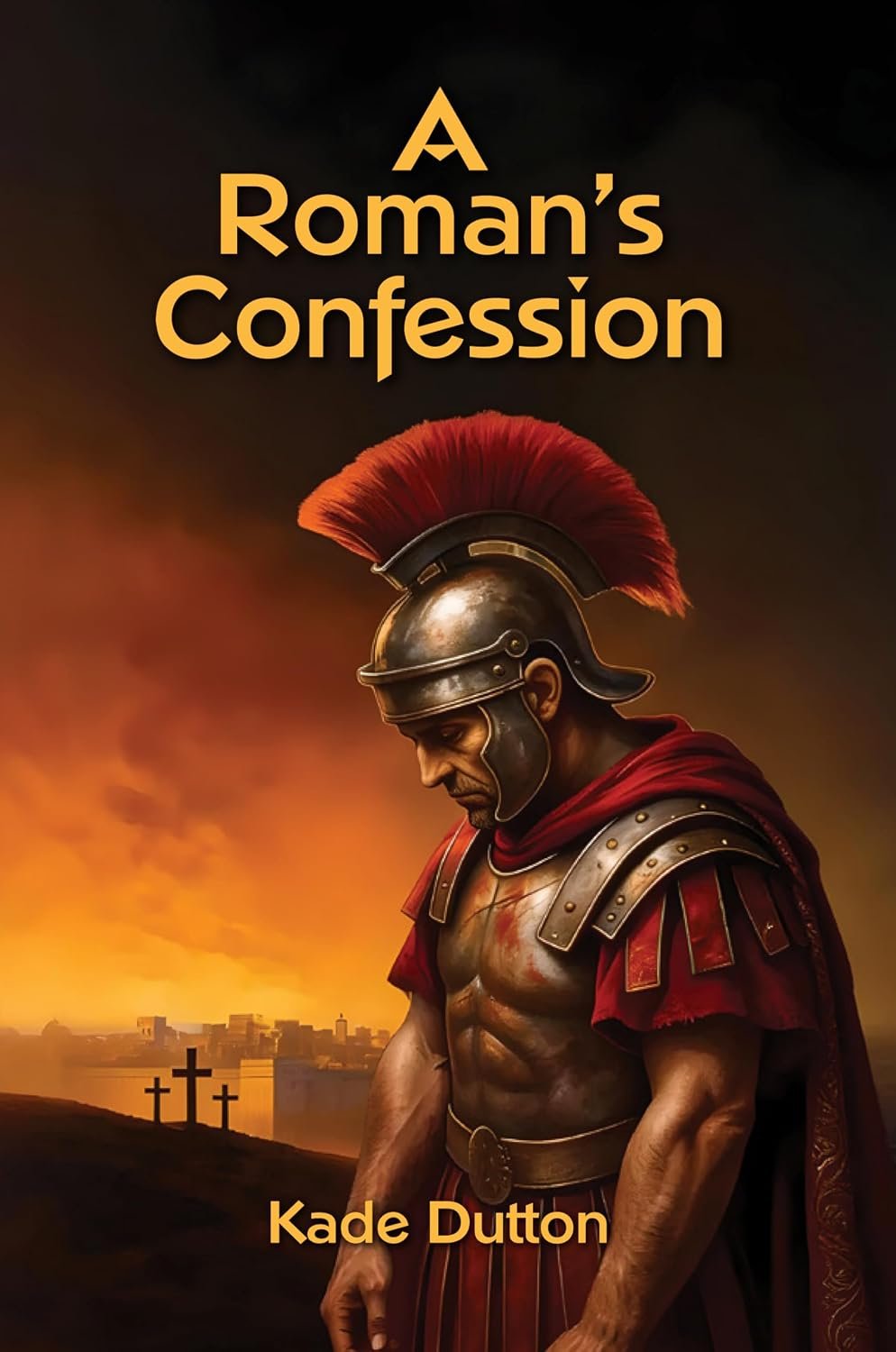
History records the conflict between imperial power and first-century religious movements; Kade Dutton’s A Roman’s Confession approaches the final days of Jesus through an imagined Roman officer who must…
Books worth discovering. Authors worth knowing.
History records the conflict between imperial power and first-century religious movements; Kade Dutton’s A Roman’s Confession approaches the final days of Jesus through an imagined Roman officer who must administer order while confronting beliefs he cannot readily understand. The public synopsis names Marcus Cassianus Varro, stationed in Jerusalem…
Book-specific criticism, grounded in what the available sources support.
History records the conflict between imperial power and first-century religious movements; Kade Dutton’s A Roman’s Confession approaches the final days of Jesus through an imagined Roman officer who must administer order while confronting beliefs he cannot readily understand. The public synopsis names Marcus Cassianus Varro, stationed in Jerusalem during Passover, and his subordinate Lucius. The city’s political tension and the presence of a Galilean teacher press the officer’s inherited categories of control, loyalty and truth.
The outsider’s moral sight
A Roman viewpoint gives a familiar sacred narrative a significant formal shift. Marcus cannot begin with the theological knowledge many contemporary readers bring to the events. He works within an empire that understands unrest primarily as a problem of governance. His uncertainty can thus become a productive dramatic space: what looks like sedition from one institutional position may appear as hope from another. The danger is that the soldier could be made an anachronistic mouthpiece for present-day conclusions. A convincing novel would preserve the distance between his first reactions and the interpretation toward which the story moves.
Passover as a pressure point
The synopsis situates the story during Passover, an occasion that makes Jerusalem’s density and religious stakes important to the governing authorities. This is not merely a colourful period backdrop. A public gathering can expose the limits of force because attempts to secure peace may generate the fear they are meant to suppress. Marcus’s responsibility for order is therefore morally compromised before any personal revelation arrives. The novel’s critical task is to depict that conflict with historical seriousness while acknowledging the liberties of fiction. The available description does not independently verify its historical details or invented scenes.
Duty against conscience
Marcus has reportedly trained himself to enforce Roman stability. His encounter with Jesus challenges the notion that power and authority are synonymous. The structure invites a question that religious historical fiction sometimes avoids: what must an enforcer admit about his own conduct before a change of allegiance has meaning? A sudden conversion can be moving if it follows a series of costly recognitions; it can feel convenient when it simply relieves a protagonist of responsibility. The relationship with Lucius also presents a possible counterweight, since private doubt carries different consequences in a military hierarchy than it does in a personal diary.
Rewriting a known ending
Readers who know the gospel narrative will not turn these pages to discover what happens to Jesus. The suspense, if it is well sustained, arises instead from how a fictional observer makes sense of events whose significance the audience already understands. That form depends on irony, gradual perception and a disciplined account of what the character can know. A long novel has room for the conversion of judgment to occur slowly; whether it uses that room effectively cannot be decided from the publisher-style synopsis alone.
The challenge of historical imagination
Historical religious fiction has two obligations that do not always sit easily together. It should be faithful to the moral and cultural distance of its chosen setting while remaining intelligible to readers who know the later significance of its events. A Roman commander in Jerusalem is positioned to misunderstand much of what the story’s intended audience may take for granted. That asymmetry can create dramatic irony, but only if his initial worldview is credible. Marcus must not begin as a disguised modern narrator, already equipped with the sympathies and language his journey is meant to develop. The description allows the critic to identify this challenge, yet no amount of plot summary can substitute for examining how the novel handles the everyday assumptions of a Roman military officer.
Violence within the language of peace
The phrase “Rome’s peace” is itself a useful contradiction. Imperial order may protect roads and commerce while demanding obedience enforced by violence. Dutton’s protagonist has spent his life administering that system. If the novel takes the contradiction seriously, Marcus’s moral crisis will be more than astonishment at an unusually gentle teacher. He will need to see how his own profession defines peace, who benefits from that definition and which people are permitted to object. This would give the narrative a political dimension without asking it to become a modern polemic. The highest dramatic stakes would arise when his conscience alters a choice he is actually empowered to make. Whether Dutton provides such decisions is unverified.
A witness is not the centre of history
By placing an invented observer near a sacred figure, the author faces the temptation to make the observer strangely indispensable. A more disciplined approach can allow Marcus to remain peripheral to the public events while making those events central to his own transformation. This restraint preserves scale: one man’s awakening matters without rewriting the whole historical tradition around him. The subtitle-free public title, A Roman’s Confession, puts the emphasis on what the soldier comes to admit, not on a startling revision of a known story. Readers may therefore look for an internal account of responsibility, fear and possible restitution. That is an interpretive expectation grounded in the chosen viewpoint, not evidence of the actual ending.
The title as a critical clue
A confession requires an audience. It can seek absolution, expose guilt, record a change of belief or refuse to conceal a shameful past. Dutton’s choice to place the word in the title makes Marcus’s inward reckoning as important as the public events he witnesses. The book may therefore invite readers to distinguish being impressed by an extraordinary figure from admitting one’s complicity in an unjust system. That is a more demanding and potentially durable drama than simple astonishment at a miracle.
Who will find value here
A Roman’s Confession is likely best suited to readers who appreciate explicitly Christian historical fiction and invented witnesses at a well-known religious turning point. Readers seeking documentary history should separate imaginative characterisation from established evidence. The premise provides a meaningful ethical conflict, but a final verdict on its historical texture and theological complexity requires the novel itself.
What this review can establish
This is an independent, research-based editorial assessment of the identified book, informed by the listed publisher, author and bibliographic materials. The analysis identifies documented premises, meaningful genre expectations and open critical questions. It is not a firsthand claim to have read every chapter or inspected the entire illustrated edition; judgments about the quality of prose, plot resolution and any unverified interior material are reserved for a full-text review.
About the book.
A limited-source, independent editorial evaluation of historical biblical fiction. Facts are drawn from the listed book record and separately identified public descriptions; speculative editorial questions are not presented as plot facts. MAB-2635 lists same title and author on a different Amazon product; likely another format, requires same-work confirmation before later ID is processed.
This is an unsponsored editorial review based on verified public descriptions and bibliographic materials, not a claim to firsthand reading of the complete book.
Found a book worth opening?
Books worth discovering. Authors worth knowing.
Return to the Journal →