
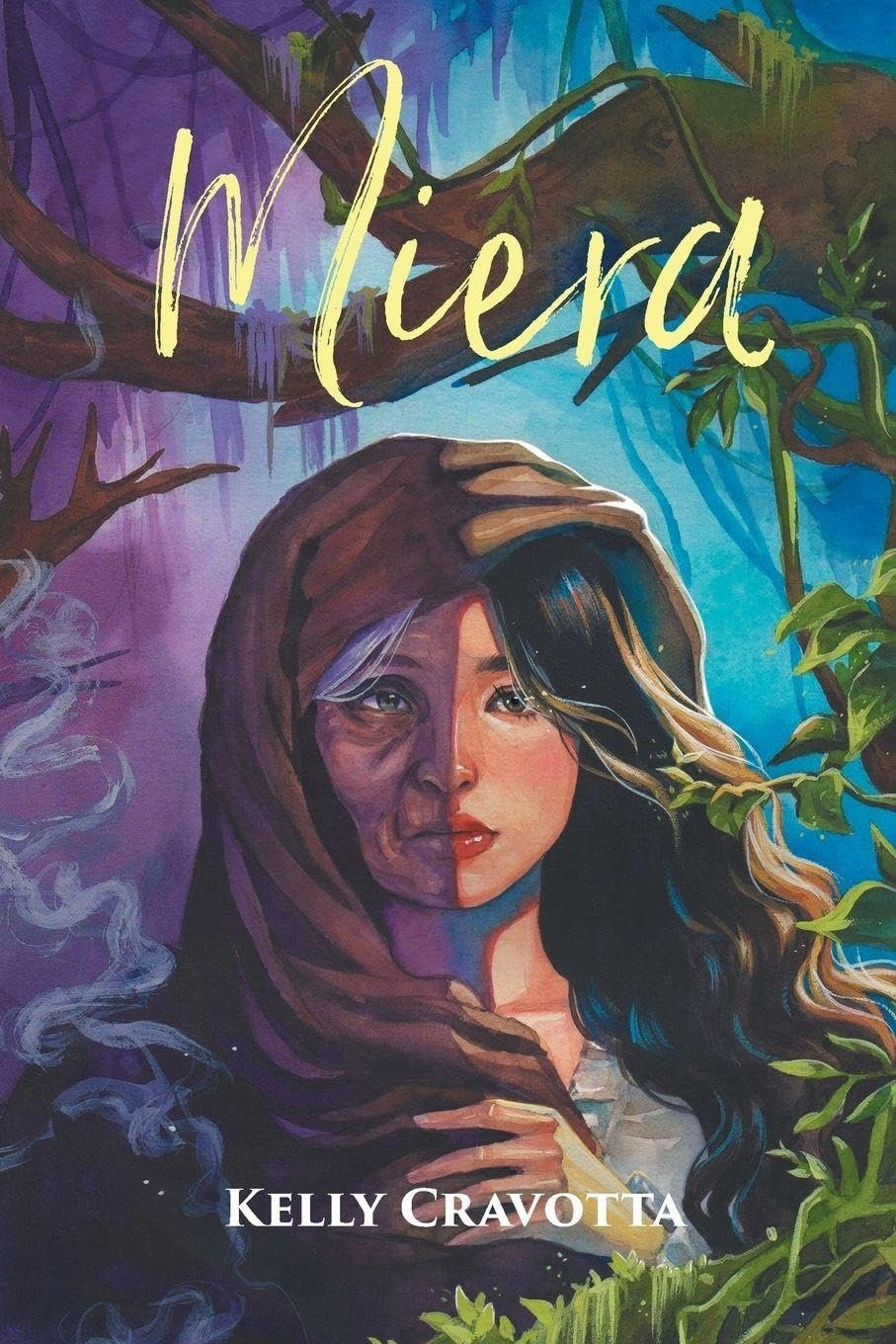
Miera
In a kingdom troubled by poverty, unrest and secrets of royal blood, a being once confined to legend becomes an immediate problem for the living. Kelly Cravotta’s Miera is presented by Page…
Books worth discovering. Authors worth knowing.
In a kingdom troubled by poverty, unrest and secrets of royal blood, a being once confined to legend becomes an immediate problem for the living. Kelly Cravotta’s Miera is presented by Page Publishing as the awakening of a nature-given figure associated with a worthy king and long-buried myths. The being called a Miera may preserve a fragile peace by…
Considered reviews, grounded in the book’s documented promise.
In a kingdom troubled by poverty, unrest and secrets of royal blood, a being once confined to legend becomes an immediate problem for the living. Kelly Cravotta’s Miera is presented by Page Publishing as the awakening of a nature-given figure associated with a worthy king and long-buried myths. The being called a Miera may preserve a fragile peace by remaining hidden or risk danger by embracing her own identity. That is a more interesting fantasy dilemma than a simple contest between darkness and light. The central question is whether a kingdom can ask a person to disappear for its stability and still describe that arrangement as peace.
An inheritance with political consequences
Royal-secret fantasies often place identity at the meeting point of genealogy and public authority. A hidden origin can explain a protagonist’s powers, but it can also expose the social order that kept the truth hidden. The publisher description specifically joins the Miera to ancient myths and royal bloodlines within a kingdom experiencing hardship. This suggests that the emergence of the legendary being will matter to people beyond a palace. A carefully developed story could ask why a suffering population should trust a power associated with rulers and what obligations arise from a gift not requested. The summary does not specify the kingdom’s institutions, the identity of the king or the Miera’s personal history. Those details should remain outside any supposedly factual analysis until verified in the book.
Nature is not an unambiguous ally
The Miera is described as a gift from nature. Such language tends to imply innocence, but the synopsis is careful enough to leave her future uncertain: she might bring despair or hope. This ambiguity is a welcome point of departure. Nature in fantasy can stand for fertility and restoration, yet it can also be indifferent, destructive or resistant to human attempts to classify it. A character linked to that force need not be morally predictable. The stronger narrative possibility is that her choices complicate both superstition and political expectation. If the people around her treat her as a blessing or threat before understanding her as a person, the book could expose how myth is used to grant or deny agency. Whether Cravotta explores that distinction remains a matter for the complete text.
Hidden life versus chosen visibility
The synopsis frames concealment as the path of apparent safety and public emergence as a dangerous claim to selfhood. This is an unusually human conflict for a mythic premise. A person may accept invisibility because it protects others, because exposure carries real risk, or because they have been taught that their desires are disruptive. A morally convincing story should not assume that courage always means becoming visible; sometimes discretion is a freely chosen form of care. The question is who gets to decide and whether the Miera understands the consequences. The novel’s advertising emphasizes her ability to choose, so the principal measure of its character design is whether that freedom remains real when kings, prophecies and readers demand a predetermined destiny.
The burden of prophetic scale
Fantasy written at the level of a whole kingdom has a recurring difficulty: large language can make personal choices feel abstract. Poverty, unrest, secret lineage and ancient power promise considerable stakes, but those stakes acquire meaning through particular people and consequences. The official description does not give a detailed supporting cast or named scenes. A reader can appreciate the scope while withholding judgment on whether it is realized in relationships, conflict and place. Prophecy is most engaging when the future is not merely a series of instructions disguised as mystery. The Miera’s uncertain destiny may provide the necessary resistance to that machinery. The title’s focus on her, rather than the name of a kingdom or an impending war, supports the expectation that agency matters more than spectacle.
An opening for younger fantasy readers
The ebook is categorized for young adult readers by at least one retailer, though age labeling may differ among editions. The premise of an extraordinary figure confronting inherited assumptions can resonate strongly with readers deciding how much of their identity to disclose and what obligations they owe to a family or community. Yet that resonance should not be confused with a guarantee that the book delivers nuanced coming-of-age psychology. A full review would need to examine perspective, dialogue and the use of fantasy language in scenes. What can be established is that Cravotta’s announced conflict places the choice to remain hidden or emerge at the story’s center. That is a legitimate and potentially resonant literary proposition.
Whose prophecy is being fulfilled?
The Miera’s supposed destiny is framed by other people’s inherited beliefs. That arrangement can create a powerful distinction between a prophecy and the social use of prophecy. A kingdom may build political hopes around a figure who has not agreed to become its emblem. If the Miera chooses to reveal herself, does she thereby inherit obligations that others have written for her? If she stays hidden, is she preserving peace or protecting a hierarchy that benefits from silence? Such questions follow directly from the publisher’s central dilemma. The novel’s capacity to answer them depends on how much freedom Cravotta gives her protagonist to interpret the myths, not merely to obey or refuse them.
Who will value this book
Miera should appeal to readers of mythic and young-adult fantasy who enjoy uncertain destinies, ancient secrets and female-centered questions of self-definition. It is worth considering for those who prefer a moral dilemma alongside supernatural power, though readers seeking a rigorously mapped magic system should inspect a preview. The publisher’s description provides enough substance to identify its core tension but not to judge pacing, the quality of dialogue or the resolution of the Miera’s choice. A review after the full novel could test whether the character is allowed to resist the myths built around her.
Scope of this assessment
This is a research-based editorial review drawn from identified bibliographic, author and publisher sources. It considers the work’s documented premise and the critical questions it invites, without claiming a complete firsthand reading. No unverified scene, character action or ending is asserted.
About the book.
An evidence-bounded critical introduction to mythic fantasy about identity, power and choice. Published descriptions support the stated premise; interpretations are identified as editorial analysis, not confirmed plot details.
This review concerns a book marked sponsored in the current MarketAnyBook queue. Sponsorship is disclosed, and all observations remain research-based.
Found a book worth opening?
Books worth discovering. Authors worth knowing.
Return to the Journal →