
Zen and the Art of Kitty Litter Raking
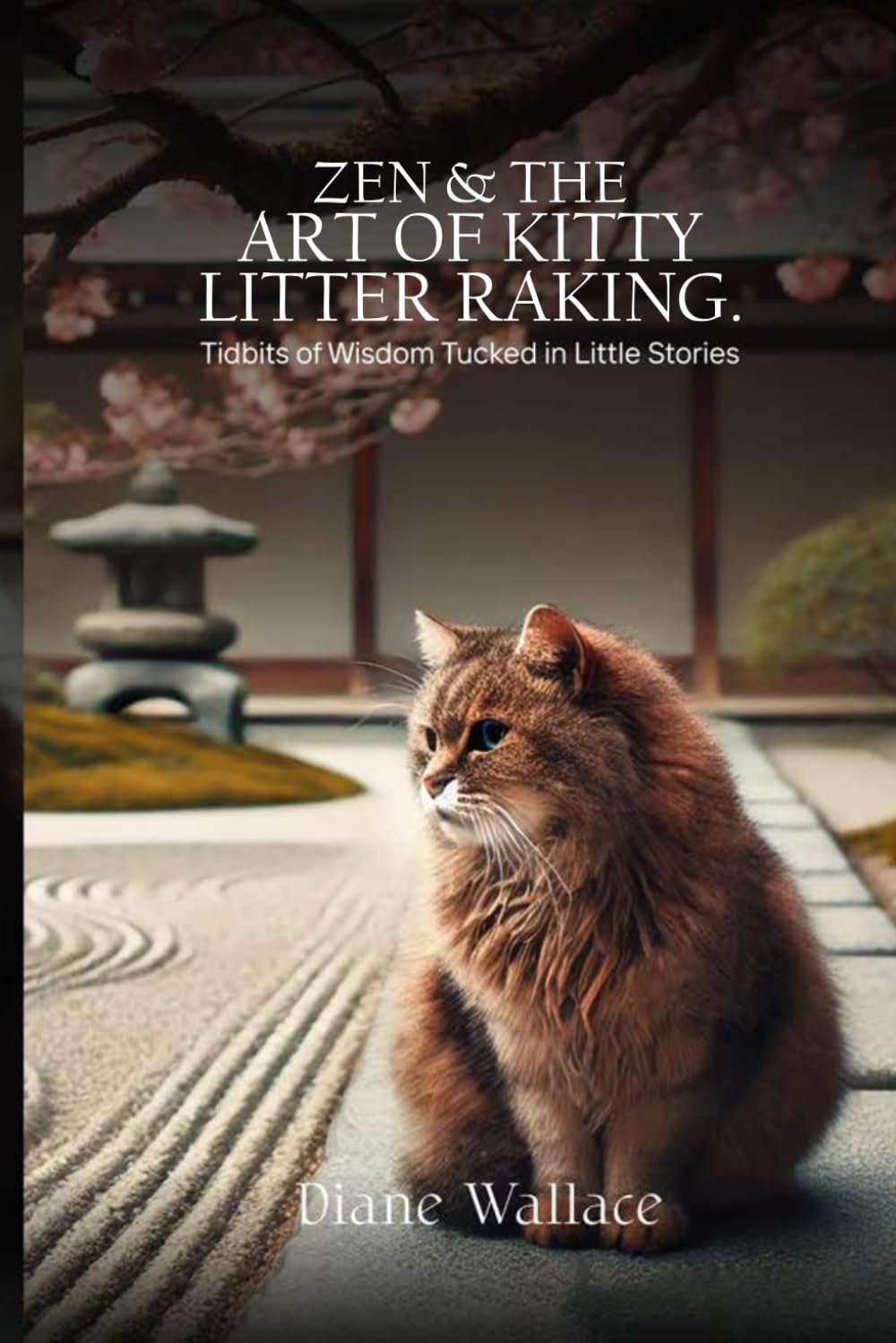
Diane Wallace's Zen and the Art of Kitty Litter Raking announces its method in a joke: the path toward insight might begin with the least glamorous household chore imaginable. Her short pieces…
Books worth discovering. Authors worth knowing.
Diane Wallace's Zen and the Art of Kitty Litter Raking announces its method in a joke: the path toward insight might begin with the least glamorous household chore imaginable. Her short pieces reportedly roam through everyday mishaps, meals, animals and missing dentures, looking for small moments of clarity. The book belongs to the tradition of the…
Considered reviews, grounded in the book’s documented promise.
Diane Wallace's Zen and the Art of Kitty Litter Raking announces its method in a joke: the path toward insight might begin with the least glamorous household chore imaginable. Her short pieces reportedly roam through everyday mishaps, meals, animals and missing dentures, looking for small moments of clarity. The book belongs to the tradition of the comic personal essay, in which observation must do the work that grandeur usually claims for itself. Its central ambition is modest but not trivial: to make ordinary life look worthy of close attention.
The joke is also a way of seeing
A writer can call the mundane profound and still fail to show why. The stronger comic approach allows a precise awkward detail to unsettle the narrator's certainty. Kitty litter is an excellent emblem because it is inescapably practical; no philosophy cleans the box for you. Wallace's chosen title suggests that attending to an unpleasant routine may reveal something about patience or resistance. The reader should not have to accept a grand revelation. A small shift in perception can be enough, especially when the humor remains honest about the mess.
A vignette must know when to stop
Short essays can carry their own internal rhythm: setup, observation, surprise and afterthought. Too elaborate a conclusion may explain the joke away. Too little reflection can leave the piece as a pleasant anecdote with no lasting resonance. Wallace's book description promises nuggets of wisdom, but the most convincing essays often leave room for readers to reach a slightly different insight. Evaluating the actual balance requires reading a representative sequence; the available record establishes the topics and short-form design.
A spirituality that lives indoors
The book's use of Zen appears conversational rather than doctrinal. Readers should not mistake a playful title for formal Buddhist instruction. Its emphasis on gratitude, mindfulness and curiosity places it near contemporary reflective nonfiction, but its humor may keep abstract virtues from becoming solemn instructions. This distinction matters for audience: someone skeptical of self-help prescriptions may still enjoy a narrator willing to laugh at herself. The author’s own website describes an emotional and spiritual journey grounded in daily experiences, rather than a systematic philosophical theory.
The dignity of ordinary people and things
Personal essays often become memorable through their respect for apparently unimportant moments. An animal's habit, a meal or a forgotten object may contain more emotional truth than a staged epiphany. The potential gift of Wallace's collection is to suggest that attention itself is a moral practice. The risk is that every anecdote ends with a tidy lesson, diminishing the oddness that made it interesting. These are useful standards for a future close reading, not claims that the book either succeeds or fails by them.
A companionable scale
At roughly seventy pages, the work may be experienced in short sittings rather than in a single sustained argument. That structure can suit readers looking for a reflective pause in the day. It also means variety of tone is important: humor needs moments of stillness, and wisdom needs enough self-doubt to avoid sounding prepackaged. Wallace's reported background as a columnist and longtime personal essayist makes the form understandable, but biography cannot substitute for a textual judgment.
Comic timing and the shape of wisdom
Humorous essays can go wrong when the writer insists that every mishap must have a lesson. A missed appointment or embarrassing error may be funny precisely because its meaning remains uncertain. Wallace's promise of insights tucked inside stories is most persuasive if the point arrives as an aftertaste rather than a banner. That kind of restraint requires trust in the reader and an ear for the sentence that should end the piece. Her columnist background may be relevant to this economy, though the actual craft must still be measured in the prose itself.
A counterweight to spectacular self-improvement
Contemporary self-help often proposes dramatic reinvention, complete with milestones and before-and-after images. A book about litter boxes and dentures suggests a less punitive understanding of a life. Improvement may be as simple as seeing an ordinary irritation with a new measure of humor. That can make the text companionable rather than directive. It also has limits: a moment of insight does not dissolve structural trouble or serious grief. The essays are best understood as invitations to attention, not promises that cheerful perception will cure difficulty.
Why small essays accumulate
A vignette collection develops a cumulative portrait through repetition and difference. Readers meet a voice whose habitual concerns emerge from many subjects. In Wallace's case, gratitude, curiosity and humor appear repeatedly in the public description. If the pieces allow those qualities to change register—from playful to reflective to unexpectedly candid—the collection may achieve more than a sequence of amusing sketches. A full review should judge which stories are strongest and whether the order creates movement. Until the whole collection is read, the fair praise concerns the distinctive premise and scale, not proven consistency across every entry.
Humor as a form of modest courage
The ability to laugh at ordinary embarrassment is not necessarily denial. It can be a recognition that a person survives countless small defeats without becoming the sum of them. Wallace's collection promises precisely that kind of companionable perspective. Rather than presenting a heroic life lesson, the personal essay can hold up the peculiar detail a reader might otherwise dismiss. A serious critic should still ask which reflections surprise and which seem too neatly packaged. The invitation is attractive because it does not require the reader to become extraordinary before finding meaning in a day.
Who will value this book
A likely pleasure for readers who enjoy gently comic essays, small observations and spirituality without elaborate doctrine. It is not a manual for meditation and should not be held to that expectation. The author description is unusually clear; a definitive review would still need close reading of the individual pieces.
Scope of this assessment
This is a research-based editorial review drawn from identified bibliographic, author and publisher sources. It considers the work’s documented premise and the critical questions it invites, without claiming a complete firsthand reading. No unverified scene, character action or ending is asserted.
About the book.
An evidence-bounded critical introduction to humorous personal essays and reflective vignettes. Published descriptions support the stated premise; interpretations are identified as editorial analysis, not confirmed plot details.
This review concerns a book marked sponsored in the current MarketAnyBook queue. Sponsorship is disclosed, and all observations remain research-based.
Found a book worth opening?
Books worth discovering. Authors worth knowing.
Return to the Journal →