
Devil's Doorway
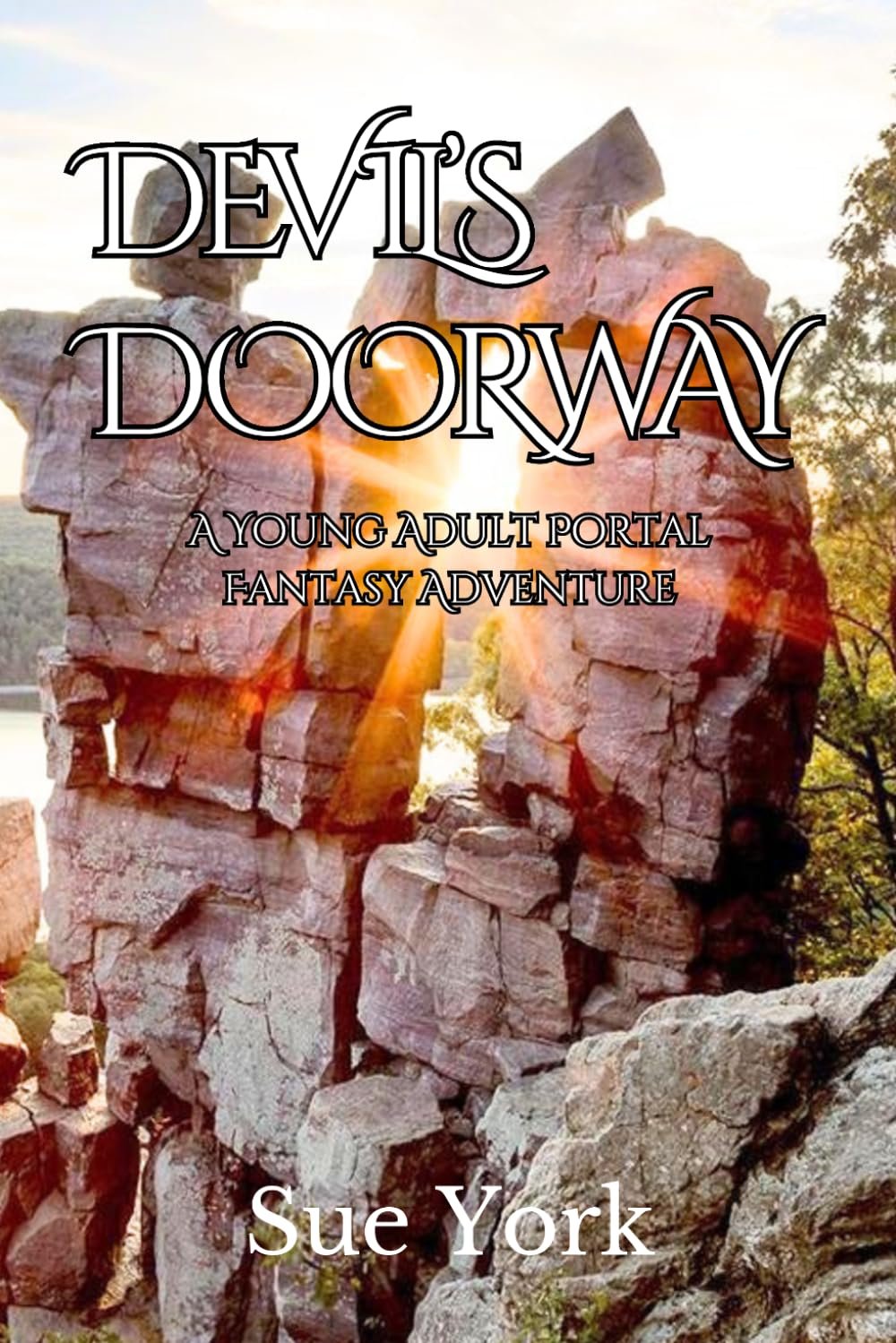
Devil's Doorway begins in a landscape whose oddities might once have been dismissed as local curiosities: four teenagers find an old cloth, an inexplicable arrangement of rocks and voices in…
Books worth discovering. Authors worth knowing.
Devil's Doorway begins in a landscape whose oddities might once have been dismissed as local curiosities: four teenagers find an old cloth, an inexplicable arrangement of rocks and voices in apparently empty trees while out hiking before work. Sue York turns these clues into the possibility of passage through time. The strength of the premise is its…
Considered reviews, grounded in the book’s documented promise.
Devil's Doorway begins in a landscape whose oddities might once have been dismissed as local curiosities: four teenagers find an old cloth, an inexplicable arrangement of rocks and voices in apparently empty trees while out hiking before work. Sue York turns these clues into the possibility of passage through time. The strength of the premise is its gradual erosion of common sense. A familiar path becomes difficult to explain, and ordinary young people must decide whether to trust their senses or the reassuring idea that every mystery has a conventional solution.
The ordinary timetable of adventure
The hiking trips occur before the teenagers report for work. This small detail anchors the story in responsibility and routine; it gives the magical disruption something tangible to interrupt. Time-travel fantasy depends on that contrast. If characters begin as people already prepared to enter legend, the impossible is less startling. Here, the prospect of vanished hours or changed history can disturb the schedules that kept their days comprehensible. A reviewer should watch whether the novel maintains those ordinary stakes after its larger adventure begins.
Clues that challenge perception
A piece of ancient-looking fabric, rocks in water and disembodied whispers form an effective sequence because none demands the same explanation. Material history, geography and sound pull the children toward competing hypotheses. The mystery would work best if their attempts to investigate remain coherent rather than serving as automatic permission for supernatural revelation. In young-adult fiction, curiosity becomes character when it produces difficult decisions, not only faster plot.
The doorway as moral border
Entering another time is an act of crossing into other people's lives. The familiar pleasure of a portal story may conceal questions about intervention: can visitors change events without harming those whose history they do not understand? Do they treat the past as an exotic landscape or a world with its own ordinary people? York's short public description leaves the destination and rules unstated. That restraint could help preserve suspense, but it also means a critic must not invent the era, cultural setting or outcome.
The pleasure of a group dynamic
Four teenagers make the story potentially richer than a lone heroic journey. A group must distribute fear, skepticism, leadership and guilt; nobody can simply decide on behalf of everyone without consequence. The description does not name the characters or their relationships, so it would be unfair to describe their personalities. The relevant question for reading is whether they develop distinct voices and whether their disagreements matter to the decisions that follow.
Returning to the known world
The advertised question is whether they can get back once they enter. A return journey acquires meaning only if the travelers have learned something that makes their former world less straightforward. Even a modest time-slip adventure can explore responsibility, friendship and the appeal of mysterious places. The public synopsis establishes a clear plot engine, while offering no basis for asserting how elegantly its mechanics or ending are handled.
Time travel and the burden of explanation
A portal story benefits from clear rules, but too much explanation can turn wonder into a technical manual. The stones, fabric and whispers in York's synopsis create an atmosphere of accumulated anomaly. Each detail seems ordinary in isolation, so their combination invites a change in how the landscape is read. The best first act would allow the teenagers to make plausible guesses before the impossible explanation wins. Readers will be less concerned with a perfect theory of time than with consequences they can follow. If a choice changes the past, the novel must make that change matter to the people who inhabit it.
The danger of becoming tourists in history
When characters enter another time, they often behave as if the destination exists for their entertainment. A more searching adventure acknowledges that the people they meet have their own beliefs and vulnerabilities. What an outsider takes for a clue may be somebody else's precious possession. The book's public description leaves the historical era unspecified, so a reviewer cannot judge its cultural accuracy or historical research. Yet that absence is a reminder of what the eventual manuscript must answer. The past is not a museum in which contemporary visitors are always the only important people.
A four-person moral experiment
An ensemble adventure can dramatize the way risk is distributed unequally. One teenager may want to continue; another may worry about obligations at home; another may feel responsible for the group's safety. These are hypothetical roles, not verified character descriptions. They show why the number of travelers is narratively significant. A strong group story creates tension among genuine forms of courage. Deciding to turn back may be as brave as crossing the doorway, and the consequences of choosing together can make the journey feel more human.
How mystery becomes memory
The adventure's end will matter not only because the children might get home. It will matter because their memories of what happened cannot be shared easily with people who never crossed the threshold. Portal fantasy often produces a secret history within a group of friends. That can strengthen intimacy or create a burden of isolation. The supplied setup makes that possibility imaginable without confirming it as an actual plot event. A critic should withhold a judgment on the ending until its events are known while recognizing the emotional possibilities of the return.
A mystery that begins in observation
The most persuasive detail in the synopsis may be the act of noticing: a cloth that does not seem to belong to this century, an inexplicable formation in the water, a sound with no visible source. Mystery begins when familiar things refuse familiar explanations. That is why outdoor settings suit portal fiction so well. A trail can appear unchanged while holding clues that alter every assumption about it. If York allows the four characters to argue about the clues before committing themselves, the eventual passage will feel like an earned decision rather than an authorial shortcut. The simplest narrative intelligence is to let their curiosity have consequences.
Who will value this book
An accessible prospect for readers who like time portals, outdoor mysteries and teenage ensemble adventures. The supernatural setting and historical destination are insufficiently documented to make stronger claims. This is a premise-based review draft, awaiting a fuller synopsis or sample for final appraisal.
Scope of this assessment
This is a research-based editorial review drawn from identified bibliographic, author and publisher sources. It considers the work’s documented premise and the critical questions it invites, without claiming a complete firsthand reading. No unverified scene, character action or ending is asserted.
About the book.
An evidence-bounded critical introduction to young-adult time-travel mystery and outdoor adventure. Published descriptions support the stated premise; interpretations are identified as editorial analysis, not confirmed plot details.
This is an unsponsored, research-based editorial review, not a claim to firsthand reading of the complete book.
Found a book worth opening?
Books worth discovering. Authors worth knowing.
Return to the Journal →