
The Return To Real Love
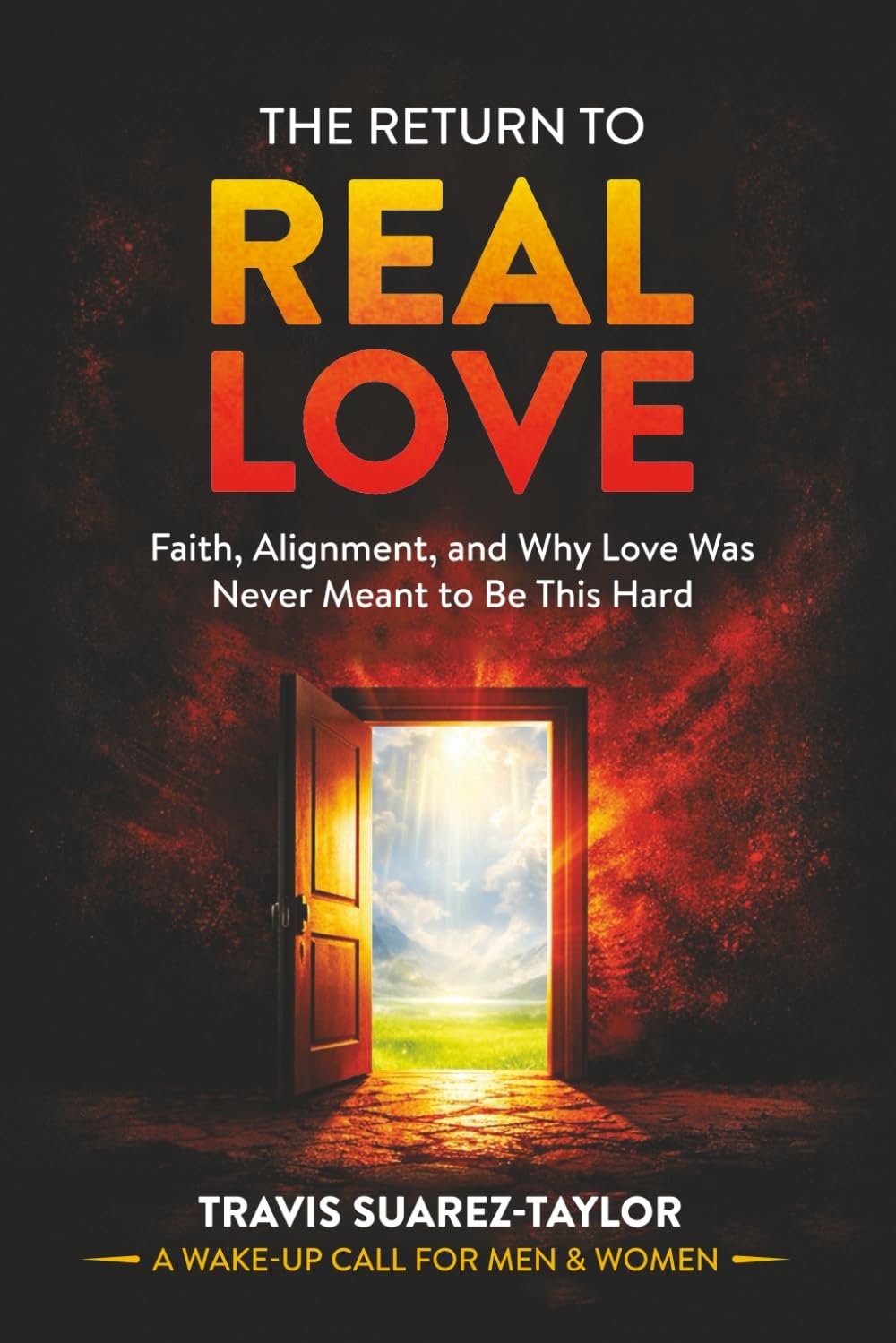
The Return to Real Love proposes that emotional safety is not a consolation prize after romance but a condition of love worthy of the name. Travis Suarez-Taylor writes for readers who repeatedly…
Books worth discovering. Authors worth knowing.
The Return to Real Love proposes that emotional safety is not a consolation prize after romance but a condition of love worthy of the name. Travis Suarez-Taylor writes for readers who repeatedly find themselves in confusing or exhausting relationships and want to choose alignment and self-trust without surrendering their identities. The formulation is…
Considered reviews, grounded in the book’s documented promise.
The Return to Real Love proposes that emotional safety is not a consolation prize after romance but a condition of love worthy of the name. Travis Suarez-Taylor writes for readers who repeatedly find themselves in confusing or exhausting relationships and want to choose alignment and self-trust without surrendering their identities. The formulation is direct, but it places a useful challenge before popular romance culture: why do we so often mistake anxiety, unpredictability and sacrifice for evidence of depth? The title's promise is not a return to someone else; it is a return to standards that make self-respect possible.
What alignment can and cannot mean
Alignment is a seductive word because it seems to promise effortless compatibility. A more useful reading treats it as a disciplined comparison between stated values and repeated behavior. Two people may share aspirations while disagreeing about practical needs; they may also be emotionally safe even when they are not always comfortable. A strong guide must distinguish healthy difference from manipulation and resist offering a vocabulary so broad that it explains every disappointment after the fact. The subtitle puts that balance at the center of the book's claim.
Safety before intensity
Much relationship advice promises techniques for keeping another person's attention. Suarez-Taylor's framing moves the emphasis toward one's own capacity to feel secure and to set boundaries. That is a productive shift, particularly for readers taught to treat self-erasure as devotion. Its limitation is the risk of turning intimacy into a checklist, as though relationships can be made risk-free by choosing correctly. Even safe relationships involve vulnerability. The meaningful distinction lies in whether vulnerability is respected rather than exploited.
The cost of repetition
The book is positioned for people who find themselves repeating unhealthy patterns. That may imply learned expectations, fear of abandonment or mistaken ideas about obligation; it does not license a reviewer to diagnose the reader or the author. Self-help writing is strongest when it treats patterns as possibilities to examine, not universal labels. A question such as whether conflict leaves both people with more understanding can be more illuminating than dividing relationships into absolute categories of good and bad.
Advice versus lived reality
Brief relationship guides have to choose between breadth and depth. Public audiobook listings identify a relatively compact presentation, so readers should expect concentrated principles rather than an exhaustive account of trauma, attachment and social circumstances. Good advice acknowledges that leaving a harmful relationship can involve financial, family and safety constraints, not merely a change in mindset. The title's promise is best understood as a vocabulary for reflection, not a guaranteed remedy or a replacement for individual professional support.
A useful act of refusal
At its best, the language of real love could give readers permission to refuse arrangements in which affection depends on silence or accommodation without limit. That is a humane idea. The book's merit should ultimately be judged by the clarity of examples and by whether its counsel respects individual circumstances rather than issuing a universal verdict. The public description supports the premise; it does not allow certainty about the originality or effectiveness of every recommendation.
The language of self-abandonment
The subtitle's strongest phrase is the promise of love that does not cost the reader themselves. It suggests that some relationships become organized around the gradual abandonment of private preferences, friendships or convictions. That process is rarely announced as an explicit demand. It can be disguised as flexibility or proof of commitment. A useful book will teach readers to notice patterns rather than treat one disagreement as a fatal sign. The distinction matters because healthy intimacy also requires compromise. Self-preservation cannot mean never being inconvenienced; it means retaining the freedom to speak honestly and to refuse what violates basic dignity.
The problem of the perfect partner
Self-help texts sometimes imply that an emotionally mature person can avoid heartbreak by making the right selection at the beginning. Such certainty is neither realistic nor kind. People change, circumstances tighten and mutually respectful partners still fail one another. Suarez-Taylor's framing will be more humane if alignment is described as a continuing process of conversation and repair rather than a one-time compatibility test. The published description offers an opening toward that view but does not establish the exact advice. A reader should treat practical examples as hypotheses to test against lived circumstances, not universal laws.
Emotional safety as a shared practice
Safety is not simply the absence of conflict. It is also the expectation that conflict will not become punishment. A couple may disagree intensely while each still trusts that the other will not use fear or humiliation to win. This makes emotional safety a dynamic achievement rather than a personality label. The book's declared attention to self-trust can support that understanding if it encourages both boundaries and accountability. A critic should also ask how the text addresses situations in which social or financial dependence restricts someone's choices. Advice that ignores such constraints risks blaming readers for circumstances they cannot easily change.
When simple counsel is useful
The brevity of this kind of relationship book can be an advantage. A few memorable distinctions may help somebody notice a pattern before it becomes entrenched. The danger is formula: emotionally rich lives are not a set of signs to score and discard. Suarez-Taylor's title is attractive because it insists that affection and self-respect need not be enemies. Its best readership will be people who want language for reflection and conversation. Those requiring crisis support, trauma therapy or legal guidance need services beyond any general relationship guide.
A book can offer permission without certainty
The best advice literature does not promise that every reader will make the same decision after receiving its principles. It helps people ask clearer questions. Someone might recognize a pattern of disrespect and choose to leave; another might discover that a difficult conversation is possible within a fundamentally safe relationship. The important distinction lies in choice made without fear of punishment. Suarez-Taylor's stated focus on emotional safety offers a constructive vocabulary for those decisions. The work will be more enduring if it treats self-knowledge as an ongoing practice rather than an identity one achieves by declaring oneself healed. That is a standard of usefulness worth carrying into the text.
Who will value this book
A relevant short read for adults seeking introductory language about boundaries, mutual respect and emotional safety in relationships. Readers needing tailored counseling, safety planning or evidence-based treatment should look beyond this volume. The assessment evaluates the stated approach, not independently tested outcomes.
Scope of this assessment
This is a research-based editorial review drawn from identified bibliographic, author and publisher sources. It considers the work’s documented premise and the critical questions it invites, without claiming a complete firsthand reading. No unverified scene, character action or ending is asserted.
About the book.
An evidence-bounded critical introduction to relationship self-help and emotional-boundary guidance. Published descriptions support the stated premise; interpretations are identified as editorial analysis, not confirmed plot details.
This review concerns a book marked sponsored in the current MarketAnyBook queue. Sponsorship is disclosed, and all observations remain research-based.
Found a book worth opening?
Books worth discovering. Authors worth knowing.
Return to the Journal →