
Dancing Fools and All That Jazz
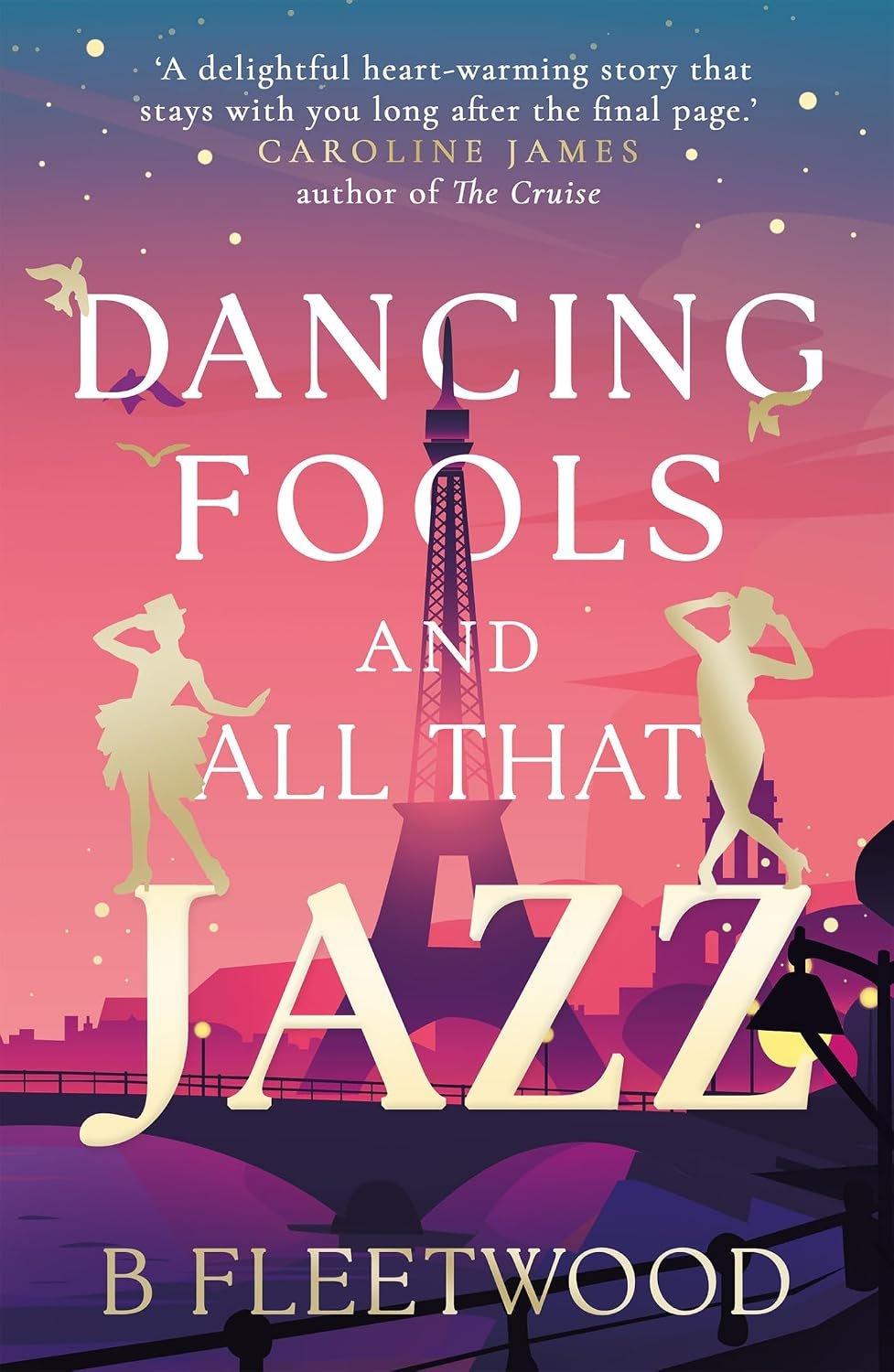
Dancing Fools and All That Jazz understands that taking an amateur dance competition seriously need not make its participants foolish. B Fleetwood's contemporary novel follows Clarissa's women's…
Books worth discovering. Authors worth knowing.
Dancing Fools and All That Jazz understands that taking an amateur dance competition seriously need not make its participants foolish. B Fleetwood's contemporary novel follows Clarissa's women's dance group from Manchester to Paris for the Expression finals, where rivalry and sabotage complicate the ambitions of women who also carry private domestic…
Considered reviews, grounded in the book’s documented promise.
Dancing Fools and All That Jazz understands that taking an amateur dance competition seriously need not make its participants foolish. B Fleetwood's contemporary novel follows Clarissa's women's dance group from Manchester to Paris for the Expression finals, where rivalry and sabotage complicate the ambitions of women who also carry private domestic struggles. The ensemble includes a designer, a nanny and a dentist, making its central community one formed through enthusiasm rather than profession or family obligation. Its richest question is whether a hobby can become a place where adults reclaim parts of themselves that life's serious duties have crowded out.
Paris as aspiration and pressure
A competition trip offers a compact theatrical setting. Characters already committed to a shared purpose cannot easily avoid one another, and the spectacle of an international final sharpens nerves that ordinary rehearsals may have concealed. Yet the destination matters less as tourism than as a magnifier of existing tensions. A story about mature women pursuing public achievement risks making their ambition quaint. The stronger approach is to grant that the prize matters to them as much as an equivalent award would to younger or more conventionally celebrated competitors.
Five women, competing claims
Publisher descriptions name Monica's troubled marriage, Ruby's romantic uncertainty, Ingrida's secret marriage, Fay's hopes of reconnecting with her daughters and Asha's wedding preparations. These strands suggest a deliberate refusal to give every woman the same lesson. Their different circumstances can create productive friction within a shared project. The challenge for an ensemble is balance: a subplot should illuminate character rather than merely fill time between group scenes. The dance troupe becomes convincing when its members sometimes disagree about what loyalty requires.
Movement as a democratic art
Dance demands discipline and synchronization, but it also permits distinctive bodies and personalities to become expressive. That makes it a resonant vehicle for a novel about adult women who resist being defined by a single social role. An author need not turn every rehearsal into a metaphor for friendship; the physical comedy and effort of the art may carry their own meaning. Fleetwood's description promises warmth and amateur enthusiasm, a combination that can celebrate practice without suggesting that only winning validates the undertaking.
Uplift with a little abrasion
The genre label UpLit can invite a too-easy expectation of kindness and happy endings. But the published synopsis includes betrayal, theft and sabotage, promising that an agreeable group is not protected from selfishness. The effectiveness of uplifting fiction depends on the credibility of what it asks readers to forgive. If consequences are neatly waived to maintain a cheerful atmosphere, the book may feel slight; if the characters recognize the cost of trust, warmth can emerge as an achievement rather than a default mood.
A narrative shared among dancers
The author's site describes five key dancers as narrators. Multiple perspectives could protect the story from making Clarissa the sole interpreter of the group's experience. It could also fragment momentum if the voices feel interchangeable. In this form, the differences in how each woman regards competition, romance and friendship are especially important. The premise has a natural comic surface but the structure promises room for regret and vulnerability. A full review should ask whether the voices are distinct enough to make the ensemble's collective outcome satisfying.
The invitation behind the spectacle
There is cultural value in fiction that grants older or otherwise overlooked women permission to be competitive, sensual and ridiculous without reducing them to a joke. The interest is not that a dance troupe will suddenly change the world. It is that the women's ordinary lives contain more unfinished possibility than their surrounding institutions may recognize. Fleetwood's publicly described story makes a credible promise of that pleasure. The precise balance of humor, conflict and sentiment must be tested in the complete novel.
The ensemble beyond a single heroine
An ensemble novel has the unusual capacity to show a shared event from several partially incompatible perspectives. A late rehearsal may seem like an inconvenience to the character tending to family, while to another it represents the one hour of the week that belongs entirely to her. The author describes multiple narrators, a form well suited to that complexity. A critic must still attend to voice: if everyone uses the same wit and emotional vocabulary, the device may amount to rotating labels. If each woman brings a different measure of what success would mean, their collective dance can become much more than a pleasant plot.
Competition and friendship can coexist
The popular assumption that women ought to be unfailingly supportive of one another can make competitive desire look suspect. Fleetwood's premise offers a more generous account. Friends can want a prize fiercely; they can also resent another person's attention or ability. Such feelings do not necessarily destroy a community if the people involved can speak about them. Sabotage and betrayal complicate the novel's advertised warmth, making the final test not simply whether the dancers win but whether their relationships can withstand a more truthful understanding of one another.
The dignity of amateur art
There is something quietly radical in taking a nonprofessional creative practice seriously. The women in the troupe are not trying to become world-famous performers. Their investment comes from being allowed a project that is neither paid labor nor domestic duty. Performing in public involves the risk of ridicule, especially for women who may have learned to make themselves useful rather than visible. The book's most attractive promise is that ambition does not expire with youth and that play can have consequences deep enough to deserve fiction's respect. Humor need not cancel that dignity.
A feel-good ending must be earned
Uplifting fiction promises readers a release from cynicism, but the promise is most satisfying when it knows what cynicism protects us from. Divorce, estrangement, romantic uncertainty and secret decisions all appear in the public synopsis. They should not become temporary inconveniences erased by the spectacle of a final performance. A successful conclusion could celebrate group achievement while leaving some private troubles unresolved, trusting readers to recognize that friendship is valuable even when it cannot repair every life. The available evidence suggests that Fleetwood is reaching for that warm complexity; a complete reading is needed to judge how well she balances it.
Who will value this book
Appealing to readers of ensemble friendship fiction, light contemporary humor and stories about artistic ambition in middle life. The publisher and author describe an uplifting tone but also relationship difficulties and sabotage. The review evaluates those documented strands without asserting a particular resolution.
Scope of this assessment
This is a research-based editorial review drawn from identified bibliographic, author and publisher sources. It considers the work’s documented premise and the critical questions it invites, without claiming a complete firsthand reading. No unverified scene, character action or ending is asserted.
About the book.
An evidence-bounded critical introduction to uplifting contemporary women’s friendship fiction. Published descriptions support the stated premise; interpretations are identified as editorial analysis, not confirmed plot details.
This review concerns a book marked sponsored in the current MarketAnyBook queue. Sponsorship is disclosed, and all observations remain research-based.
Found a book worth opening?
Books worth discovering. Authors worth knowing.
Return to the Journal →