
21 Days of Fear
Lucas has twenty-one days, and one letter at a time, to learn whether his missing sister is alive.
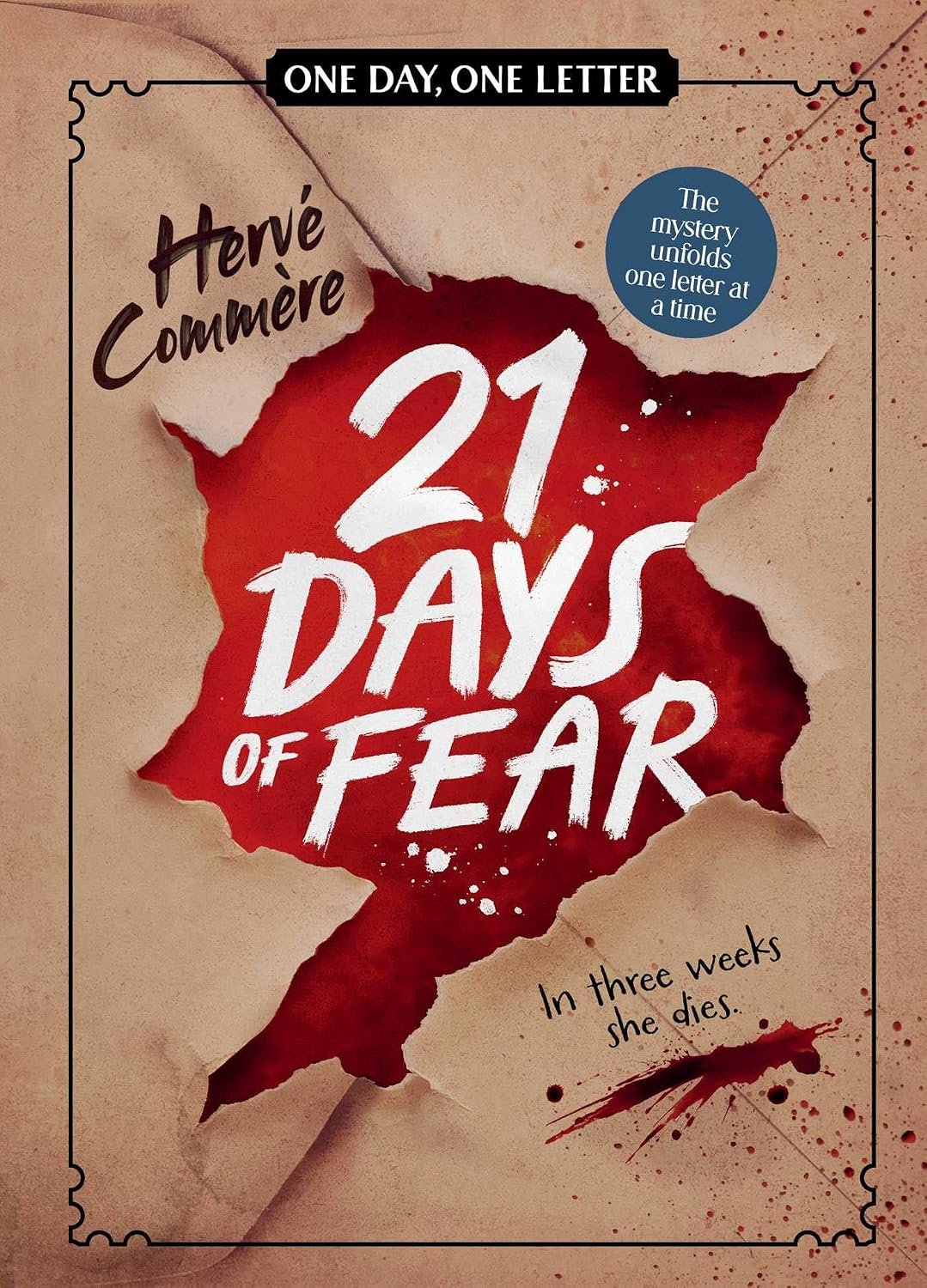
Hervé Commère’s letter-a-day thriller.
21 Days of Fear is Hervé Commère’s young-adult thriller, built as one day and one letter. Simon & Schuster Books for Young Readers published the 424-page paperback on August 18, 2026, ISBN 9798347119615, for ages 14 and up. Lucas’s sister disappeared ten years ago, in front of him. A note arrives. He has twenty-one days to find the truth, and to decide what he will give up if she is alive.
One letter, then another
The clock the book uses
The format is the premise. Twenty-one days, twenty-one letters, a chapter a day. The publisher says the pace is built to raise the suspense. Every action is watched. Every choice is counted. Lucas is not only searching. He is being scored. That is a thriller structure a reader can see before the first letter.
The family is already broken when the note arrives. His mother is in a deep depression. His father will not speak of what happened. Lucas is stuck in guilt, because the disappearance happened under his nose. The note does not repair that. It gives the guilt a deadline. Twenty-one days to save her, if she is alive. Twenty-one days to find out if he can stand the cost.
The question on the publisher page is the moral one: what would you do to bring your sister back from the dead? The book allows that she may not be dead. The title prefers fear to certainty. This feature will not say which.
That is the public shape of the book, and it is the shape this feature stays inside. The later pages can surprise. They are not required to know whether the premise is worth opening.
A reader can take the date, the form, and the named trouble and decide. Nothing here claims a full reading, and nothing here adds a scene the publisher or the review did not already put on the table.
What the letters are for
A letter a day is a slow drip and a hard limit. Lucas cannot skip to the answer. The reader, in the form the publisher describes, cannot either. The unique format is the selling point and the constraint. A 424-page book has room for the family and the hunt. The letters are the spine.
The disappearance is ten years old. That gap is the wound. A thriller about a fresh kidnapping is a chase. A thriller about a decade-old vanishing is a house that never got well. Lucas is a teen in the present and a child in the memory. The note collapses those two times.
Simon & Schuster is the publisher. The grade band is 9 and up. The book has been translated, on the author note, into Japanese, Chinese, and English. This listing is the English edition. The sister, the note, and the count of days are the story.
That is the public shape of the book, and it is the shape this feature stays inside. The later pages can surprise. They are not required to know whether the premise is worth opening.
A reader can take the date, the form, and the named trouble and decide. Nothing here claims a full reading, and nothing here adds a scene the publisher or the review did not already put on the table.
Who it is for
The book is for a reader who wants a countdown and can stand a family that has already failed once. It is a poor fit for a reader who wants a mystery that opens with a body in the first chapter. The body, if there is one, is ten years out of sight.
The public record stops at the note, the guilt, and the twenty-one days. I have not read the last letter. The ending stays in the book.
The verified part worth opening is the format itself: one day, one letter, a sister who might be alive, and a boy who is being watched while he decides.
That is the public shape of the book, and it is the shape this feature stays inside. The later pages can surprise. They are not required to know whether the premise is worth opening.
A reader can take the date, the form, and the named trouble and decide. Nothing here claims a full reading, and nothing here adds a scene the publisher or the review did not already put on the table.
More Journal stories are on the Journal, and other book articles are collected in Book Reviews.
About the book.
Simon & Schuster published 21 Days of Fear on August 18, 2026, a 424-page paperback. Lucas has twenty-one letters and twenty-one days to learn the truth about the sister who vanished ten years ago.
A short note
I like that the clock is also the form. The part worth opening is the note: a sister gone for ten years, a family that stopped speaking, and twenty-one days in which Lucas is watched. Commère fits the book because the suspense is built into the chapter count. I have not read the last letter. The deadline is the part I would hand someone first.
This MarketAnyBook feature is based on the publisher listing and verified public information. It is not a full-book review. Book links may be affiliate links.
Found a book worth opening?
Books worth discovering. Authors worth knowing.
Return to the Journal →