
Pokécology An Illustrated Guide to Pokémon Ecology
An illustrated field guide treats Pokémon as creatures with habitats, not only as a game.
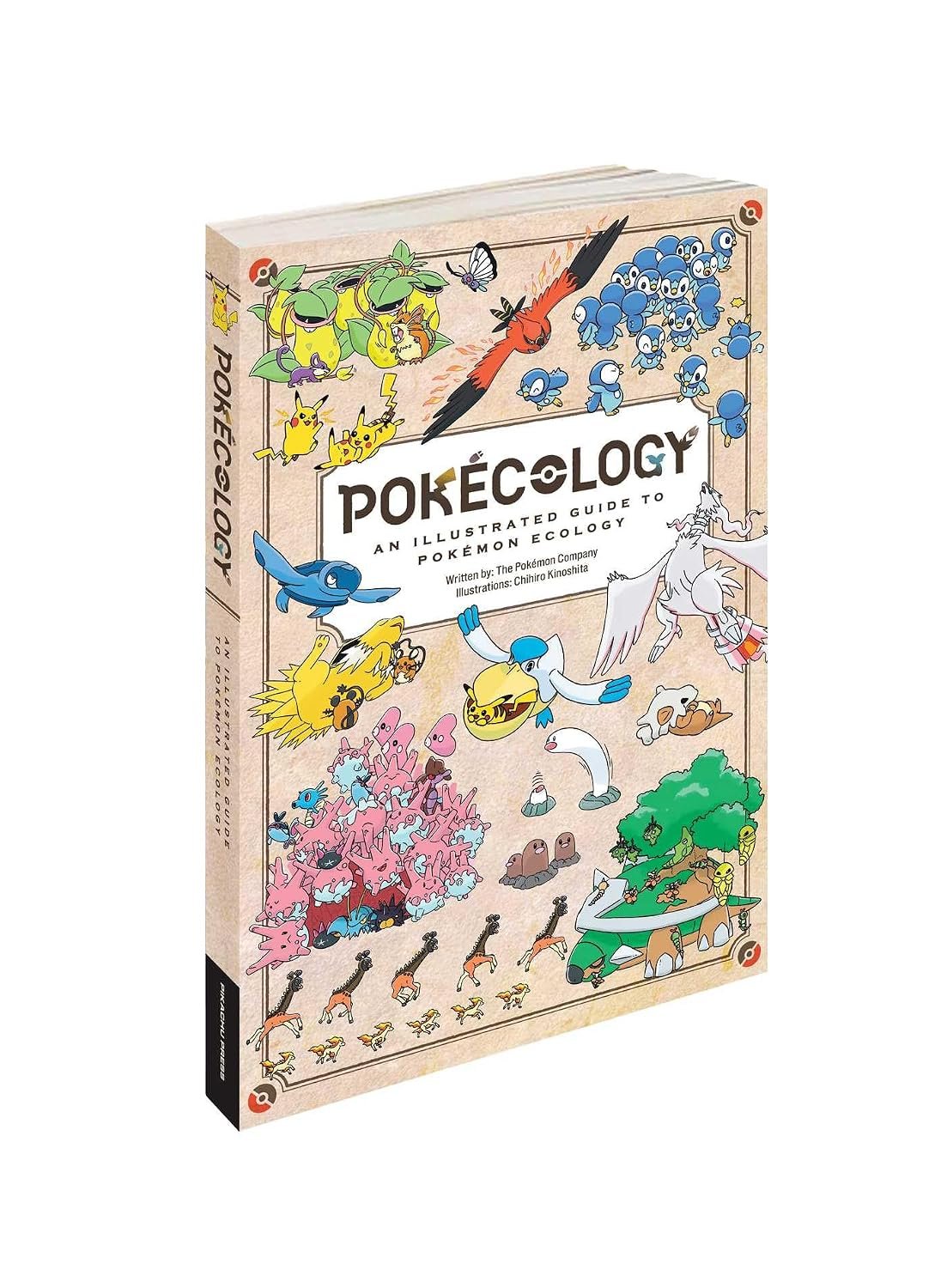
Pokédex data becomes the starting point for an ecology lesson.
Pokécology asks a playful question in a serious frame: what would the lives of Pokémon look like if a field biologist wrote them down?
An editorial introduction to the book, its premise and the story surrounding it.
The official publisher page describes Pokécology as a first look into the lives of Pokémon.
Rather than a story campaign, the book uses Pokédex data as source material. Vivid illustrations sit beside observations about similarities, differences, and relationships among Pokémon ecologies. The result is closer to a natural-history album than to a novel.
A field guide for a fictional world
Simon & Schuster places the title in the Pokemon Pikachu Press line and dates the trade paperback to July 28, 2026. The page says the author and illustrator studied animal behavior and ecology, which explains the book’s habit of treating invented creatures with the language of habitat and adaptation.
That approach gives readers a way back into a familiar world without requiring a plot recap. A Pikachu on a card becomes a creature with a place to live, a diet to infer, and neighbors to compare.
Who it is for
The listed range, grades one and up and ages eight to ninety-nine, signals a family reference book. It can sit with a player who already knows the creatures, or with a reader who simply likes illustrated nature books and is willing to accept a fictional bestiary.
Other illustrated and series features are gathered in Book Reviews.
About the book.
Simon & Schuster lists the book under Pikachu Press, edited and translated by Pikachu Press, at 208 pages, for readers from about age eight.
This article is presented as a MarketAnyBook Book Feature based on supplied materials and verified public information. It is not presented as a full-book review.
Found a book worth opening?
Books worth discovering. Authors worth knowing.
Return to the Journal →