
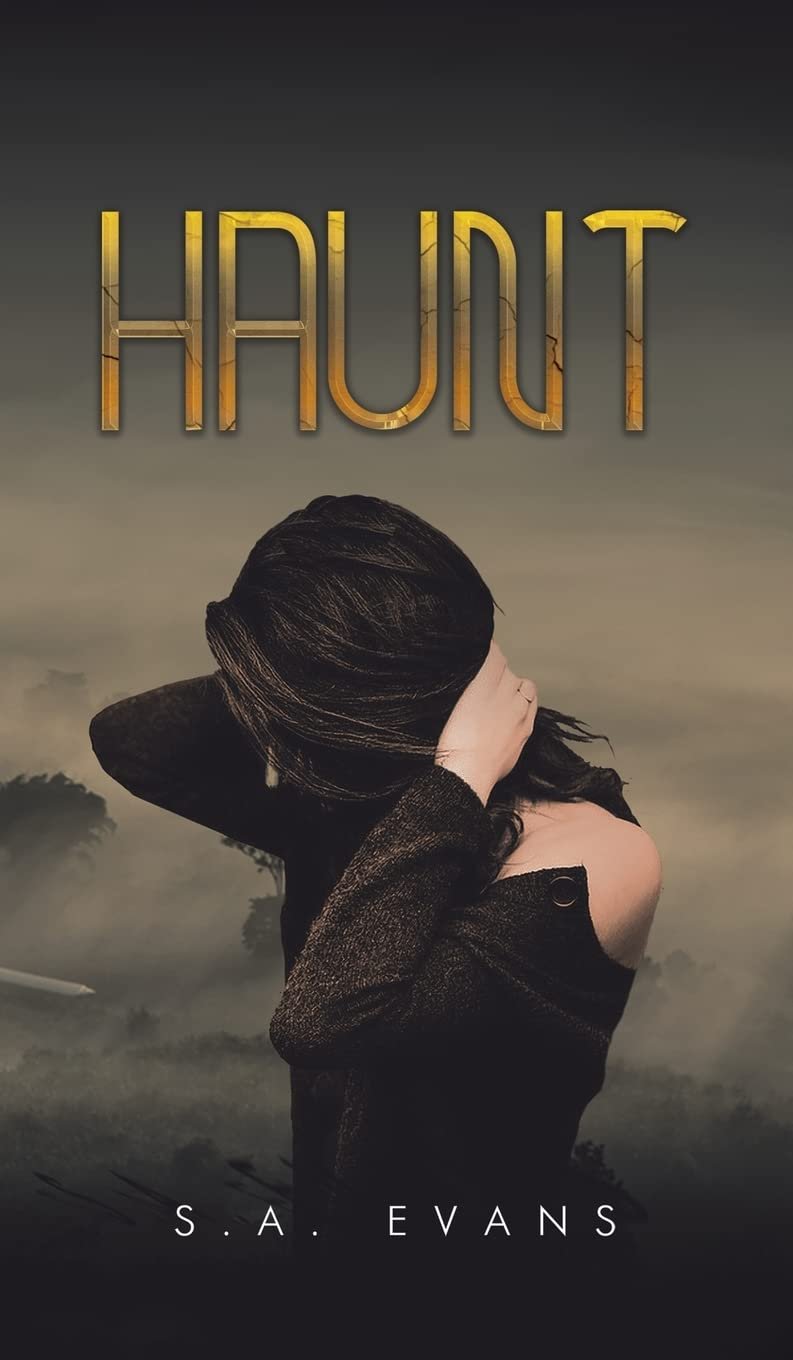
Haunt
Four offbeat situations explore how memories, habits and ambitions can haunt ordinary lives.
Books worth discovering. Authors worth knowing.
In a collection of whimsical short stories, the things people cannot let go of prove as unsettling as any ghost.
Short fiction about eccentric lives, uneasy attachments and the oddness hiding inside daily routines.
What does it mean for a person to be haunted? In S.A. Evans’s Haunt, the answer extends beyond the familiar image of a ghost in a dark hallway. The published description introduces a collection of short stories about unusual people whose everyday attachments, routines and ambitions become unexpectedly unsettling. A family man’s attachment to childhood toys, an enigmatic figure’s increasingly difficult walks, a student librarian’s protectiveness toward her space, and an aspiring businesswoman’s compromises offer four distinct starting points. Together they establish a deceptively flexible central idea: the past can follow someone, but so can obsession, uncertainty and the cost of a choice.
The collection is described by booksellers as whimsical, strange and emotionally alert rather than as a sustained exercise in terror. That distinction matters. The title may initially draw readers expecting a conventional supernatural narrative, yet the book’s announced territory is broader and more playful. The descriptions promise humour alongside tension and relationship strain. This feature is based on those published materials, not a claim to have read every story or identified conclusions the listings do not disclose.
More than one meaning of haunting
A short-story collection can use a shared idea in different ways without requiring every character to live in the same fictional world. For Haunt, the advertised connecting thread is the presence of something difficult to dismiss. The word suggests an interruption of ordinary life: a memory that persists, a ritual that turns oppressive, or a desire that begins to control the person who holds it. Evans’s outlined characters occupy different roles, but each offers a recognizable example of how a seemingly small part of someone’s day can acquire disproportionate significance.
The figure attached to childhood toys is especially revealing as a premise. Objects once associated with comfort can eventually carry nostalgia, identity, responsibility, or an unwillingness to let an earlier period end. A toy is not inherently sinister. The story’s premise becomes interesting in the space between affection and dependence. The public description does not reveal what this family man does or how his story resolves, and it would be misleading to supply either detail. What can responsibly be said is that the connection between adult responsibilities and childhood possessions creates an immediate thematic friction.
When an ordinary walk turns unfamiliar
Another advertised story centres on a mysterious man—whose identity is itself placed in question—taking regular walks that become more stressful. Few actions are as ordinary as walking, and that ordinariness gives a writer room to disturb familiar expectations. A route that should restore calm can instead sharpen anxiety when the walker’s experience changes. Is the disturbance in the setting, the person, or the assumptions by which we interpret him? The listing does not answer. Its carefully limited description does, however, show how the collection brings unsettling questions into habitual routines rather than relying solely on unusual locations.
That premise also suits the short form. A brief story need not construct an enormous fictional mythology to unsettle readers. It can establish a repeated action, reveal a shift in how that action feels, and invite readers to reconsider the apparent stability of the opening. Whether Evans takes this particular story toward comedy, suspense or an ambiguous blend remains for the text itself to show. The more useful editorial observation is that the premise makes routine a narrative resource: repetition creates an expectation, and a change within it creates tension.
The library as a place worth defending
The student librarian in the description wants to preserve the sanctity of a cherished space. That phrasing suggests a different sort of haunting. A library is both practical and symbolic: it stores books and knowledge, but it can also represent quiet, order, identity and a sense of belonging. A person who deeply values such a place may react strongly when its rules, atmosphere or meaning are threatened. The dramatic pressure need not involve a visible apparition. It can emerge from what a devoted caretaker feels obliged to protect.
Readers who enjoy fiction about people with intense personal commitments may be drawn to this setup. Devotion is admirable in moderation but can become comic, moving, or alarming when tested. The public description leaves the source of the librarian’s challenge unspecified. That uncertainty is best preserved rather than treated as an invitation to invent a disruptive visitor, a lost book or a climactic confrontation. What is verifiable is a contrast between the character’s cherished ideal of a place and the pressure that threatens to upset it.
Ambition and the price of compromise
The collection’s prospective business owner is described as willing to tolerate almost anything to get her enterprise started. Her predicament connects the book’s oddball characters with an especially recognizable adult concern. Many early projects demand sacrifices; the difficult question is which sacrifices support a meaningful goal and which begin to diminish the person making them. The promotional outline does not tell us the type of business or identify the compromises she makes. It does invite a broader reflection on how ambition can become its own kind of persistent companion.
Placing that scenario beside the other advertised stories widens the volume’s emotional range. Nostalgia, routine, protectiveness and aspiration are ordinary human experiences. Each can become consuming. Evans’s shared motif is therefore useful because it resists a narrow division between the haunted and the supposedly normal. The strange is not confined to people who see ghosts. It might be found in the familiar explanations people give for why they cannot leave something behind.
A deliberately mixed emotional register
The public listing explicitly promises laughs, eyebrow-raising situations and moments that tug at the heart. Those promises position Haunt near whimsical or offbeat short fiction, with tension arising from personality as much as from atmosphere. The marketing also mentions pushed boundaries and tested relationships. Readers should consequently expect tonal variation rather than assume every tale is either light comedy or pure horror. This is a description of the collection’s advertised intent, not an independently verified judgment about the success of each story.
Such variation can be an advantage for readers who like to encounter a premise, sit with it, and return for an entirely different angle on a related question. The compact scale of short fiction makes that possible without demanding the sustained investment of a novel. Published bookseller data describes a paperback edition of approximately 124 pages from Austin Macauley, which reinforces the book’s positioning as a concise collection. Individual story lengths and their exact sequencing were not confirmed in the accessible materials.
Why the collection’s premise stands out
The clearest distinctive feature here is not a single hero or intricate plot arc, but a pattern of characters who may be prisoners of the things they value. A family man, a walker, a librarian and an entrepreneur could inhabit unrelated genres. Bringing them together under the heading Haunt proposes that emotional and psychological unease can connect very different lives. That is a fertile approach for short fiction because the recurrence of an idea can offer coherence without requiring identical outcomes.
The book’s playful framing also discourages the assumption that being haunted is always tragic. A treasured habit can be absurd from the outside and deeply consequential to its owner. A place that seems unremarkable to others may be essential to someone’s sense of stability. A writer can find pathos in those differences while still recognizing their potential for humour. Those are reasons the published premises are intriguing, rather than assertions about unverified scenes, prose techniques or endings.
Who should consider reading Haunt?
Consider this collection if you like short fiction built around eccentric characters and the uneasy border between comfort and fixation. It may also appeal to readers who want a book they can approach in separate sittings and who enjoy a blend of strangeness, humour and emotional conflict. The most important expectation to set is that Haunt is promoted as a set of varied stories, not as one continuous ghost-hunting plot. Readers seeking an intricately mapped supernatural saga should check the sample or full description first. Anyone intrigued by everyday lives becoming odd in unpredictable ways has a clearer reason to explore it. The eventual merit of the individual stories must be judged from reading them, not from marketing copy alone.
A note on the author
S.A. Evans is credited as the author of Haunt. The bookseller’s author note says Evans earned a BA in Creative Writing from Young Harris College in 2019 after developing an interest in storytelling during school. That is the extent of the biographical detail used here. The collection’s listed publication through Austin Macauley supplies additional context, but no awards, career milestones or personal experiences are inferred beyond the available records.
About the book.
Four advertised scenarios—a nostalgic family man, an enigmatic walker, a protective librarian and an ambitious entrepreneur—explore everyday forms of haunting.
Independent, non-sponsored MarketAnyBook book feature prepared from publicly available book descriptions and bibliographic sources. This is a researched editorial introduction, not a claim of firsthand reading or an independent rating. No scenes, quotations or author facts have been invented. Book links use the owner-provided destination.
Found a book worth opening?
Books worth discovering. Authors worth knowing.
Return to the Journal →