
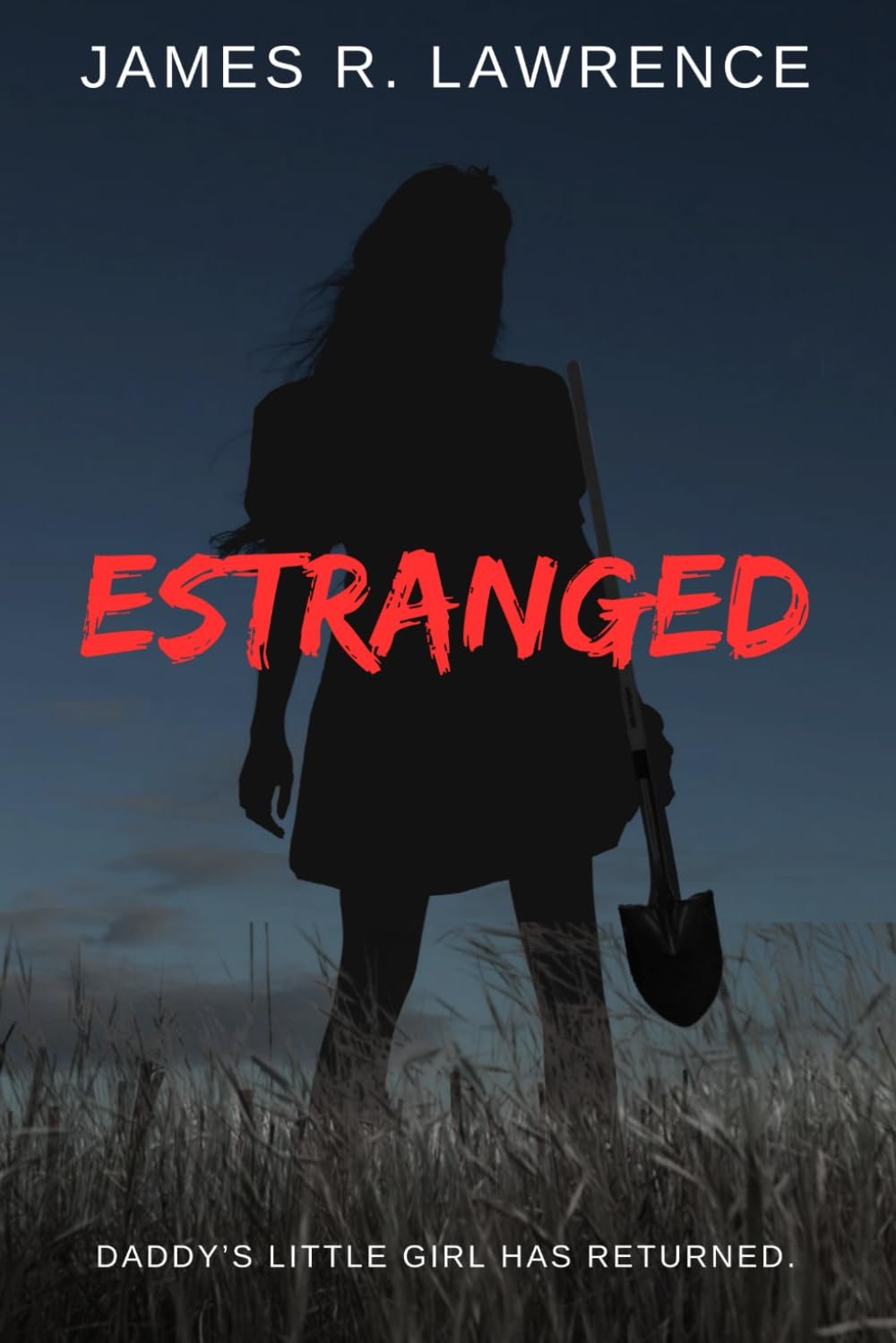
Estranged
A young woman searches for an absent father and encounters a terrifying truth behind the prospect of reconciliation.
Books worth discovering. Authors worth knowing.
Wren Stevens wants to repair a lost family bond, but the father she finds is more dangerous than the one she remembers.
Family longing and concealed danger converge in a psychological thriller of misplaced trust.
Wren Stevens has spent seven years wanting an answer from her absent father. At eighteen, she decides to find him. That straightforward emotional premise is the entry point to James R. Lawrence’s Estranged, a thriller in which a hoped-for family reunion gradually becomes a source of danger. The published synopsis establishes a painful contrast: Wren’s father initially offers charm and the promise of a fresh beginning, but the life behind that welcome contains troubling evidence and a frightening secret. This is not a conventional reconciliation novel. Its suspense emerges from the risk of placing long-held hope in someone who may have deliberately earned neither access nor trust.
The most compelling element of this premise is the distance between a child’s remembered parent and the adult waiting to be discovered. Wren last saw her father when she was eleven. Even a relatively ordinary separation would leave substantial gaps in her knowledge; an entire adolescence has passed. The man she hopes to meet is partly someone she remembers and partly someone she has imagined in the intervening years. This makes the search emotionally significant before the sinister elements enter. The book’s danger is heightened by a motive almost anyone can understand: wanting a parent to choose you.
When a reunion is also an investigation
The public description places Wren in two roles at once. She is a daughter seeking closeness, and she becomes an investigator of details that do not add up. Those roles are difficult to reconcile. A stranger can be questioned with relative detachment. A person one desperately wants to love may be given explanations and second chances long after suspicion appears. Estranged draws its initial energy from that unequal contest between need and evidence. The question is not whether Wren should desire a relationship; it is how she can protect herself while still respecting that desire.
The synopsis says small, unsettling signs accumulate as Wren discovers more about her father’s life. It does not supply a complete sequence of those discoveries, and this feature does not invent one. The essential structure is clear enough: a familiar domestic promise turns unstable as new information alters the meaning of old hopes. That is fertile territory for psychological suspense because the reader can understand both the temptation to ignore a warning and the frightening cost of doing so. An apparently warm greeting is only the beginning of learning who someone really is.
Trust does not erase history
Family stories often assign moral weight to reunion itself. A long-separated parent and child are expected to embrace, forgive and begin again. A thriller can challenge that expectation without treating longing as weakness. Wren’s determination to reconnect is an expression of agency, but it does not obligate her to accept every explanation. Healthy trust requires room for contradiction, questions and changing one’s judgment when evidence changes. The published premise makes these distinctions more than abstract advice: the person in question has the power to harm her.
There is also an important difference between guilt and responsibility. Children sometimes imagine that an absent parent’s choices reveal something about their own value. Estranged’s description does not state what Wren believes about herself, so her psychology should not be invented. Nevertheless, the setup invites readers to consider how unmet childhood needs can create a strong desire for reassuring answers. The thriller’s emotional seriousness depends on recognizing that the burden of a parent’s misconduct belongs to the parent, not to the young person who hoped for an ordinary relationship.
The threat behind the familiar face
The publisher-facing synopsis makes a disturbing claim about the father: he is a predator who has escaped justice. That information is part of the public premise, not a twist manufactured for this feature. It shifts the suspense from uncertainty about whether something is wrong toward a sharper question about when Wren will fully recognize the risk and whether she can act in time. The novel’s title becomes apt in more than one sense. Physical estrangement has already happened; moral estrangement may be the deeper and more permanent fracture.
This sort of family-centered menace differs from an anonymous threat. The father can invoke shared history or unrealized dreams to make closeness appear normal. The dramatic danger comes from the mismatch between the language of connection and the evidence of harmful behavior. Readers drawn to suspense about manipulation and concealed identity may find that friction more compelling than a purely procedural puzzle. The accessible source does not establish particular crimes, victims, or a final confrontation, and none is asserted here.
Eighteen as a turning point
Wren’s age matters. At eighteen, she is legally entering adulthood while still carrying unresolved questions from childhood. The search for her father can therefore be read as an effort to author her own account of who she is. Yet adult agency is not the same as perfect foresight. She can make a courageous decision and still face information she could not reasonably have predicted. The premise frames maturity as a developing capacity to revise a conclusion rather than stubbornly preserve it for the sake of an old dream.
Readers who have experienced complicated family relationships may recognize this underlying pressure, even though the thriller amplifies it into extreme danger. The story’s appeal need not rest on a belief that family reunion is inherently unsafe. It rests on the more precise truth that a relationship, however desired, must earn trust through conduct. The strongest suspense often asks a character to distinguish the future they imagined from the reality they can actually observe.
A dark thriller, not a restorative family drama
Estranged is more suitably approached as psychological and domestic suspense than as an uplifting reconciliation narrative. The advertised material includes predatory behavior and a young woman’s fear of the person she seeks. It may therefore be unsettling for readers sensitive to abuse, coercion, or family betrayal. Readers who want gentle family healing should know that the public description promises escalating danger instead. This caution concerns subject matter, not an assumed judgment about how the author depicts it on the page.
The value of the premise is its reversal of a comforting expectation. Wren thinks that finding her father might complete a missing part of her life. Each disturbing clue instead asks her to rethink the connection between belonging and safety. Whether she finds a way through is the novel’s story to tell. For readers interested in high-stakes revelations grounded in recognizable emotional needs, Estranged offers a clear invitation: follow Wren’s search, but do not assume the person at its end is the person she has been looking for.
About the book.
At eighteen, Wren seeks her absent father after seven years apart, only to uncover signs of a dangerous and deceptive life.
Sponsored MarketAnyBook book feature based on publicly available book descriptions and sources. Sponsorship identifies the paid placement, not a firsthand-reading claim, independent endorsement of quality, or verification of every advertised claim. No plot scenes, book quotations or author facts were invented. Book links use the exact owner-provided destination.
Found a book worth opening?
Books worth discovering. Authors worth knowing.
Return to the Journal →