
I No Longer Hold the Hand That Held Me Down
Brandie Brace gathers short stories and poems about heartbreak, loss and the difficult movement toward renewal.
Books worth discovering. Authors worth knowing.
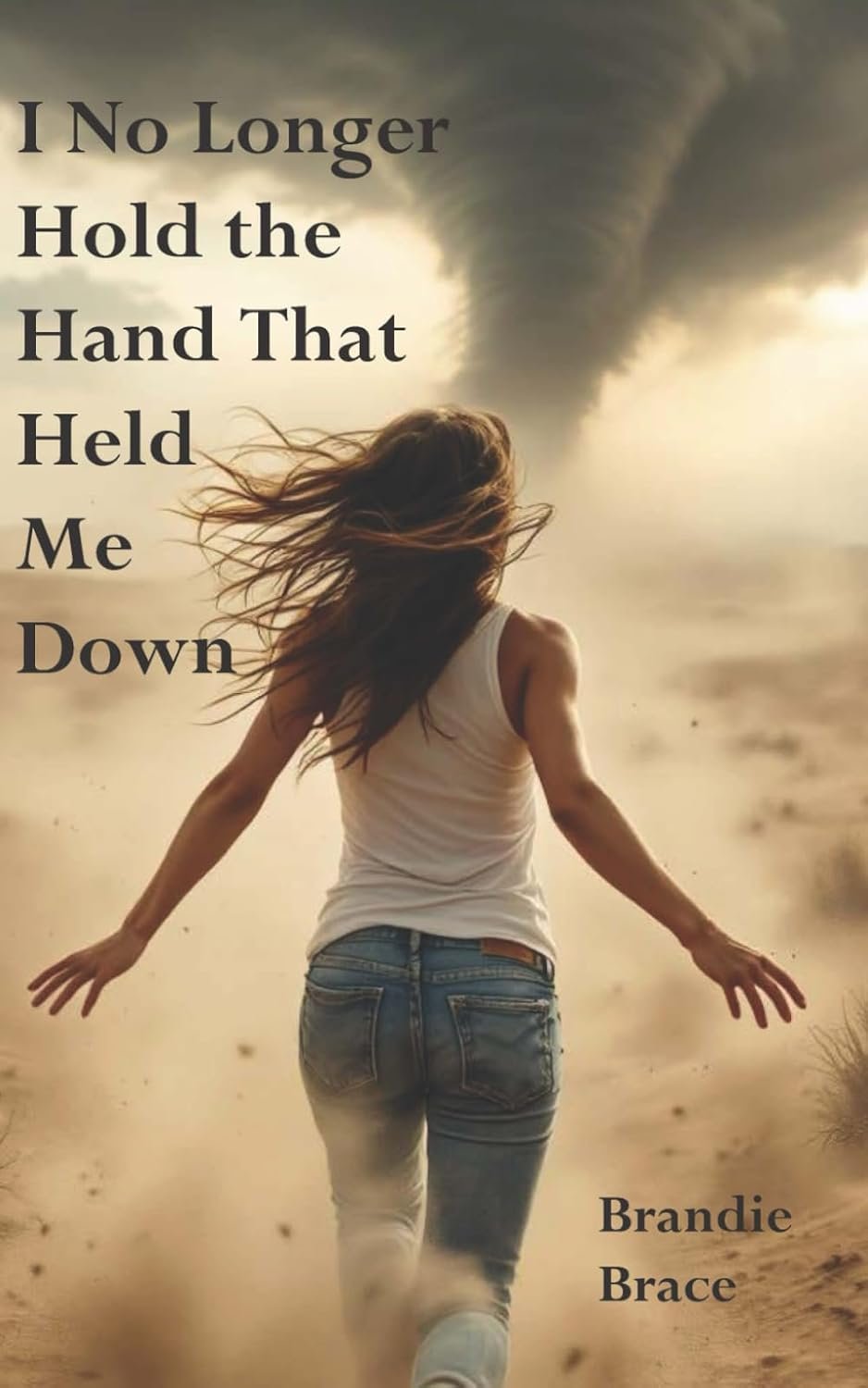
A gesture that once suggested closeness can become a metaphor for the freedom to let go.
Edition synopsis confirms a mix of short stories and poetry reflecting love, heartbreak, divorce, loss and transformation; an expanded revised edition is noted.
A title that marks a difficult change
Brandie Brace’s I No Longer Hold the Hand That Held Me Down is presented as a collection of short stories and poetry about heartbreak, loss, personal change and renewed resilience. Bookseller materials describe writing informed by the author’s experience of divorce and profound life transitions, and they note an expanded edition with revised chapters and an updated cover. The exact linked edition in the queue uses ISBN 9781967131006, which should remain the source identity even where other editions are advertised. This feature draws on that published description; it does not quote unseen poems or claim detailed knowledge of specific stories.
The title immediately establishes a complicated emotional movement. Holding a hand can signal love, trust, care or the fear of letting go. A hand that also holds someone down turns the same gesture into a metaphor for restriction. Leaving such a relationship or condition may require more than a single act of refusal. It can bring grief for what once seemed possible, relief at what is no longer tolerated and uncertainty about the future. The book’s verified themes make this a meaningful way into the collection without assuming a particular autobiographical episode is described on a particular page.
The difference between leaving and feeling free
A person can make an external change before their inner life feels ready to follow. A relationship may end, a home may change and familiar routines may disappear, while memories and expectations retain their force. That mismatch is a productive subject for prose and poetry because language can move among different moments of the same experience. A story may reveal circumstances; a poem may linger with a feeling that resists explanation. The description of Brace’s work as a mixed collection suggests multiple ways of approaching transition, though the specific arrangement and content of individual pieces have not been independently reviewed.
Freedom should also not be confused with a command to recover quickly. After divorce or bereavement, individuals may experience contradictory responses, and those responses are not evidence of weakness. It can be possible to know that a change was necessary and still mourn the life that will not occur. A literary collection about renewal has the opportunity to acknowledge such complexity rather than impose a single uplifting sequence. Whether each piece does so belongs to direct reading; the announcement of resilience supplies an intention, not a clinical or aesthetic guarantee.
Why short stories and poems belong together
A mixed-form volume can alternate between the sweep of a situation and the intensity of an image. Short fiction often places emotion within action and relationship. Poetry may compress an experience until a few words hold contradictory meanings at once. When the common subject is personal transformation, the forms can complement one another. Events rarely arrive with clear interpretations; reflection afterward may change their significance. A collection can explore the gap between what happened and how it is remembered without needing to resolve every conflict.
Brace’s public description speaks of love, heartbreak, tragedy and renewal. It would be tempting to assign one theme to each form, as though stories document hardship while poems celebrate survival. The sources do not support that division. A poem can be narrative; a story can be lyrical; either can carry darkness or joy. Readers should approach the book expecting thematic kinship rather than a verified formal blueprint. The most reliable common thread is the effort to express difficult change in language.
The hand as an image of attachment and power
The title’s image works partly because the meaning of touch depends on context. A hand offered in friendship feels different from one used to prevent movement. Emotional dependence can have similar ambiguity. An arrangement may include genuine affection while also diminishing someone’s ability to act freely. Recognizing that conflict often requires careful attention to boundaries, responsibility and the stories people tell themselves about loyalty. These are critical reflections prompted by the title, not a set of precise personal facts about the author’s former relationships.
Readers who have encountered coercive relationships may connect with the image, but the book should not be turned into a diagnostic manual. A poem about feeling held down is not proof of a specific clinical category or legal offense. Literature can illuminate lived experience while leaving room for ambiguity and individual differences. The appropriate response is to respect the writer’s stated themes and avoid speculating about identifiable people or private events beyond what the author has chosen to disclose publicly.
Loss as part of transformation
The bookseller synopsis mentions loss alongside divorce and renewal. Loss can refer to a person, a future, a sense of trust or an earlier picture of the self. Each kind creates a different form of absence. When a collection places such experiences together, it may invite readers to consider how rebuilding can involve both remembering and relinquishing. That does not require erasing the past. In fact, a writer’s decision to shape an experience into stories or verse may be one way to preserve its complexity instead of reducing it to a lesson.
There is also a distinction between telling a story of resilience and prescribing resilience to someone else. A survivor may find meaning in hardship, but no reader is obligated to call suffering a gift. Compassionate writing can make space for anger, exhaustion, humor and uncertainty as well as hope. The public description emphasizes a journey through life’s difficulties toward strength; this feature treats that as the collection’s declared emotional orientation, not a universal outcome promised to everyone who reads it.
The role of personal voice
First-person writing and fictionalized narrative can convey experience differently. A direct account may ask for recognition of what happened to the speaker, while fiction can give the writer distance to reimagine choices or explore several perspectives. Without access to the full text, it would be irresponsible to label every story autobiographical or every poetic speaker identical to Brace. A writer can draw on life and still shape characters or voices for artistic purposes. That distinction protects both literary interpretation and the author’s privacy.
An expanded edition and the significance of revision
The bibliographic material notes revised chapters, expanded content, formatting improvements and new cover design in an edition related to this title. Such changes are normal in independent publishing, but they matter when readers compare recommendations, quotations or page counts. Material discussed in one edition may not match another exactly. The queue’s purchase link must be retained rather than replaced with a cleaner or different listing, and anyone seeking a specific passage should verify which version they have. This feature does not claim to have compared editions side by side.
Revision also has an appealing thematic resonance for a work about personal change. A text can be revisited as the author gains distance from the experiences that shaped it. That is a general observation about the writing process, not evidence of why Brace revised any particular poem. Books exist as artifacts with publication histories, and those histories deserve the same care given to titles and author names. An honest reader can be interested in the evolution of a collection while acknowledging the limits of public documentation.
Literature as company, not treatment
Many readers seek poems and short stories during difficult life transitions because literature offers recognition without requiring immediate disclosure. A line of verse can name a feeling that seemed private; a fictional situation can create enough distance to make a hard subject approachable. Such encounters can be comforting, but they are not substitutes for safety planning, therapy, legal counsel or medical care when those are needed. In particular, readers currently living with coercion or violence should not be told that literary inspiration alone resolves practical risk.
The published synopsis of I No Longer Hold the Hand That Held Me Down foregrounds hope and renewed strength. Its literary invitation is to witness one writer’s effort to give shape to pain and change. The value of that witness will differ among readers. Some may seek immediate emotional identification; others may be more interested in how diverse forms transform lived material into art. Neither approach needs to presume that each piece offers direct advice.
Who should read it
I No Longer Hold the Hand That Held Me Down may appeal to readers of personal poetry, short reflective fiction and collections about relationship endings, grief, self-definition and renewal. Those seeking a conventional linear memoir should be aware that its public description identifies both stories and verse. Readers sensitive to themes of emotional restriction, divorce and loss may prefer to consult a sample before reading. Brace’s announced strength is the attempt to place hard experiences beside possibilities for change, without requiring that anyone else’s story follow the same route. This feature is an introduction grounded in the publisher-distributed synopsis, not a review of individual unseen poems or a promise of therapeutic results.
About the book.
Personal poetry and short prose / loss, resilience and relationships. Edition synopsis confirms a mix of short stories and poetry reflecting love, heartbreak, divorce, loss and transformation; an expanded revised edition is noted. Research-based editorial feature, not a claim of firsthand reading.
Independent editorial book feature; marked not sponsored in the source queue. Research-based commentary using verified public material, not a firsthand review. Cover media fields await the owner’s publishing automation.
Found a book worth opening?
Books worth discovering. Authors worth knowing.
Return to the Journal →