
Tim Tim and The Birthday Party Animals
Billy worries about his sixth birthday party until a plush monkey named Tim Tim opens a gentler path toward friendship.
Books worth discovering. Authors worth knowing.
Billy worries about his sixth birthday party until a plush monkey named Tim Tim opens a gentler path toward friendship.
Sixth birthdays are supposed to be exciting, but the celebration at the heart of Tim Tim and The Birthday Party Animals comes with a challenge that many children recognize.
A Birthday Party That Feels Bigger Than a Party
Sixth birthdays are supposed to be exciting, but the celebration at the heart of Tim Tim and The Birthday Party Animals comes with a challenge that many children recognize. Billy wants to enjoy his special day, yet he worries about speaking to classmates and being judged for his stutter. A party can be an arena of expectations: there will be other children, there may be unfamiliar conversations, and everyone seems to know how much fun the birthday child ought to be having. The public description of Taylor Robert Wyatt and Angelo Misseri’s picture book identifies Billy’s anxiety as a central part of the story, not a passing obstacle added for drama. That distinction matters. It invites adults to see a child’s reluctance as an experience worth understanding rather than behavior to correct. The book’s premise starts with a recognizable emotional truth: feeling loved at home does not always make being seen in a crowd easy.
Meeting Tim Tim
Billy’s two dads give him a plush monkey named Tim Tim, and that birthday gift becomes the doorway into an imaginative adventure. In the available description, Tim Tim is more than a toy acquired at just the right moment; he becomes a companion who helps Billy navigate fears connected with friendship and self-expression. Readers do not have to accept a literal magical monkey to understand why the device works. Children frequently carry a beloved object into new environments because it offers a familiar point of reference. A stuffed animal can be a witness when a child is not yet confident enough to speak for themselves. In storytelling, that familiar bond makes room for playful fantasy without abandoning the original feeling. The adventure grows out of Billy’s immediate situation instead of interrupting it. His birthday, his worry, and his relationship with Tim Tim belong to the same emotional narrative.
Making Room for Different Voices
A stutter is not a character flaw, and a child who stutters should not be expected to earn friendship by sounding like everyone else. That is one of the useful conversations the book’s setup may open. Billy is anxious about looking foolish, a fear that can survive even among kind classmates because anticipation is often harsher than reality. A picture book can give families language for this dynamic without turning story time into a lecture. Adults might ask what Billy imagines other children are thinking, or whether their own childhood fears sometimes proved inaccurate. They can also discuss why listening patiently matters when someone’s words arrive at a different pace. These are possibilities for guided conversation, not claims about particular pages or dialogue. The reported story emphasizes acceptance and being oneself; the strongest interpretation honors Billy’s voice rather than framing fluent speech as the price of belonging.
The Role of a Family’s Reassurance
The detail that Billy receives Tim Tim from his dads adds another layer to the family setting. Here, parental support appears as a thoughtful response to the kind of stress a young child may struggle to describe directly. Families cannot always remove the social situations that trouble children. They can, however, recognize those feelings, show interest rather than impatience, and offer companionship. The birthday gift becomes a small symbol of that kind of support. For parents reading together with children, it may prompt a useful question: what makes you feel brave when something new is about to happen? The answer could be an object, a person, a ritual, or permission to take time. Readers should not treat any book as a substitute for individualized guidance about communication challenges. Its contribution is imaginative and relational: it makes an uncomfortable experience visible in a format families can revisit.
Illustrations and Emotional Access
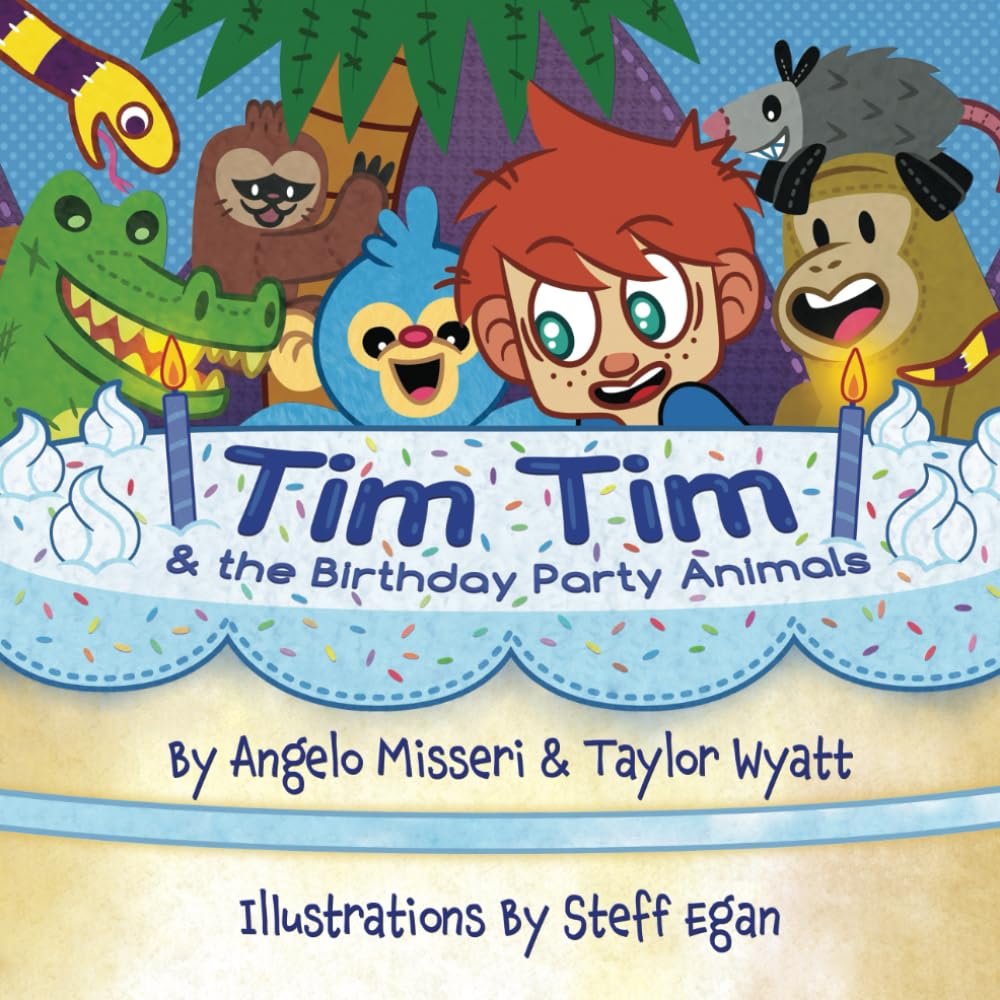
An independent picture-book review credits Steff Egan with the illustrations, while the queue names Wyatt and Misseri as the authors. That credited visual contribution deserves attention because children’s books convey meaning through pictures as well as text. A character’s posture, facial expression, the scale of a room, or the presence of a comforting companion can help younger readers follow emotion before they have words for it. The review specifically comments on the illustrations’ whimsy and their support for Billy’s story. Without reproducing or describing unseen spreads, a responsible feature can identify why that matters in a book about hesitation and confidence. Visual storytelling gives children several ways into the same experience. A child who struggles to name anxiety may nonetheless recognize its shape in an image or understand the relief suggested by a friendly figure sharing the scene.
Friendship Without a Performance
The reported resolution emphasizes confidence, friendship, and the value of being oneself. That idea becomes more interesting when considered alongside the social pressure already established in the premise. If Billy believes there is a correct way to behave at his own birthday celebration, his worry can make an occasion designed for pleasure feel like an examination. Stories like this have room to loosen that expectation. Friendship need not require a witty introduction, perfect conversation, or a fearless entrance into every game. It can begin with curiosity, patience, shared play, and another child making space. An adult might use Billy’s experience to explore both sides of a friendship: what it feels like to be nervous, and what it means to welcome someone who is nervous. That broader emphasis keeps the book from becoming a simplistic command to be brave on demand.
Reading Together, Talking Afterwards
Tim Tim and The Birthday Party Animals is suited to the kind of repeated family reading in which a child notices something different each time. One reading can focus on the plush monkey, another on the birthday setting, and another on Billy’s concern about classmates. Adults can invite discussion without demanding personal disclosures. For example, a child might choose a favorite animal companion, imagine an encouraging gift, or suggest how a party guest could help someone feel included. Those activities are reader suggestions, not content claims about exercises printed in the book. The picture-book format can be especially useful because stopping to talk does not derail a complicated plot. The story provides a shared reference point, allowing children to consider difficult emotions at a comfortable distance before deciding whether to connect them to their own lives.
A Celebration of Being Present
The central appeal of this birthday adventure is not that fear can be switched off by a magical helper. It is that the fear can be acknowledged without allowing it to define everything else about Billy. He is still a birthday child with interests, a family, a gift, and the possibility of friendship. By making those dimensions coexist, Wyatt and Misseri’s premise creates room for a gentler understanding of confidence. Confidence can include hesitation; courage can involve entering a room while still uncertain. This is a useful thought for anyone who reads with an anxious child, especially at an age when social situations expand faster than the child’s ability to explain them. The public synopsis and independent review support a hopeful reading of the book as an imaginative invitation to inclusion. The specific pleasure of the illustrations and the full arc of Billy’s adventure remain for readers to discover in the book itself.
About the book.
Illustrated children’s picture book on anxiety, acceptance, and friendship. Billy worries about his sixth birthday party until a plush monkey named Tim Tim opens a gentler path toward friendship.
Editorial book feature, not paid sponsorship. Independent research-based commentary based on publicly available book details; not a claim of first-hand full-text review. The designated cover placeholder will be resolved by the owner’s publishing automation.
Found a book worth opening?
Books worth discovering. Authors worth knowing.
Return to the Journal →