
Lost in the Reflecting Pool
Psychologist Diane Pomerantz revisits the loss of safety in a marriage and the long work of recognizing emotional abuse.
Books worth discovering. Authors worth knowing.
Psychologist Diane Pomerantz revisits the loss of safety in a marriage and the long work of recognizing emotional abuse.
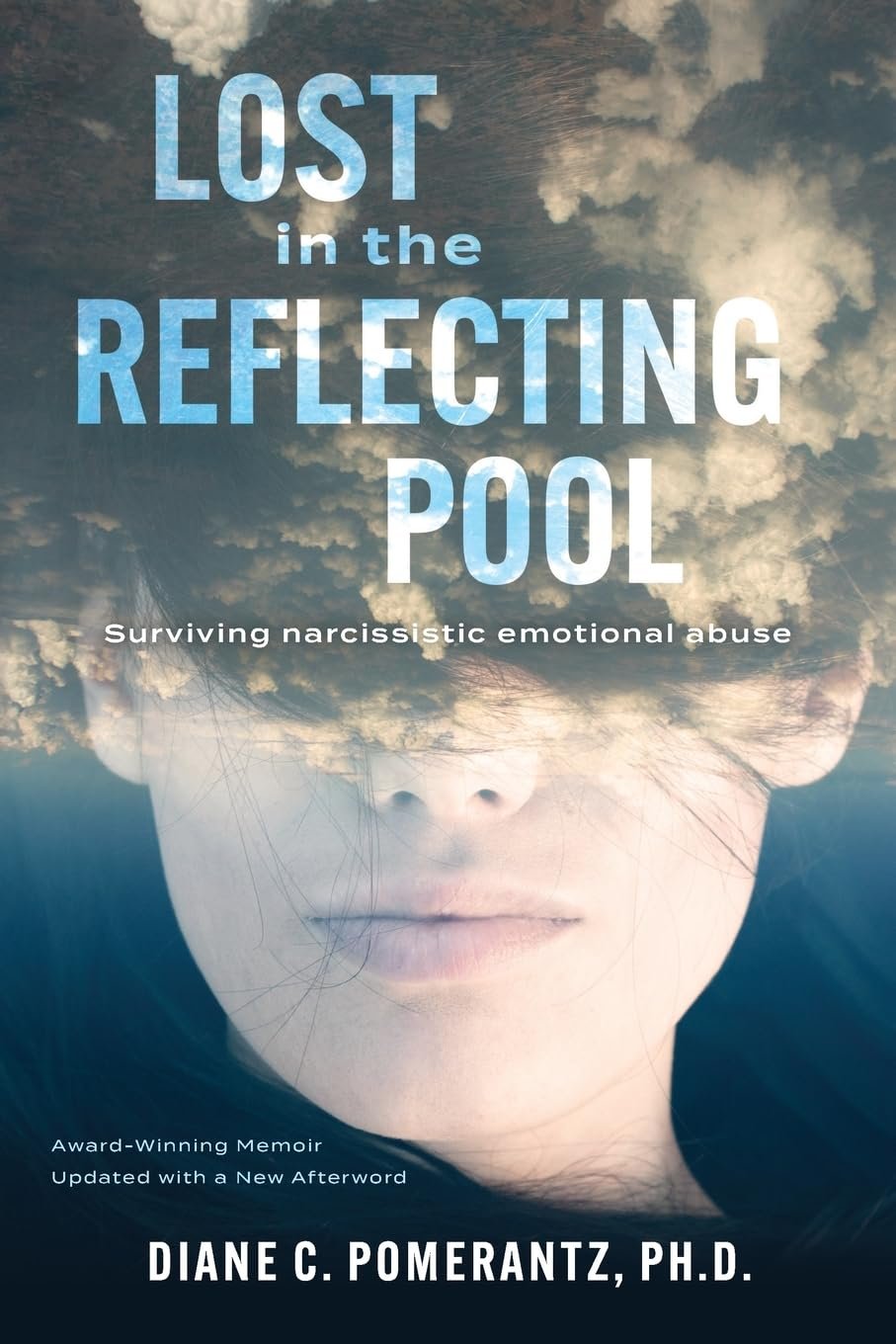
Diane Pomerantz’s Lost in the Reflecting Pool: Surviving Narcissistic Emotional Abuse approaches a painful relationship from the inside, beginning not with a textbook label but with the promise of love.
When a Marriage Stops Feeling Safe
Diane Pomerantz’s Lost in the Reflecting Pool: Surviving Narcissistic Emotional Abuse approaches a painful relationship from the inside, beginning not with a textbook label but with the promise of love. In the original publisher’s description, Diane, a psychologist, falls in love with Charles, a charming psychiatrist. The couple confronts infertility treatment and the adoption process together before making a family. The outward story has the components of shared commitment; the troubling changes appear gradually through criticism, control, and an erosion of emotional safety. This revised-edition memoir asks readers to pay attention to the distance between what a relationship appears to be and how one of its partners experiences it. It is a work of personal testimony informed by its author’s clinical background, not a diagnostic tool for labeling people in another reader’s life. That boundary makes the story more rather than less serious.
A Reflection That Becomes Distorted
The book’s title offers a strong way into its concerns. A reflecting pool promises a clear image, yet a disturbed surface can change the appearance of everything it mirrors. In emotionally controlling relationships, the narrator’s account suggests, a person’s confidence in their own perceptions can become uncertain. Repeated criticism may make ordinary decisions feel risky. Affection may be remembered intensely even when harmful patterns persist. The publisher’s early synopsis emphasizes how tenderness and darkness existed within the same marriage rather than dividing it into an entirely happy first act and a wholly different second one. That coexistence matters because readers often ask why a person would remain attached to a damaging partner. A memoir can explain the daily texture of emotional dependence more sensitively than an outsider’s quick verdict. It can also show how uncertainty is produced, not simply chosen.
Family Building Under Pressure
The original book description identifies infertility treatments and adoption as major shared experiences, not incidental background. Those experiences require hope, vulnerability, planning, and frequently a substantial investment of emotional labor. They also can create a powerful picture of partnership: two people navigating difficult decisions together and imagining their future family. Within the memoir’s announced arc, that shared history helps explain why a relationship’s deterioration is not merely the loss of a romantic attachment. It can feel like the loss of a life story that both partners have been building. The author does not give readers license to generalize about every marriage involving infertility or adoption. Rather, her particular narrative invites recognition that practical and emotional ties can make the decision to leave difficult. The resulting tension is grounded in obligations and memories as well as fear.
Illness and the Need for Care
A decisive crisis in the published synopsis comes when Diane is diagnosed with aggressive breast cancer. At a moment when dependable partnership would be especially important, Charles’s apparent care becomes withdrawal and hostility, according to her account. Serious illness changes the practical balance of a household and can heighten a person’s need for trust, rest, and support. The book makes those stakes vivid by placing relationship abuse alongside the vulnerability of treatment. Readers should not confuse a memoir’s depiction with a general account of how psychiatric professionals, spouses, or families behave during illness. It is one woman’s testimony about what she encountered. Its value lies partly in resisting the comforting assumption that danger always arrives from outside the home or that a partner’s professional standing guarantees empathy. Emotional care is established by conduct, not by credentials.
Why the Revised Edition Matters
The author’s official website identifies the edition subtitled Surviving Narcissistic Emotional Abuse as a later version of her award-winning memoir. According to her biography, the revision draws more directly on her psychologist’s perspective to help readers recognize abusive characteristics and consider how they can be addressed. That addition changes the reader’s expectation: the book is not solely a chronology of lived experience, but also an opportunity to reflect on patterns that may otherwise be difficult to name. Caution remains essential. The word narcissistic can refer to a range of everyday descriptions and clinical concepts that should not be casually collapsed. The memoir does not enable someone to diagnose an absent third party, and it cannot establish what any particular relationship requires. It can, however, supply language for conversations about control, emotional harm, boundaries, and seeking appropriate support.
A Psychologist Writing as a Witness
Diane Pomerantz has worked professionally with trauma and personality development, according to her public biography. Yet the emotional center of this book is the reversal of roles: a professional accustomed to helping others becomes the person trying to understand her own experience. That does not mean training offered no insight or that abuse can only affect those without specialist knowledge. It underscores how intimate relationships are lived through attachment, obligation, fatigue, and hope rather than through detached assessment. The author’s Healing through Writing activities also connect her professional interests to the practical work of constructing a narrative. Writing can provide distance from confusing experiences and a way to order memories, though it is not a universal or guaranteed treatment. Readers can appreciate the act of testimony without assuming that all survivors will choose the same means of recovery.
The Ethics of Reading Another Life
An abuse memoir calls for a kind of attention different from consuming a conventional suspense plot. The account concerns identifiable experiences as the author remembers and interprets them; it should not be treated as entertainment built around another person’s distress. Nor should a reader demand a perfect victim, an uninterrupted record of certainty, or a neat sequence of decisions to validate the seriousness of what is described. Pomerantz’s stated aim is to make troubling patterns visible and to recount how she found a route out. Respectful reading can distinguish between her reported facts, her later interpretation, and the broader ideas she brings from psychology. It can also avoid sensationalizing scenes that the public synopsis describes in severe terms. The question worth asking is what the narrative teaches about listening to someone whose own sense of reality has been repeatedly challenged.
A Memoir of Reclaiming Perspective
Lost in the Reflecting Pool will likely resonate with readers interested in psychological memoirs, accounts of emotional abuse, and the difficult passage from dependency toward agency. Its subject matter may be distressing for survivors, so readers may prefer to approach it with care. The book should not stand in for professional mental-health, legal, or safety advice, especially where someone is facing immediate danger. What it does offer, through the publicly documented story, is a sustained insistence that emotional experiences deserve to be examined rather than dismissed because a relationship looks successful from the outside. The reflection in the title ultimately becomes an invitation to see more clearly: the behavior of others, the cost of remaining uncertain, and the possibility of rebuilding a life with a renewed trust in one’s judgment. This is a research-based feature, not a claim to have independently evaluated every passage of the memoir.
For someone choosing whether to read, the presence of illness and psychological abuse should be considered as much as the memoir’s promise of survival. The experience may feel affirming to some readers and overwhelming to others. A reader may also benefit from discussing the book with trusted people rather than treating an individual story as a universal template. What happened in one marriage can illuminate recurring patterns, but circumstances and safe options differ. The value of a thoughtful memoir lies partly in making those distinctions easier to express.
About the book.
Memoir of coercive control, survival, and psychological recovery. Psychologist Diane Pomerantz revisits the loss of safety in a marriage and the long work of recognizing emotional abuse.
Sponsored book feature. Independent research-based commentary based on publicly available book details; not a claim of first-hand full-text review. The designated cover placeholder will be resolved by the owner’s publishing automation. Descriptions of abuse and mental health reflect the author’s account, not an individual diagnosis or treatment advice.
Found a book worth opening?
Books worth discovering. Authors worth knowing.
Return to the Journal →