
Cataclysm Kin
Celestial sisters, inherited cruelty, and a dangerous choice between vengeance and mercy shape W.W. Mitchell’s dark fantasy.
Books worth discovering. Authors worth knowing.
Celestial sisters, inherited cruelty, and a dangerous choice between vengeance and mercy shape W.W. Mitchell’s dark fantasy.
Cataclysm Kin by W.
Sisters at the Edge of Catastrophe
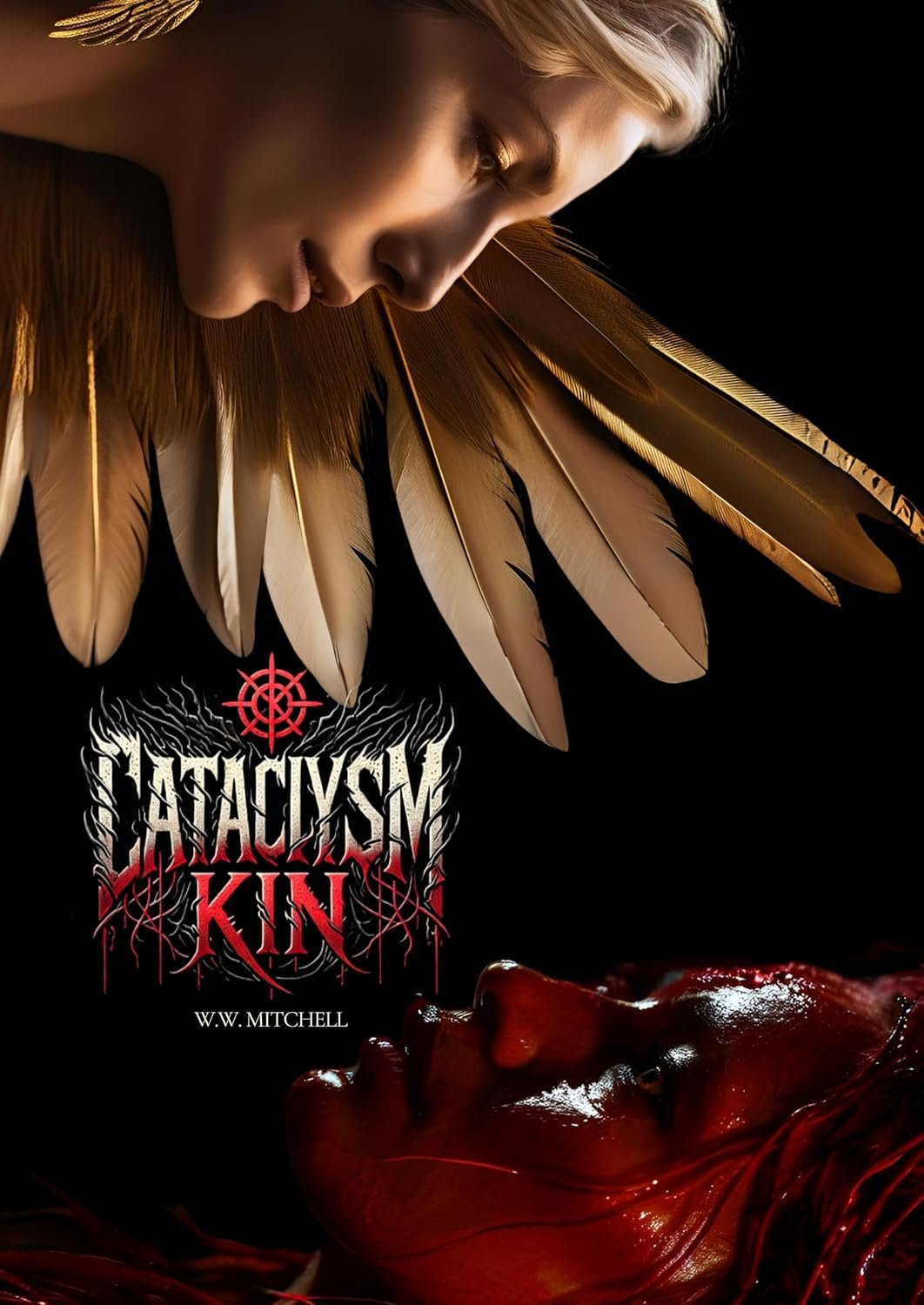
Cataclysm Kin by W.W. Mitchell enters a dark-fantasy territory where a family’s private history acquires terrifying public consequences. The book’s distributor and retailer descriptions establish a conflict involving celestial kin, persecution, and the possibility of catastrophic vengeance. One detailed listing centers on Kore, rejected at birth for her crimson skin and undeveloped wings, and her sister Ara, who struggles to prevent the scale of her retaliation. Another promotional synopsis presents a different pair, Edith and Bethany, divided between compassion and fury. The accounts may refer to alternative promotional treatments, but without the full text we cannot responsibly reconcile the character lists. Their shared, verified thematic center remains powerful: a supernatural family bond becomes the site of a dispute over mercy, justice, and inherited suffering. This feature follows that publicly described conflict rather than pretending that every edition-specific synopsis agrees.
What the Word Kin Promises
The title is unusually revealing. A cataclysm is a disaster on a scale that overwhelms normal institutions; kinship is a connection often imagined as a source of belonging and protection. Mitchell brings those ideas into uncomfortable proximity. In the Kore description, the person condemned as monstrous is first made vulnerable by people who ought to protect her. Her father’s rejection and her confinement imply that family is not merely a background detail but one origin of the violence to come. Such a premise complicates the easy fantasy division between pure heroes and irredeemable monsters. A reader can condemn what a wounded character does without forgetting how they came to believe that cruelty is the only dependable form of power. That tension is more dramatic than a simple prophecy about a villain destroying the world. It allows the conflict to become an argument about responsibility across generations.
The Limits of Sympathy
The extended publisher-matched synopsis describes Kore moving through broken worlds and haunted forests while targeting the bloodlines she holds responsible. Her sister Ara, associated with divine light, tries to stop her. These details establish an encounter between two responses to trauma rather than merely two competing kinds of magic. The question is not whether the hurt that preceded vengeance was real. It is whether that hurt can confer an unlimited right to punish people who may not have committed the original wrong. Fantasy gives this ethical question an immense canvas: a single choice can endanger species, reshape worlds, or threaten the order of reality. Still, the recognizable human element lies in deciding when understanding someone’s pain turns into excusing their harm. Mitchell’s premise encourages readers to distinguish explanation from justification. That distinction remains useful even when the antagonists possess wings and cosmic powers.
Mercy as a Dangerous Decision
Stories about apocalyptic revenge often make retaliation look vivid and mercy look passive. Cataclysm Kin suggests a more difficult arrangement. The sister who seeks to interrupt a devastating campaign must take a risk, potentially exposing herself and others to additional danger. Mercy, in this framework, is not necessarily a soft sentiment; it may require opposition, limits, sacrifice, and a willingness to bear consequences. The darkest version of the dilemma asks whether family allegiance can survive when stopping someone you love becomes necessary to protect strangers. No public description establishes how the novel resolves this challenge, and predicting a final confrontation would flatten its uncertainty. The more compelling invitation is to approach the story with competing obligations already in view: to remember the original injustice, to defend those now endangered, and to acknowledge that neither task cancels the other.
An Atmosphere Built From Ruin
Mitchell’s public descriptions promise a landscape of supernatural devastation rather than conventional sword-and-castle adventure. Broken realms, ancient beings, and skies marked by violence point toward a blend of dark fantasy and horror. Such settings matter when the scale of a book threatens to become abstract. Readers need tangible signs that a cosmic dispute has consequences, whether those signs are altered environments, threatened communities, or the decisions made by people too small to command the forces around them. The listings identify horror and fantasy as the book’s categories, but they do not provide an exhaustive chapter-by-chapter account. It is therefore more accurate to discuss the atmosphere the publisher advertises than to claim knowledge of particular battle scenes. The effect suggested by the material is one in which divine power can be terrifying precisely because it has escaped familiar human boundaries.
The Author Behind the Worlds
A public profile of W.W. Mitchell describes a Marine Corps veteran whose debut book began an ambitious larger fantasy project. Biographical context can deepen interest in a work without becoming a shortcut for interpreting its characters. A military background does not prove that a particular scene reflects personal experience, just as an author’s account of hardship does not establish that a novel should be read as autobiography. What readers can reasonably notice is a creative decision to use an invented cosmology to explore endurance, conflict, and the transformation of pain into action. The title also belongs to a publishing context that includes the author’s other speculative fiction. Readers who enjoy world-spanning premises may be interested in that broader imaginative ambition, while new readers can treat this book as a distinct entry point rather than assuming they need to understand a larger universe first.
Conflicting Summaries and Careful Reading
A bibliographic caution deserves space in an honest feature. Some retail metadata for Cataclysm Kin describes Edith and Bethany, while a publisher-matched hardcover summary describes Kore and Ara. Both name the same author and title, and public search records do not adequately explain the divergence. That means a summary combining four names into one coherent cast would be editorial invention. The distinction is not a trivial matter of spelling: it changes how the central relationships are framed. We have therefore focused the analysis on common motifs and attributed the Kore storyline to the detailed publisher-matched listing. Readers seeking exact scene and character continuity should consult the linked edition or a direct preview. This method helps preserve trust. It also illustrates a wider lesson about book discovery: sales descriptions are useful starting points, but they are not interchangeable with close reading of the complete work.
Who May Want This Journey
Cataclysm Kin is a likely fit for readers drawn to morally tangled supernatural conflict, large-scale fantasy threats, and the uneasy relationship between vengeance and justice. Its advertised horror elements may make it less appealing to those looking for lighthearted escapism, while its family-centered dilemmas may interest readers who usually approach fantasy through character rather than lore. The most useful question to carry into the book is not which celestial figure will prove strongest. It is what power does to wounded people when protection, punishment, and love become difficult to separate. The available evidence supports an introduction to that problem, not an assertion about the novel’s ending or every character’s motives. Entering with both curiosity and that limitation in mind leaves room for the narrative to surprise on its own terms.
The overlap between personal and cosmic history also opens a question about scale. In everyday life, families may carry stories about blame and loyalty long after the original participants are gone. Fantasy literalizes that inheritance by giving descendants extraordinary power and consequences. A destructive choice made by one person can become a danger for people who did nothing to earn it. Readers can track that movement from private grievance to collective risk without presuming they know how Mitchell apportions responsibility at the end. The publicity points toward an ethical confrontation; the novel determines its resolution.
About the book.
Dark fantasy and cosmic horror. Celestial sisters, inherited cruelty, and a dangerous choice between vengeance and mercy shape W.W. Mitchell’s dark fantasy.
Editorial book feature, not paid sponsorship. Independent research-based commentary based on publicly available book details; not a claim of first-hand full-text review. The designated cover placeholder will be resolved by the owner’s publishing automation.
Found a book worth opening?
Books worth discovering. Authors worth knowing.
Return to the Journal →