
Dyani’s Adventures
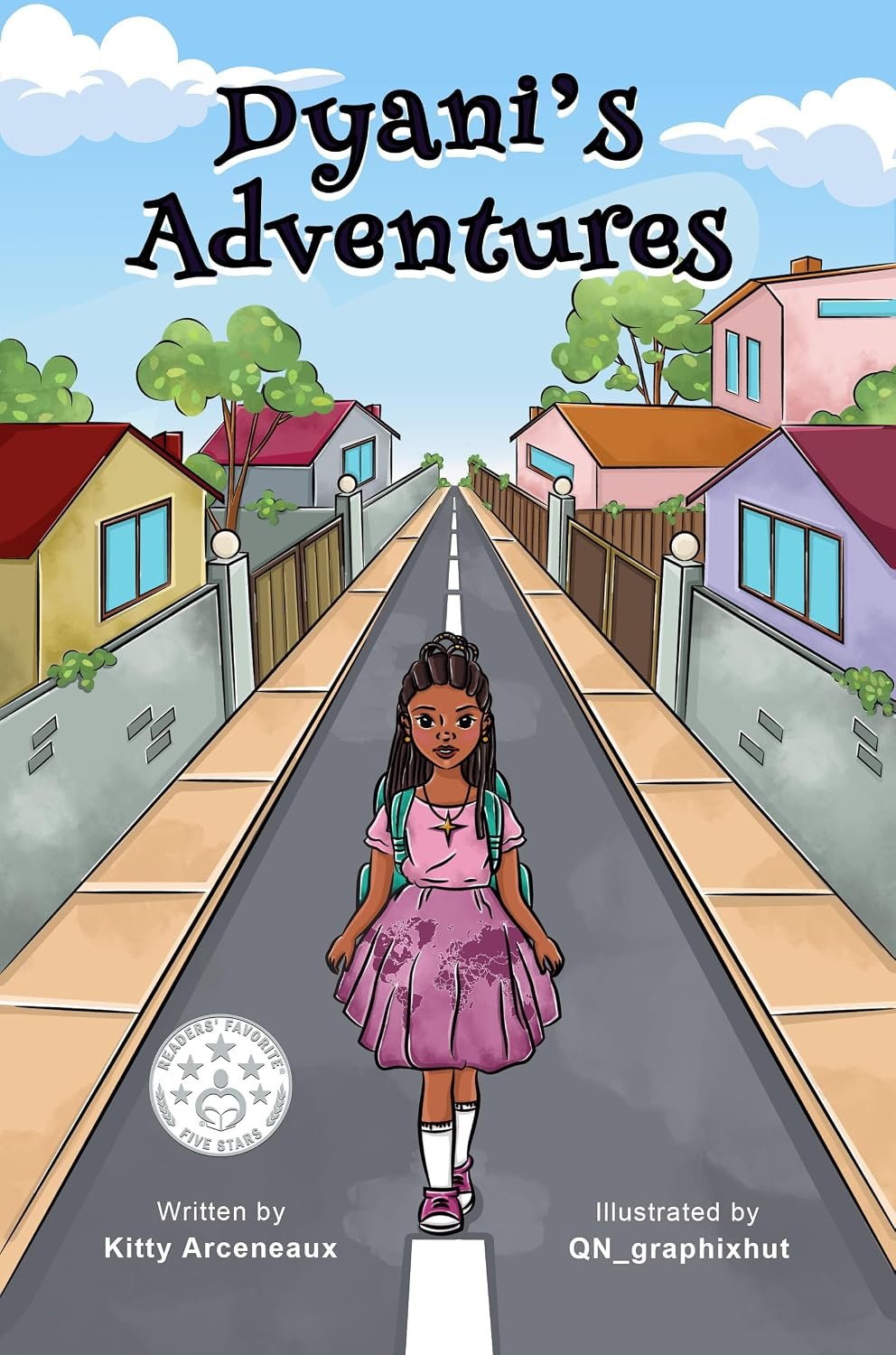
Nine-year-old Dyani ventures beyond familiar streets and meets neighbors whose traditions and stories expand her sense of community.
Books worth discovering. Authors worth knowing.
Nine-year-old Dyani ventures beyond familiar streets and meets neighbors whose traditions and stories expand her sense of community.
In Kitty Arceneaux’s Dyani’s Adventures, nine-year-old Dyani senses that there must be more to discover than the familiar streets around her home.
The World Just Beyond the Block
In Kitty Arceneaux’s Dyani’s Adventures, nine-year-old Dyani senses that there must be more to discover than the familiar streets around her home. Her curiosity leads her to explore her community and meet children whose customs, languages and experiences differ from her own. Retailer summaries and an author interview establish that this is a story about friendship and cultural discovery, not a fantastical journey to an invented kingdom. Its premise is especially accessible because the first act of adventure may involve simply looking differently at nearby places. A library, market or neighborhood gathering can become a point of contact with people whose lives are full of stories Dyani has not yet heard. The book invites young readers to imagine curiosity as a form of courage. Moving beyond a comfortable routine may feel uncertain, but it can also reveal richness that was present all along, waiting to be noticed.
Learning Through Real Encounters
Dyani’s exploration is described through meetings rather than lectures. Public synopses name friends including Melo, Yoli, Pilar and Navya, each associated with perspectives and traditions that expand her understanding. A child learning about another culture directly from someone she befriends receives a different kind of invitation than a child memorizing isolated facts. The story’s approach suggests that experience and relationship can make unfamiliar customs approachable. Of course, a single person never stands for an entire culture, and a respectful adult conversation can help reinforce that principle. Readers can ask which details are particular to one family, which traditions are shared more widely and how people may hold several identities at once. The book’s optimistic framing offers a starting point for such conversations, while leaving teachers and caregivers room to deepen them. Curiosity matters most when it includes listening, not merely collecting colorful differences.
New Friends With Distinct Stories
Names give a children’s book social texture, and the roster of people Dyani meets makes clear that she is not exploring an empty map. The public description indicates that these friends bring varied stories and traditions to her encounters. It does not, however, provide a reliable scene-by-scene account of every conversation. A feature should not attach invented nationalities, personal histories or dialogue to these children. What can be said is that meeting people becomes the action at the heart of the journey. In many adventure books, progress is measured in obstacles defeated or miles travelled. Here the advertised progress is relational: each encounter offers a chance to revise what Dyani thought she knew about her own community. Young readers can be encouraged to notice whether the protagonist asks questions, makes mistakes, listens to answers and changes her assumptions. Those are practical habits that reach far beyond the boundaries of one story.
An Adventure That Begins Near Home
The contrast between faraway discovery and local diversity is one of the book’s most appealing questions. Dyani wants to experience more than her immediate neighborhood, but the synopsis asks whether the richness she seeks might already be close by. This is not an argument against travelling or learning about distant places. It is an invitation to recognize that even familiar streets contain layered histories and relationships. A child may walk past a shop, library or community center without realizing how many people have created meaningful lives around it. Arceneaux’s premise turns attention into adventure. That makes the story accessible to families who cannot take long trips and to classrooms exploring their own surroundings. The discovery may be less about crossing a national border than about crossing the smaller distance between noticing someone and becoming willing to know them.
The Role of Illustration
The supplied queue credits Qundeel Naseer as illustrator, a detail supported by bookseller records. Illustrated storytelling matters here because young readers can encounter aspects of a setting before they can explain them in words. Expressions, shared activities, neighborhood details and the arrangement of people in a scene can all help convey warmth or hesitation. This feature does not claim to have assessed every illustration or know how a particular page is composed. Instead, the confirmed collaboration provides a reason to consider the book as a joint reading experience shaped by both language and pictures. Adults reading aloud can invite children to describe what they notice without imposing a single interpretation immediately. They might ask who seems ready to speak, what a character may be learning or which details suggest a place is welcoming. Images can open conversations that a child would not initiate through a written question alone.
Conversations About Difference and Similarity
A story celebrating varied traditions risks becoming shallow if difference is treated only as decoration. Dyani’s Adventures has the potential to prompt more thoughtful questions because its premise centers on relationships. Children may share games, jokes or worries even while their families observe different customs. At the same time, common interests should not erase meaningful distinctions. A reader might ask how Dyani responds when she hears about an unfamiliar celebration or food, and whether she makes room for a friend to explain it in their own way. Those questions are suggestions for discussion, not claims about specific scenes absent from the summary. The book can function as a conversation starter for parents, teachers and young readers who want to think about friendship across cultural boundaries. Its most valuable promise is not that every encounter will be easy, but that learning about people can begin from a generous and active curiosity.
Kitty Arceneaux’s Creative Interests
A public interview with the author places Dyani at the center of a conversation about moving beyond one’s comfort zone. Arceneaux has worked across writing and community-focused activities, and the descriptions of this children’s book emphasize empathy and connection. This background helps explain why the story’s adventure depends on the protagonist’s willingness to engage with others. Still, a biography should not be made into proof of a reader’s response or a guarantee of the book’s educational effectiveness. Families may use the narrative in different ways: as a bedtime story, as a classroom opening for discussion or as encouragement to visit a neighborhood library. The verified facts provide those possibilities without requiring invented scenes. The publication details also reveal more than one edition and variant of the title in bookseller listings; readers should use the exact linked edition to avoid confusion when purchasing.
A Small Journey With Room to Grow
Dyani’s Adventures seems especially suited to readers who enjoy realistic discovery stories about friendship, family and the lively variety of local life. Its distinguishing feature is the premise that something unfamiliar may lie just around the corner rather than across an ocean. By following Dyani’s meetings with Melo, Yoli, Pilar, Navya and others, young readers can imagine themselves as learners rather than passive observers. A responsible feature does not promise that reading one story will eliminate bias or teach every cultural fact correctly. It can say that Arceneaux’s publicly described narrative opens space for discussion about the value of asking questions, listening and recognizing other people’s experiences. Those habits are worth practicing precisely because they are not completed in a single afternoon. Dyani’s imagined neighborhood becomes a starting point for the larger work of seeing a community with more curiosity and care.
About the book.
Children’s chapter book about friendship and cultural discovery. Nine-year-old Dyani ventures beyond familiar streets and meets neighbors whose traditions and stories expand her sense of community.
Editorial book feature, not paid sponsorship. Independent research-based commentary based on publicly available book details; not a claim of first-hand full-text review. The designated cover placeholder will be resolved by the owner’s publishing automation.
Found a book worth opening?
Books worth discovering. Authors worth knowing.
Return to the Journal →