
Windswept
Digger Doyle investigates a politician’s death at a wind farm and discovers links to a long-buried New Mexico disappearance.
Books worth discovering. Authors worth knowing.
Digger Doyle investigates a politician’s death at a wind farm and discovers links to a long-buried New Mexico disappearance.
Rosalie Rayburn’s Windswept brings investigative journalist Elizabeth “Digger” Doyle to a remote New Mexico wind farm expecting to report on a public event.
A Wind Farm Becomes a Crime Scene
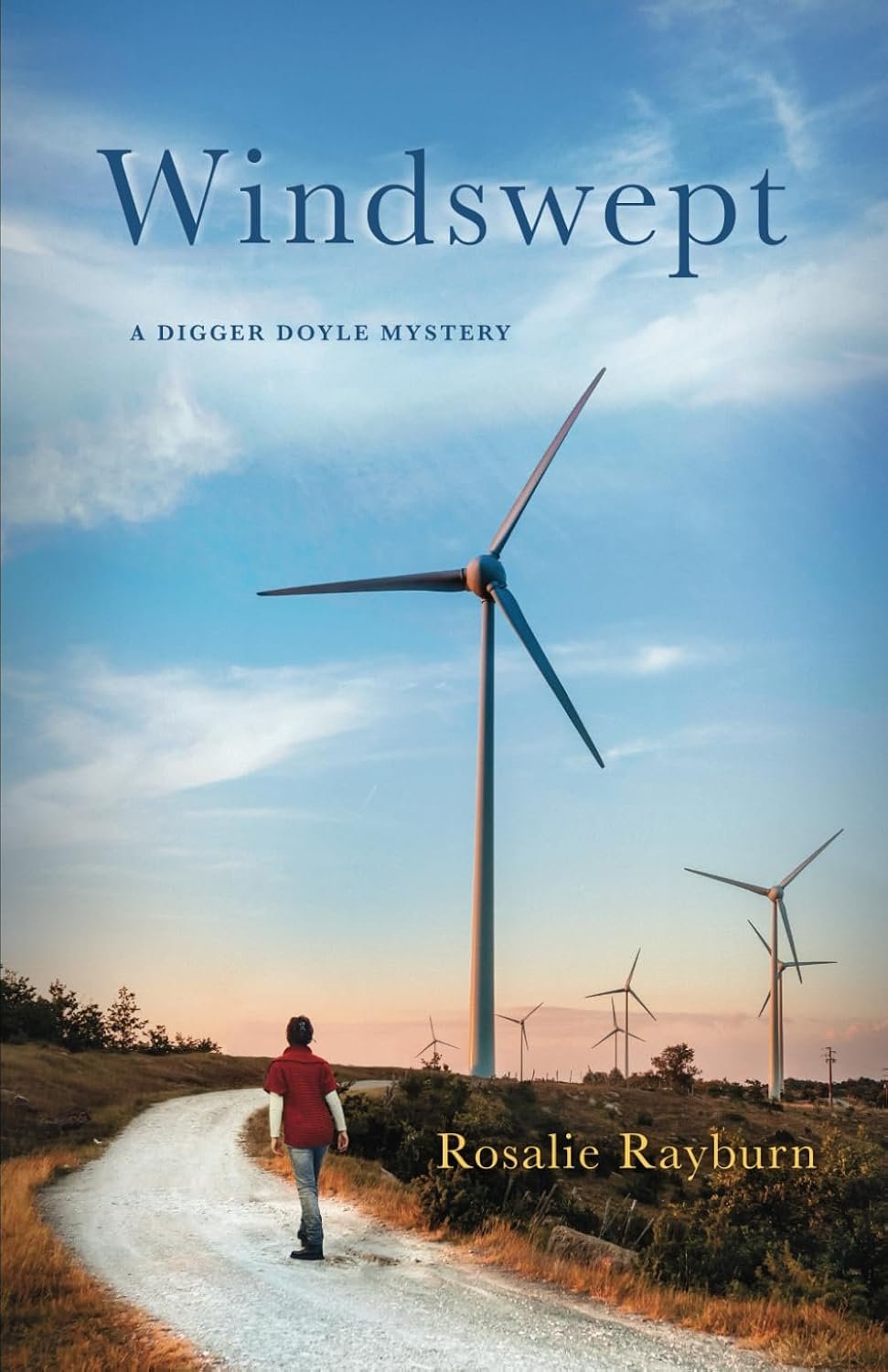
Rosalie Rayburn’s Windswept brings investigative journalist Elizabeth “Digger” Doyle to a remote New Mexico wind farm expecting to report on a public event. Instead, State Representative Carmen Lawlor is discovered dead at the base of a turbine. The location is dramatic, but it is also politically charged: the published synopsis places the event amid conflict over energy development and the interests surrounding it. A death that might first be considered an accident quickly becomes a question about evidence, motive and the stories people have reason to suppress. Digger is both reporter and detective figure, which gives the premise a distinctive investigative rhythm. Rather than receiving facts in a tidy sequence from official authorities, she has to ask questions, follow contradictory leads and determine which sources have something to gain. The opening situation establishes why truth-seeking could be dangerous long before the complete mystery is explained.
The Reporter Who Cannot Walk Away
Digger works for a small online newspaper and has a background in investigative reporting, according to the author’s series overview. That professional position matters. A small publication may lack the resources of a large newsroom, while its journalists can still be expected to challenge influential people. Digger’s decision to pursue Lawlor’s death is therefore both a career task and a test of personal resolve. In fiction, reporters often possess access to people and records that create opportunities for suspense. Yet good reporting also depends on methods: confirming claims, protecting vulnerable sources and recognizing when a plausible explanation is not yet proven. Windswept uses those pressures as part of its advertised appeal. Digger’s persistence may put her in conflict with people who prefer the case to close quickly. The feature avoids stating which people are guilty; the reader should discover that through the novel’s gradual assembly of evidence.
A Cold Case Beneath the New Crime
The longer bookseller synopsis introduces an older mystery tied to the politician’s past. During a trip with school friends in New Mexico’s volcanic wilderness, a teenager named Julie Mondragon disappeared and was never found. Years later, veteran reporter Nancy Harford urges Digger to investigate links between that disappearance and Lawlor’s death. This creates a second investigative timeline. A modern killing may become legible only after the journalist understands a story that another generation has carried for decades. Cold cases offer a particular kind of suspense because memories weaken, records disappear and people build adult lives around earlier silence. Readers can consider how testimony changes with time without assuming every reluctant witness is deceptive. Rayburn’s premise gives Digger the task of sorting motives from memories and asking why an old event might suddenly matter enough to endanger people again. The answer is held back, as it should be in a mystery feature.
Politics Without a Simple Hero Map
The novel’s public summaries connect Lawlor’s public positions with energy interests and political enemies, but accounts differ in abbreviated descriptions of exactly how those positions are characterized. The fuller bookseller version portrays Lawlor as a politician pushing restrictions on new oil drilling and facing determined opposition. This article does not convert that fictional conflict into a general claim about a real political group or industry. Energy policy involves competing interests, and a thriller can dramatize the intensity of those conflicts without proving a historical conspiracy. In Windswept, the stakes are narrative: the people around a political dispute may possess reasons to protect their reputations, livelihoods or secrets. A reader drawn to issue-driven mysteries may appreciate the way the case unfolds in a recognizable public-policy setting. Careful readers can also notice when an accusation is part of a character’s belief rather than an established fact inside the investigation.
Maria and the Personal Stakes
Digger’s wife, Maria Ortiz, is a state representative whose political mentor was Carmen Lawlor. The relationship gives the case emotional force beyond its news value. Maria is grieving a colleague, and her decision to continue Lawlor’s advocacy raises the possibility that public controversy could threaten her too. Digger must consider a danger that is close to home while carrying out work that depends on openness and persistence. This complicates the familiar detective’s choice between professional duty and private safety. Love does not make the evidence easier to interpret; it makes the consequences of getting things wrong feel more immediate. The source descriptions establish Maria’s place in the story and the couple’s concern, but they do not justify inventing marital arguments or predicting the outcome of the threat. Their relationship is valuable to the premise because it turns the investigation from an abstract puzzle into something that could alter the characters’ shared future.
The Desert Landscape as Witness
The setting reaches beyond the wind farm to the volcanic Malpais country, where the older disappearance occurred. New Mexico’s varied landscapes provide vivid possibilities for crime fiction: broad distances, dramatic terrain and places where a person might remain unseen. Rayburn’s experience as a reporter in the region adds context to her use of local political and environmental settings. The landscape is more than a scenic backdrop when it can preserve secrets in the form of inaccessible places and fragmented recollections. Readers might also notice the contrast between modern infrastructure and ancient geological formations. A turbine marks current disputes about energy, while the older terrain shelters questions from another time. That observation is an interpretation of the advertised setting, not a claim that the book explicitly treats every object symbolically. The two spaces help the story hold political immediacy and long memory within the same mystery.
Rosalie Rayburn’s Reporting Background
Rayburn’s official author biography identifies years of journalism, including reporting on government, politics and energy-related subjects for the Albuquerque Journal. Her later fiction draws on that professional experience without claiming to reproduce particular real crimes. Windswept is the third Digger Doyle mystery, following earlier investigations in The Power of Rain and another series installment identified in author materials. A returning protagonist lets the author develop professional habits and relationships over several cases, but the published premise of this book provides enough orientation for readers discovering Digger for the first time. Rayburn has also discussed how a visit to a wind farm suggested a useful setting for a suspicious death. That creative leap from real location to invented mystery is central to her method. The story takes familiar institutional pressures and imagines how they might become the background for personal danger and investigative suspense.
Following the Evidence Into the Wind
Windswept is likely to appeal to readers who enjoy women-led mysteries, investigative reporting, New Mexico settings and suspense where public policy intersects with hidden private histories. The concrete premise gives it a memorable shape: a controversial politician is found dead at a wind farm; an older disappearance may hold the missing explanation; and Digger’s wife has reasons to fear the fallout. The article draws from author and bookseller descriptions rather than a claimed full-text assessment, so it leaves the culprit and final revelations undisclosed. What makes the case intriguing is the difficulty of separating what powerful people say in public from the histories they have concealed. Digger’s work requires both a willingness to question official narratives and a discipline about evidence. That combination is the foundation of the modern investigative mystery, and Rayburn gives it an especially distinctive landscape of desert winds, political ambition and memories that refuse to disappear.
About the book.
Investigative crime mystery, environmental politics and LGBTQ+ fiction. Digger Doyle investigates a politician’s death at a wind farm and discovers links to a long-buried New Mexico disappearance.
Sponsored book feature. Independent research-based commentary based on publicly available book details; not a claim of first-hand full-text review. The designated cover placeholder will be resolved by the owner’s publishing automation.
Found a book worth opening?
Books worth discovering. Authors worth knowing.
Return to the Journal →