
Life of the Party Girl
Wedding and event planner Megan Estrada reflects on professional celebrations alongside difficult private experiences and recovery.
Books worth discovering. Authors worth knowing.
Wedding and event planner Megan Estrada reflects on professional celebrations alongside difficult private experiences and recovery.
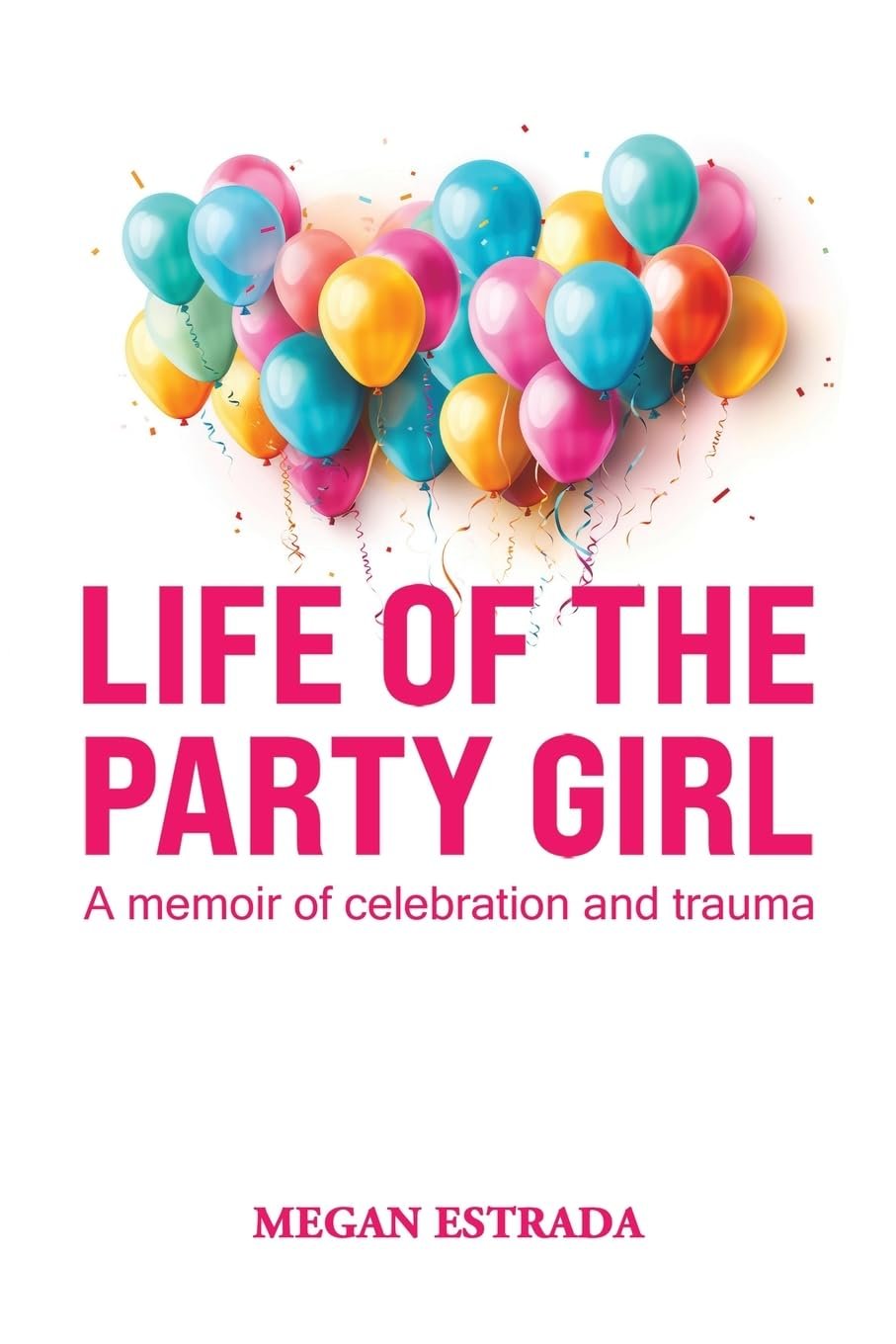
Megan Estrada’s Life of the Party Girl: A Memoir of Celebration and Trauma asks readers to look past the public face of an event planner whose work centers on other people’s milestones.
The Woman Behind the Celebration
Megan Estrada’s Life of the Party Girl: A Memoir of Celebration and Trauma asks readers to look past the public face of an event planner whose work centers on other people’s milestones. The publisher identifies Estrada as a wedding and event professional and presents her memoir as a record of celebrations interwoven with severe personal challenges. The pairing is striking because a party is often understood as the opposite of difficulty: a carefully timed space where joy is meant to look effortless. Yet coordinating such moments can demand constant attention while the organizer’s private life remains invisible to guests. Estrada uses that contrast as the central idea of her book. The public synopsis mentions a history involving violence, a difficult marriage, professional changes, motherhood and the pandemic’s disruption of the events industry. It is a story presented through the author’s own perspective, not an objective record this feature has independently verified scene by scene.
Why a Party Can Hide So Much
An event may last an evening, but preparing it can require months of work and countless small decisions. The person orchestrating the celebration rarely occupies the center of the photograph, even if much of the experience depends on her labor. Estrada’s professional role therefore provides a natural metaphor for a private life that does not always match public expectations. Her memoir promises to show experiences happening on the far side of polished occasions. That premise may resonate with readers whose work requires composure, generosity or confidence when their inner circumstances are difficult. The danger in discussing such a life is to reduce it to a lesson about appearances. Not every celebration masks suffering, and not every ambitious professional is privately unhappy. Estrada’s story matters as a particular person’s account, and its value comes from the specificity of that experience rather than from claiming a universal rule about the events industry or successful women.
Trauma Without a Neat Sequence
The publisher description includes a school shooting and a past suicide attempt among the episodes Estrada recounts. These experiences are serious, and a respectful feature should not mine them for shocking detail or suggest that recovery follows a predictable storyline. Memoirs can help a person organize difficult memories, but they do not oblige a survivor to turn every event into a clear moral or inspirational slogan. Readers may encounter moments of anger, uncertainty, contradiction and gradual change. The author’s public interview indicates that writing began partly as a therapeutic process, a statement about her own motivation rather than a general recommendation that writing alone treats trauma. People who have experienced similar crises deserve individualized support when needed. The value of Estrada’s project is that it allows a professional known for celebrations to speak in a different register, one that acknowledges complicated feelings and the long effort of understanding a life.
Work as Reinvention and Pressure
Before she became widely known in the events field, Estrada’s life included changes that did not point neatly toward a single career. The publisher mentions a record deal and a series of personal transitions. Later, event planning became a major part of her identity, eventually leading to leadership in an industry disrupted by COVID-19. Those facts suggest a career shaped by adjustment rather than a straight line from childhood ambition to professional success. Readers interested in entrepreneurial memoirs may find that arc instructive, but it should not be marketed as a reproducible formula. Opportunities, luck, relationships and circumstance differ from one career to another. What the book can offer is one person’s account of continuing to work and make choices while other aspects of life remained unsettled. That is a more grounded promise than claiming resilience necessarily produces commercial recognition or that every setback is ultimately useful.
The Pandemic Behind Closed Venues
The book’s public description situates part of Estrada’s career against the turmoil that COVID-19 caused in the hospitality and special-events industry. The disruption was not only financial; celebrations were postponed, traditions revised and the usual ways people gathered put into question. A planner whose expertise is built around bringing people together faced a professional environment in which gathering itself became uncertain. Estrada’s role as an industry advocate during this period is documented in biographical materials. A feature can acknowledge those experiences without presuming the details of every client cancellation or business decision she recounts. The larger contrast fits the book’s title: someone identified with the creation of joyful occasions had to navigate a moment when occasions disappeared or changed beyond recognition. That experience adds a public dimension to a memoir already concerned with private volatility and the pressure to perform confidence.
Family Roles and the Cost of Expectations
Motherhood, marriage and divorce appear in the publisher’s description of Estrada’s story. These are major changes that can interact with professional identity without defining a person entirely. A memoir may offer space to reconsider decisions made under pressure, expectations carried from family and the difficulty of recognizing when an arrangement is no longer sustainable. Readers should be cautious about turning one person’s account into judgments about people the public synopsis does not describe in detail. The writer controls her narrative voice and selection of memories; those choices are essential to memoir as a form. What is meaningful in Estrada’s advertised approach is the willingness to place intimate questions beside public achievements. The ability to lead a demanding career does not remove the need for care and safety in private relationships. Equally, personal mistakes or painful experiences should not erase a person’s professional accomplishments or capacity to develop over time.
Finding a Voice Outside the Ballroom
A published interview introduces Estrada as the founder of NSWE Events and records her intention to share the personal struggles behind a public-facing career. Writing allows a different kind of authority from planning an event. Instead of arranging an experience for someone else, the memoirist selects which memories to revisit and how to connect them. That process is not the same as documenting every fact from a distance, but it can offer readers a vivid sense of what particular choices felt like. The title Life of the Party Girl plays with expectation: a phrase that sounds glamorous or carefree becomes a doorway into accounts of fear, endurance and the search for self-worth. Estrada’s interviews frame the writing as personal and restorative. Readers may respond differently to that framing, but its ambition is clear enough without exaggeration: to describe a life in which trauma and celebration have repeatedly occupied the same space.
What the Memoir Offers a Reader
Life of the Party Girl is aimed most naturally at readers of personal memoirs, stories about women in business and accounts of recovery that resist a simple division between success and hardship. Its particular contribution is the occupational lens through which Estrada revisits her experiences. She has helped other people stage important moments while negotiating her own changing circumstances. The book’s public materials provide the broad outline, not a basis for evaluating every scene or claiming a firsthand judgment about its full narrative arc. A responsible invitation to readers leaves that discovery intact. Someone working in a service profession may recognize the emotional labor of making others feel comfortable; another reader may be drawn by the question of rebuilding confidence after pain. Estrada’s story does not promise that celebration cures suffering. It invites consideration of how both can be part of one life, and of what happens when a person finally gives her own experience space to be heard.
About the book.
Personal memoir, recovery and event-industry leadership. Wedding and event planner Megan Estrada reflects on professional celebrations alongside difficult private experiences and recovery.
Editorial book feature, not paid sponsorship. Independent research-based commentary based on publicly available book details; not a claim of first-hand full-text review. The designated cover placeholder will be resolved by the owner’s publishing automation. This article does not provide individualized medical or mental-health advice.
Found a book worth opening?
Books worth discovering. Authors worth knowing.
Return to the Journal →