
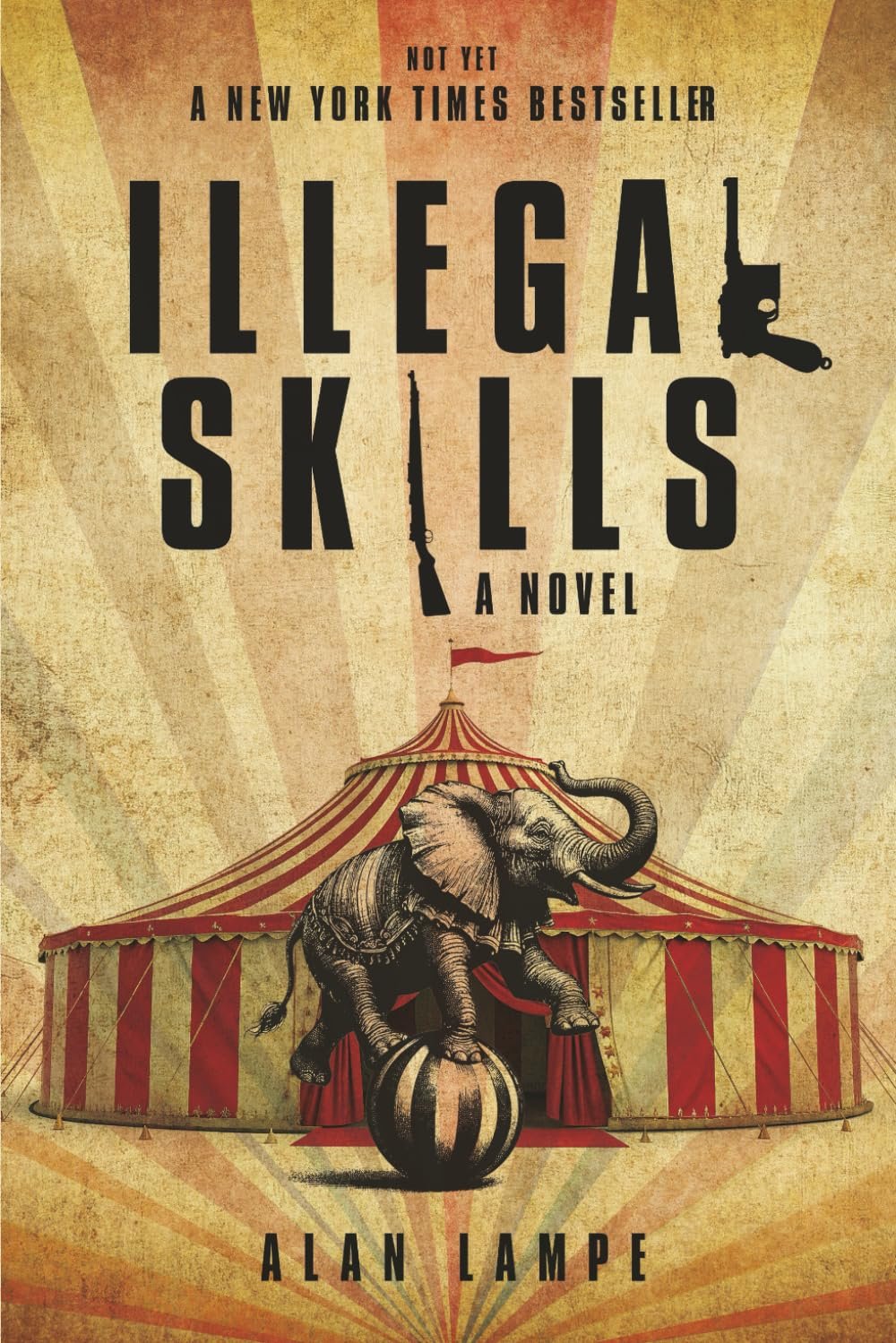
Illegal Skills
After a devastating gymnastics accident, Ethel Pepperton’s drive to be the best becomes a dangerous pursuit of revenge.
Books worth discovering. Authors worth knowing.
After a devastating gymnastics accident, Ethel Pepperton’s drive to be the best becomes a dangerous pursuit of revenge.
A.
A Circus Where Ambition Turns Dangerous
Ethel Pepperton wants to be the best. In Alan Lampe’s Illegal Skills, that desire is neither an inspiring slogan nor an assurance that hard work will pay off. The public synopsis places it at the beginning of a chain of vengeance after a severe fall during a gymnastics routine leads to the loss of her baby. Ethel blames Nurse Dorothy, targets the person she holds responsible and eventually joins the Janicki Family Circus. Her progress within the circus is painfully slow, and her ambition appears to grow harsher rather than wiser as she struggles to reach the top. The premise asks a chilling question: what happens when the urge to succeed stops recognizing ethical limits?
Lampe sets an intensely personal grievance against an unusual social world. Circuses promise glamour, skill and public admiration, yet the work behind a performance can be repetitive, precarious and intensely competitive. That contrast offers a credible environment for Ethel’s frustrations. It is also a good setting for a suspense novel because spectacle can hide coercion. An audience sees the completed feat, not every quarrel or sacrifice required to produce it. The book’s advertised mix of revenge, blackmail and murder suggests that the boundary between appearance and reality will matter throughout.
Ethel’s Distorted Idea of Justice
The emotional beginning of Ethel’s story is devastating, but the premise does not ask readers to approve of her response. Grief and blame can become entangled, and a person who feels wronged may mistake retaliation for repair. Ethel believes Nurse Dorothy is responsible and acts on that conviction. Even if a reader understands the intensity of her pain, understanding a motive is different from excusing the harm it causes. Dark psychological fiction often depends on sustaining that distinction. It can trace a destructive decision from recognizable feelings without turning the decision into something admirable.
Her determination to be the best also complicates the idea of achievement. Many stories treat perseverance as an uncomplicated virtue. Here, perseverance may serve an increasingly distorted goal. Ethel does not simply want a place in the circus; the public description suggests she wants to dominate it. This raises a question about success when it becomes disconnected from responsibility. A triumph won by manipulating or ruining others may change an external ranking while leaving a person less able to form relationships. The published synopsis withholds the ending, but it clearly invites readers to consider the cost of mistaking superiority for fulfillment.
Nurse Dorothy’s Counterstory
Nurse Dorothy is described as devoted to her patients and generally well regarded before Ethel’s revenge destroys her standing. Forced to relocate, she faces a decision about whether to continue caring for others or seek revenge herself. The parallel is the novel’s strongest moral design. Two women endure severe disruptions, and each must decide what those disruptions will make of them. This does not mean their suffering is identical or that the narrative treats them as interchangeable. It means the plot can place very different impulses—retaliation and service, bitterness and commitment—under comparable pressure.
A public reputation is a fragile possession. Being shunned by a community can damage both practical prospects and a person’s sense of identity. In a historical or small-community setting, the effect may be especially intense because social networks are difficult to escape. Nurse Dorothy’s relocation therefore presents a new kind of trial. She must decide whether the vocation that once defined her still has value when other people cease to recognize it. Her story gives the reader another route through the novel’s darkness and prevents Ethel’s ambition from becoming its only moral reference point.
The Circus as a Stage for Secrecy
The Janicki Family Circus makes a vivid contrast with institutional spaces such as the hospital. Gymnastics and circus performance both depend on disciplined bodies and the trust of others, but their public meanings differ. A medical ward promises safety; a circus sells controlled danger. Both can conceal injustices behind the idea of professional expertise. The two women’s trajectories create a potential dialogue between systems where status is granted by applause and systems where it is granted by social or professional trust. The synopsis confirms these settings but does not detail every event connecting them, leaving readers to discover the precise structure themselves.
A circus also enables mobility. Performers travel, audiences change and newcomers can adopt personas. For a character seeking to escape shame or reinvent herself, that freedom may be tempting. Yet moving to a new setting does not erase a past decision. In mystery and suspense fiction, the gap between self-presentation and history can generate a steady undercurrent of menace. Lampe’s choice of world seems designed to let the visual energy of performance coexist with private calculation. Readers attracted to atmospheric thrillers may find that combination more distinctive than a conventional urban crime backdrop.
Ambition, Performance and the Audience
When ambition becomes a spectator sport, people can begin to value the appearance of winning over the meaning of accomplishment. Ethel’s struggle offers fertile ground for that critique. Her attempts to advance may be physically impressive while morally destructive, and the audience within the story might see only the former. The thriller reader occupies a different position: the public premise reveals her history and her willingness to exact revenge, so apparently glamorous advancement carries unease. Suspense arises partly from anticipating when others will recognize a pattern that the reader has been invited to suspect.
This is why the novel’s advertised elements should not be reduced to a list of sensational events. Revenge, murder and blackmail are genre signals, but they also express the consequences of treating other people as obstacles. Nurse Dorothy’s contrasting path asks whether dignity can be preserved when status is taken away. The more interesting question is not only whether characters survive their choices, but whether they are capable of changing the logic behind those choices. Such a reading remains interpretive; it should not be confused with a report on scenes unavailable in the public description.
An Author With a Taste for Dark Contrasts
Lampe’s public author biography describes a preference for combining serious settings with unexpected humor, citing Edgar Allan Poe and Mark Twain among his influences. It also calls Illegal Skills a companion novel to Bill’s Cajun House of Pleasure rather than a direct sequel, connected by period and some familiar figures. That distinction matters to prospective readers. A companion work can be approached on its own terms while rewarding an audience that recognizes a broader fictional environment. No prior title should be treated as mandatory reading unless the author specifically says so.
The author also describes a research-minded approach to details, an encouraging sign for fiction built around specialized settings. Accuracy about a world cannot guarantee the quality of its story, but it can help make unusual situations intelligible. A circus with its own working routines offers opportunities for credibility as well as spectacle. Readers drawn to morally complicated suspense, obsessive characters and the shifting line between justice and revenge may find the premise compelling. Those looking for a comforting story about perseverance should recognize that this is a darker proposition.
The Cost of Being the Best
Illegal Skills is advertised as a narrative of destructive ambition, and its two central trajectories promise a strong contrast between what a person desires and what they owe to others. Ethel’s suffering begins in loss, but the direction she chooses is what turns her into a suspense protagonist. Dorothy’s adversity creates a different moral challenge: whether to remain committed to care after being wronged. Their stories are connected by an original injury, yet the published description leaves the consequences uncertain.
The novel’s appeal lies in its refusal to assume that every act of determination deserves applause. Some goals must be questioned, not pursued harder. Within the glittering and dangerous world of the circus, status can be manufactured, and even talent may become an instrument of harm. Lampe offers readers an opportunity to consider how revenge changes the person pursuing it, and why a victory might not count as one if the pursuit has consumed everything worth protecting.
About the book.
Ethel Pepperton loses her baby after a gymnastics fall, blames Nurse Dorothy, seeks revenge, then joins the Janicki Family Circus; the two women follow different paths through public disgrace and escalating ambition.
Editorial book feature, not paid sponsorship. Independent research-based commentary using publicly available descriptions and author material, not a claim of first-hand full-text review. The cover placeholder will be resolved by the owner’s publishing automation.
Found a book worth opening?
Books worth discovering. Authors worth knowing.
Return to the Journal →