
Harriet and Will: The Secret Rings
A magical adventure reworked for new young readers draws on ancient history, unusual gemstones and the promise of loyal friendship.
Books worth discovering. Authors worth knowing.
A magical adventure reworked for new young readers draws on ancient history, unusual gemstones and the promise of loyal friendship.
D.
Old Objects and New Adventures
A broken tile or a curious object unearthed in a garden can seem unimportant until a storyteller begins asking where it came from. Debra Clewer has explained that the first idea behind her Harriet adventure grew from objects discovered while digging in an old vegetable patch. That encounter led her toward research into ancient Roman domestic life, unusual gemstones and the symbolic role of rings. Harriet and Will: The Secret Rings belongs to the tradition of middle-grade fantasy in which ordinary curiosity opens onto extraordinary places. Its magic has a historical imagination behind it, giving young readers more than one kind of mystery to follow.
Clewer’s account of the book is particularly valuable because she has discussed its revision process in detail. The story first appeared in an earlier form, with the new Harriet and Will title released in 2025. She shortened its chapters after feedback from children who found the previous lengths demanding, including her granddaughter. That editorial choice shows an awareness of real readers rather than a mechanical simplification of the story. An adventure intended for children must make room for suspense and discovery while offering clear places to pause, reflect and return.
Harriet as an Imperfect Hero
Clewer describes Harriet as partly inspired by her own eleven-year-old self, while deliberately granting the character a different set of qualities. She also stresses that Harriet is flawed and learns during her adventures. That is a promising foundation for fiction aimed at young readers. A perfectly brave and consistently correct protagonist may be admirable, but a child who makes mistakes and changes in response can be easier to recognize. The journey becomes less about proving innate greatness and more about discovering how to make good choices when the right one is not obvious.
The author’s interview names resilience and hope as ideas she would like readers to take from the book. Those are substantial themes for a fantasy. Resilience is not simply a matter of pushing onward; sometimes it requires admitting fear, asking for help and changing direction. Hope becomes believable when difficulty is acknowledged rather than wished away. Clewer suggests that Harriet and Will face dangerous circumstances, and that the presence of a friend can matter when bullies or other threats appear. The precise order and resolution of those episodes belong to the novel, not to an advance description.
Rings With Histories
Three rings are central to the title’s imaginative world. The author says she studied the meanings of their jewels and specifically chose a green garnet, an unusual variant of a stone more often imagined as red. She later encountered green garnet in a museum display in Tasmania, a discovery that reinforced the curiosity behind her research. This detail adds texture to the world-building. A jewel can be a magical device, but it also exists as a real mineral with a geological history and cultural associations. Such overlap can encourage children to seek out information beyond the fictional setting.
Research does not turn fantasy into a history textbook, nor should it. Its role is to create convincing edges around the impossible. When a character handles an object whose material existence feels plausible, the leap to enchantment can become more compelling. Clewer’s mention of ancient Roman houses and historical cutlery suggests similar interests. The book’s public description does not provide a complete itinerary of historical destinations, so readers should not be told that Harriet visits specific sites without confirmation. But they can expect the author to have thought carefully about the relationship between invention and the past.
A Dragon With Personal Meaning
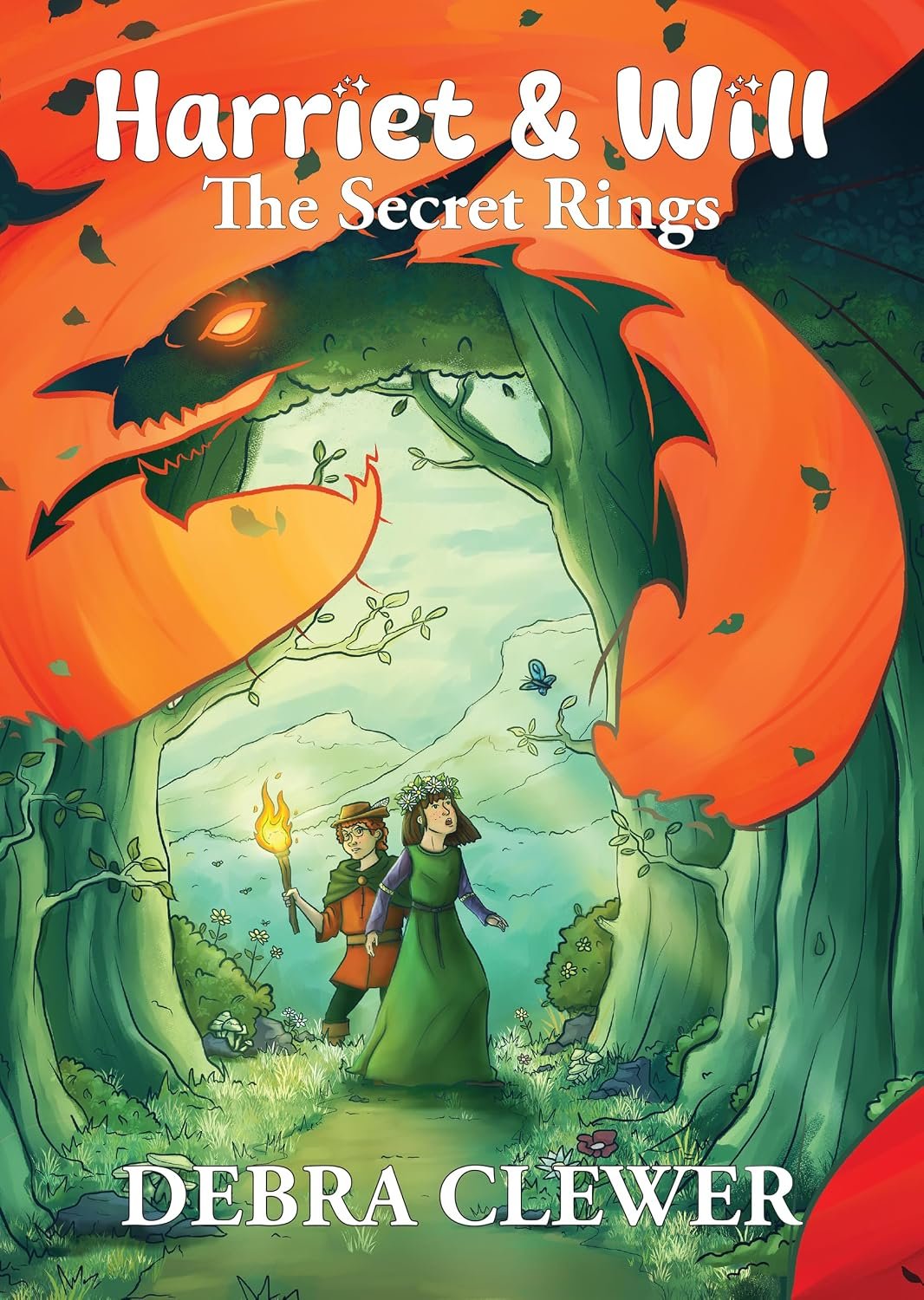
A Welsh dragon named Gruffyd appears in the author’s discussion of the story. Clewer connects the character with her late husband’s Welsh heritage and with the involvement of family members who encouraged her writing. Her interview also describes the book’s dedication to people she lost. These details illuminate the emotional background of the work without implying that every part of its fictional dragon is autobiographical. Writers often transform private memories into symbols that young readers can encounter on their own terms. A dragon can be exciting or comical within the story and still carry a deeper significance for its creator.
This matters because the emotional lives of children’s authors are sometimes overlooked. Stories for young people can be playful and meaningful at once. A magical companion may invite laughter while a scene of courage quietly expresses the author’s belief in mutual support. Clewer’s account suggests that making the work accessible to a new generation has become part of honoring those relationships. The resulting book need not be read as a memorial to be enjoyed. Its origins simply offer another level of appreciation for adults who select books with their children and wonder what shaped them.
Friendship as a Form of Courage
The title gives Harriet a companion, Will, and the author’s interview emphasizes having others at your side when difficulties arise. Friendship in an adventure provides more than comic dialogue. Different characters can notice different dangers, compensate for each other’s weaknesses and occasionally disagree about what should happen next. Such cooperation can show young readers that bravery is a shared activity rather than a solitary performance. When a protagonist struggles, it need not signify failure; it may be the beginning of learning how to trust another person.
For parents and educators, this opens conversations that move beyond the fantastical trappings. What does it mean to stand up to a bully? When is asking for help sensible rather than embarrassing? How can two friends challenge each other’s assumptions without breaking their trust? Those are possibilities invited by the author’s stated concerns, not claims about exact dialogue in the book. The value of the fantasy is that young readers can explore them at a safe imaginative distance, accompanied by gemstones, dragons and the promise of adventure.
An Edition Reimagined for Readers
The 2025 re-release also illustrates the importance of pacing in children’s literature. Shorter chapters can provide moments of arrival and accomplishment, especially for someone still developing confidence in longer books. They can help families read aloud together or encourage a child to try another chapter independently. Clewer says she also revised and edited the text and updated chapter presentation, showing that she thought of accessibility as part of the story’s new life rather than merely a marketing change.
Harriet and Will: The Secret Rings is likely to appeal to families seeking historical-fantasy atmosphere, flawed young heroes and adventure grounded in friendship. It offers a particularly clear example of how curiosity about an ordinary object can grow into an imagined world. The best reason to explore it is not the claim that a magical ring will change everything, but the author’s interest in how young people change when confronted by unfamiliar places, frightening choices and friends who refuse to let them face every challenge alone.
For young readers, the book may offer an additional pleasure in tracing how imagined adventure grows from real research. After a reading session, a family could explore the difference between legends and the histories of Roman homes, or look at how gems form inside rocks. Those activities need not turn the story into schoolwork. The joy is recognizing that curiosity does not stop when a fantasy chapter ends. It can point outward toward museums, conversations, maps and another question waiting to be asked.
About the book.
Debra Clewer describes reworking her original 2017 children’s novel into the 2025 edition Harriet and Will: The Secret Rings, with shorter chapters, researched historic settings, gemstone symbolism and a Welsh dragon named Gruffyd.
Editorial book feature, not paid sponsorship. Independent research-based commentary using publicly available descriptions and author material, not a claim of first-hand full-text review. The cover placeholder will be resolved by the owner’s publishing automation.
Found a book worth opening?
Books worth discovering. Authors worth knowing.
Return to the Journal →