
Raising Wrenns
A Worcester childhood marked by neglect and violence becomes a memoir of survival, belonging and the courage to change an inherited story.
Books worth discovering. Authors worth knowing.
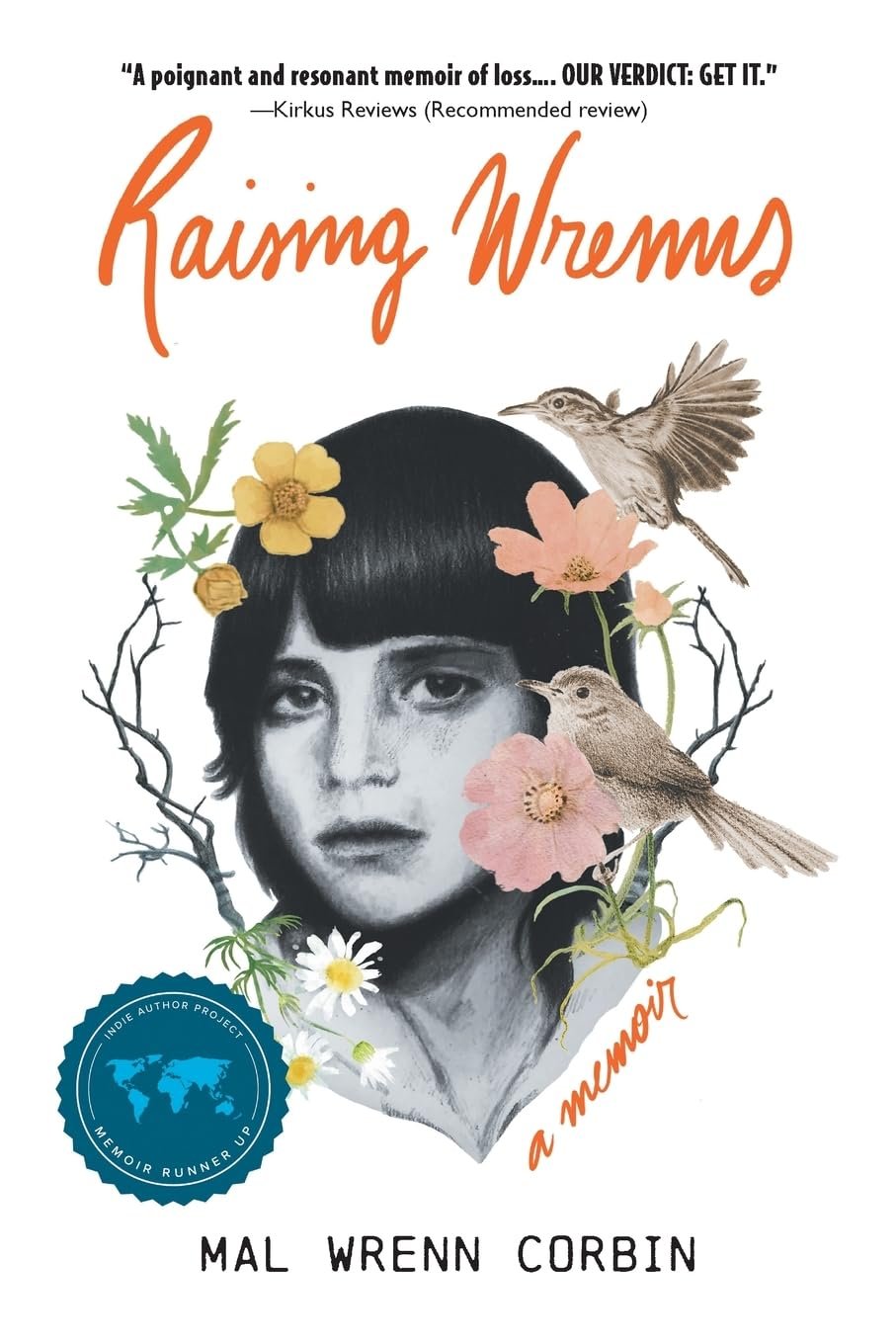
Mal Wrenn Corbin’s wrens do more than give the memoir a name: they offer a way to describe fragile shelter and fierce persistence.
S.
Small Birds, a Childhood Too Heavy to Carry
Mal Wrenn Corbin’s Raising Wrenns is a memoir about more than surviving adversity. It is also about how stories become lodged inside families and how a person eventually finds language to question them. Corbin grew up in Worcester, Massachusetts, in a neighborhood shaped by economic strain, addiction and instability. Her published account describes a childhood marked by neglect and violence, but it also remembers the small flashes of humor and tenderness that complicate any simple portrait of deprivation. The family name becomes an organizing metaphor. Wrens, those tiny and persistent birds, provide a way to reflect on shelters made and remade under difficult conditions.
The image is powerful because it resists grandeur. The birds do not symbolize the easy victory of a hero rising above an obstacle course. They suggest restless movement and vulnerable attempts to make a place to live. Kirkus describes the author’s use of bird characteristics throughout the memoir to illuminate members of her family. That structure allows Corbin to revisit people and places without reducing them to a single kind of experience. Readers encountering her childhood are asked to hold affection, fear, loyalty and disillusionment together. This is a demanding kind of honesty, but it can make a personal history feel recognizably human.
The Geography of a Family Story
Worcester is not merely a birthplace in the book’s framing. Corbin’s public author description situates her childhood amid the decline of local industry, hunger and inherited grief. The Main South neighborhood becomes a setting where material scarcity interacts with family relationships. Poverty in a memoir is often described through generalized language, yet its daily effects are concrete: uncertainty about food, housing or the behavior of adults can change the scale of a child’s world. The writer is not offering a statistical study of the city. She is tracing what that environment felt like from inside one family.
Her account also challenges the assumption that the place one comes from must permanently determine where one can go. Messages absorbed in childhood can become almost invisible rules. People may learn what careers are realistic, which forms of safety are available or whether adults outside the family can be trusted. Corbin’s memoir pays attention to the force of such expectations. It is interested not only in what happened but in the beliefs those events encouraged. That makes her later choices part of the narrative without turning education or professional success into an uncomplicated cure for the past.
Davey, Lisa and the Complexity of Loss
Corbin’s published narrative and independent reviews refer to siblings whose paths through childhood were shaped by unstable caregiving arrangements. Her brother David, sometimes called Davey, is particularly significant to the memoir’s emotional frame. After his suicide in 2018, Corbin was compelled to look back at their shared history and at the losses the family had endured. Kirkus also recounts the childhood separation from her younger sister Lisa, who was adopted by an aunt. These details identify grief as both an event in adulthood and a long shadow across childhood.
A reader should not expect the memoir to deliver a single clear explanation for a loved one’s death. Personal history rarely lends itself to such certainty. Corbin describes painful experiences and returns to them through memory, seeking connection among scenes that may have felt chaotic when first lived. That process is different from assigning blame or offering a universal diagnosis. The losses are real within the author’s reported life; the interpretive labor is personal. Anyone sensitive to material about suicide, domestic violence, abuse or addiction should know that such topics are explicitly part of the book’s public content guidance.
The Courage to Ask for a Different Life
One documented turning point is Corbin’s decision, at fourteen, to ask for placement in a foster home. Her website presents this as an early act of agency that helped reshape her future. It does not suggest that the decision made everything suddenly easy. Leaving an unsafe situation can involve fear, uncertainty and grief for what a family might have been. The simple act of asking can require enormous courage when a young person has been taught to accept the conditions around them as unchangeable.
This is where the memoir’s theme of rewriting a story becomes more than a motivational phrase. To challenge an inherited narrative is not to deny what happened. It is to refuse the conclusion that those events dictate every future choice. Corbin’s subsequent path included higher education and a substantial financial-services career, facts documented in author and alumni profiles. Her memoir does not need those achievements to justify her worth. Instead, they help illustrate the distance between early expectations and a life that developed beyond them.
Memory Has More Than One Texture
Independent reviewers note that Raising Wrenns is unflinching about hardship while also preserving moments of affection and dark humor. That mixture matters. A life described only through terrible experiences can erase the ordinary pleasures people remember with equal intensity. Yet a memoir that emphasizes resilience without acknowledging harm risks minimizing what the writer survived. Corbin’s approach, as described by Kirkus and in her own public materials, attempts to keep both truths visible. Some memories are deeply painful, and others reveal that even an unstable childhood can contain moments of connection.
Language is part of that texture. Kirkus remarks on the memoir’s use of local Massachusetts speech, a detail that helps preserve the sound of the environment rather than smoothing it into an abstract account. Regional voice can make memory immediate. The reader may understand a character’s world through rhythm and phrasing before the wider social context is explained. Corbin’s attention to those textures distinguishes personal narrative from a summary of milestones. The book appears interested in what it means to remember a place vividly, even when the memories remain difficult to revisit.
Beyond the Survival Narrative
The language of triumph is tempting when describing a person who emerged from severe childhood hardship and built an adult life. It can also oversimplify. Corbin’s story suggests that survival and growth do not erase bereavement or make earlier injuries acceptable. She has described her journey from invisibility toward voice and self-worth, while acknowledging the grief embedded in her family’s history. That is a subtler achievement than a story in which every obstacle exists solely to produce a stronger protagonist. The people lost along the way still matter, and their absence cannot be canceled by later success.
The memoir’s wider relevance lies partly in how it approaches the stories people inherit about class, family and possibility. A child’s expectations may be formed before they have the words to question them. Looking back as an adult makes it possible to name some of those constraints, though not necessarily to resolve every contradiction. Readers who have experienced hardship may recognize the effort of separating identity from circumstance. Others may gain a fuller sense of the social and emotional costs that can hide behind simplified accounts of upward mobility.
Recognition and the Author’s Public Voice
Raising Wrenns has received attention beyond its author’s own platform. Kirkus published a favorable review, and the 2024 Indie Author Project recognized Corbin’s memoir among its contest honorees. Her public author materials identify her as a speaker who discusses resilience, identity and the power to challenge limiting beliefs. Such recognition provides context for how the book has circulated, but it does not replace the need to meet the memoir on its own terms. Award mentions and promotional endorsements tell readers about reception, not about what every reader must feel.
Corbin’s experience in finance and public speaking forms a striking contrast with the family circumstances she recounts, and her author biography makes that contrast visible. The risk in talking about such a life is to turn it into a rigid model for others. Not every survivor has access to the same opportunities or support. The memoir’s meaningful invitation is narrower and more humane: that people can consider the narratives shaping their sense of worth, and that those narratives need not always retain the final word.
A Book That Carries Its Own Warning
Readers considering Raising Wrenns should be prepared for frank material about neglect, childhood trauma, addiction, violence and suicide. Its subject cannot be made comfortable without distorting it. Yet the public descriptions also emphasize humor, love and Corbin’s search for a life not wholly defined by early hardship. The wrens metaphor binds those aspects together: small creatures constructing temporary safety, finding strength without ever becoming invulnerable.
The memoir appears especially relevant to readers of literary life writing who value attention to voice, family complexity and place. Its power lies not in a promise that suffering is automatically redeemed but in the act of describing a difficult inheritance and deciding what to carry forward. Corbin’s book asks readers to consider how a family story can remain part of identity without becoming its prison. That is an important question—and one that deserves the candor with which the author has chosen to approach it.
About the book.
Corbin describes growing up in Worcester’s Main South amid poverty, addiction and familial trauma. She contrasts family history with the resilience of wrens and traces a path through foster care, education and adult reflection, including grief after her brother’s suicide.
Editorial book feature, not paid sponsorship. Research-based commentary from named public sources, not a first-hand complete-book review. The cover placeholder will be resolved by the owner’s publishing automation.
Found a book worth opening?
Books worth discovering. Authors worth knowing.
Return to the Journal →