
The Soul Contract
A spiritual love story that foregrounds heartbreak, forgiveness and divine timing.
Books worth discovering. Authors worth knowing.
A spiritual love story that foregrounds heartbreak, forgiveness and divine timing.
Research-based literary perspective on a verified edition.
Ana Warner’s The Soul Contract: A Love Story of Forgiveness and Divine Timing places relationship pain inside a spiritual vocabulary. The public book description identifies Malaika’s story as an invitation to question twin flames, soulmates and karmic relationships, and it emphasizes what can be learned from heartbreak, loss and the work of forgiveness. This is not a basis for claiming that a universal spiritual mechanism governs human partnerships. It is a particular work’s chosen way of interpreting the experience of love. Its interest lies in a question many people recognize even if they do not share its metaphysical language: can the end of an attachment become a source of understanding rather than only a proof of failure?
What do we mean by a soulmate?
The term “soulmate” is deceptively simple. For one person it suggests immediate recognition; for another it means a compatibility built through time, trust and shared choices. In spiritual romance, the word may be understood as describing a connection with significance beyond the ordinary. Warner’s published description asks readers to reconsider such categories rather than merely accept a single definition. That is a promising opening, because labels can help people articulate intimacy while also becoming a way of explaining away pain. A relationship does not necessarily become safe or mutual simply because one person experiences it as fated.
Readers can approach this tension with both curiosity and healthy boundaries. A spiritual framework may offer comfort, but it should not be treated as evidence that someone must remain in a harmful situation or endure mistreatment. The story’s advertised focus on forgiveness makes the distinction particularly important. Forgiveness and reconciliation are not synonyms. A person may release an obligation to keep reliving resentment while choosing not to resume an unsafe bond. That distinction is a relevant interpretive tool even though the available summary does not reveal Malaika’s precise decisions.
The difficult education of heartbreak
Love stories often celebrate the moment two people move toward each other. Stories about the aftermath of love examine a less photogenic labour: how a person continues after expectations collapse. The description of The Soul Contract explicitly treats heartbreak and loss as experiences from which the protagonist and reader may seek lessons. That emphasis can feel hopeful, but the idea of growth deserves careful handling. Pain does not automatically improve a person, and no one is required to be grateful for suffering while they are living through it. Meaning is something people may create in response to an experience, not a debt they owe the experience itself.
The most persuasive reflective fiction makes room for that uncertainty. Learning may involve recognizing a recurring pattern, clarifying a limit, or discovering that an imagined future cannot be repaired. It may also involve accepting that some questions will not receive satisfying explanations. Warner’s description frames the journey as spiritual development; a reader can decide whether that framework illuminates their own life while still responding to its underlying human emotions. The value of a book like this need not depend on complete agreement with its beliefs.
Forgiving another person and forgiving oneself
The available synopsis specifically names both forms of forgiveness. This distinction has emotional depth because people sometimes find it easier to identify someone else’s mistake than to acknowledge their own reasonable limitations. Self-blame may appear after a relationship ends, especially when affection persists. Yet deciding with imperfect information is part of being human. A person can take responsibility for genuine errors without converting every disappointment into proof of unworthiness. A story framed around divine timing can invite that kind of self-examination, provided its spiritual interpretation does not obscure ordinary agency.
Forgiving another person likewise does not require rewriting what happened. Readers should be alert to how the narrative distinguishes compassion from the erasure of accountability. A charitable interpretation of someone’s motives may coexist with the recognition that their actions caused harm. If the book encourages readers to reconsider resentment, it can be read alongside a practical question: what boundaries would allow kindness and self-respect to remain in the same life? The summary makes forgiveness a central theme, but it does not authorize claims about specific scenes of reconciliation or what the characters ultimately choose.
Divine timing and the urge for certainty
The subtitle names divine timing, a concept that can offer reassurance when events seem chaotic. Under this lens, a delayed relationship or painful ending may acquire meaning within a larger imagined order. There is a poetic appeal in that perspective: it resists treating every disappointment as random or pointless. At the same time, timing can become a dangerous explanation when it encourages endless waiting for someone who has not made an equivalent commitment. A thoughtful reader can engage the spiritual theme without surrendering judgement about present behaviour.
Romantic narratives are particularly suited to exploring this tension because they involve multiple people, each with a separate will. No interpretation of destiny can ethically substitute for mutual consent. The phrase “divine timing” may be a source of solace, but it need not be a reason to ignore what someone has openly said or done. Bringing this distinction to the book can deepen rather than diminish its questions. It allows faith, longing and practical responsibility to coexist as subjects of reflection, not as automatic answers.
Reading a spiritually framed love story
Warner’s summary refers to twin flames and karmic relationships, expressions that have different meanings across communities. It would be misleading to present those meanings as universally agreed, or to imply that the novel supplies scientific evidence for them. The safer and more interesting approach is to understand the language as part of the book’s imaginative and philosophical perspective. It may name the author’s way of organizing difficult emotional experience, while other readers may find an equivalent insight in psychology, literature or everyday conversations about attachment.
This openness is valuable for a book club. One reader may be moved by the belief that relationships carry spiritual lessons; another may prefer to speak of learning through experience. Both can discuss why a particular connection seems impossible to forget, whether idealization clouds judgement, and how people rebuild their understanding of love after disappointment. The existence of different interpretations need not reduce the emotional seriousness of the story. It may be precisely what makes a relationship narrative worth talking about.
Who may want to read it
The Soul Contract is a likely match for readers receptive to spiritual romance, reflective fiction and themes of emotional recovery. Those who have been interested in twin-flame or soulmate language may welcome the book’s invitation to question familiar assumptions; readers who do not share that worldview may still find meaning in its emphasis on self-forgiveness and the lessons people draw from loss. It is less clearly suited to someone seeking evidence-based relationship counselling or a narrowly realistic romance without metaphysical context. The verified information identifies a story centred on Malaika, forgiveness and spiritual interpretation, not a set of universally validated prescriptions. Readers should approach any life advice as a perspective to consider rather than a substitute for their own circumstances and judgement.
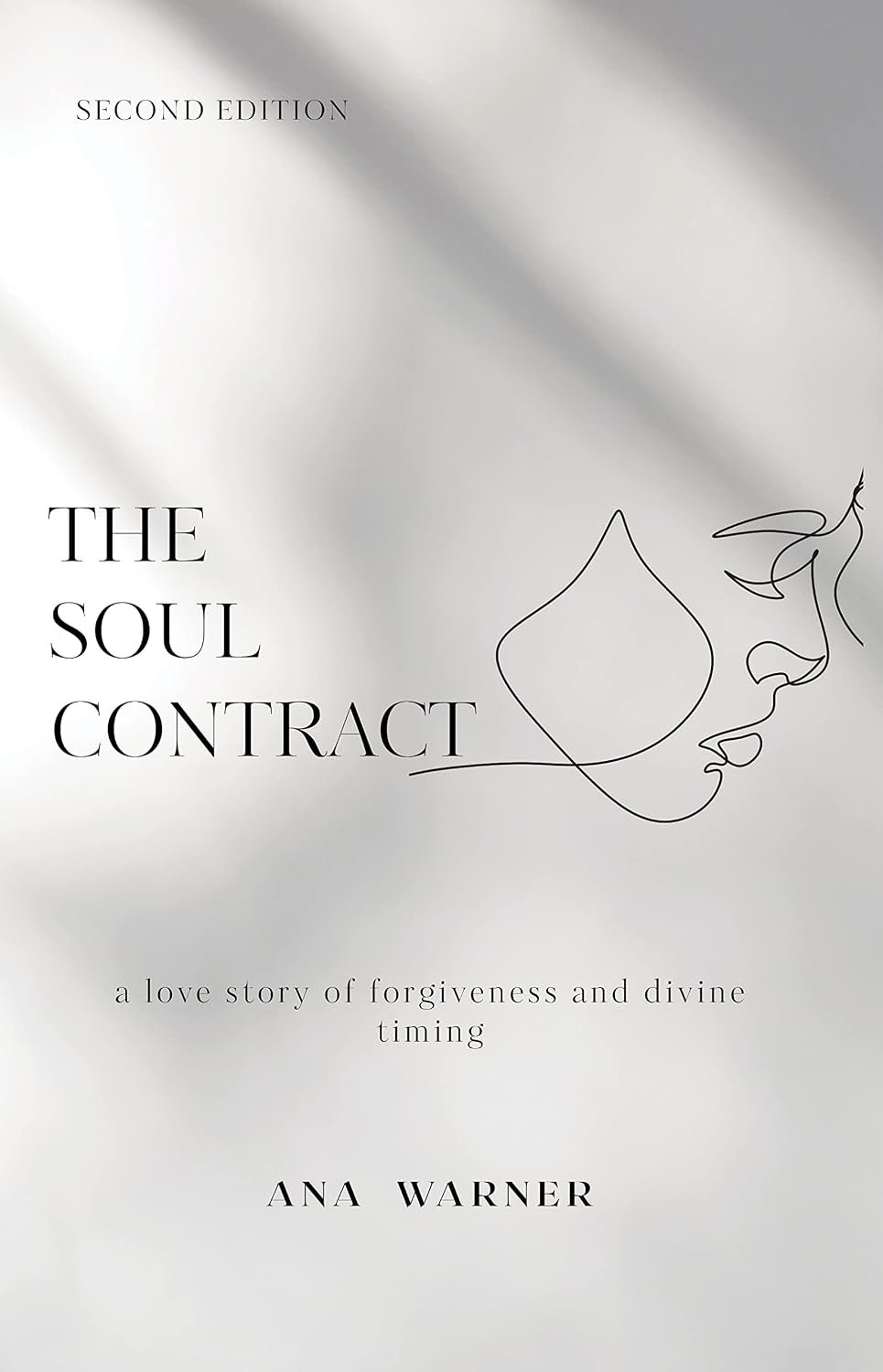
The verified cover identifies this as a second edition, while the queue preserves its original Amazon Italy listing. This sponsored feature does not claim to have examined edition differences or the full novel. It offers an introduction to a book that uses the language of the soul to ask a recognizably human question: what part of love can a person carry forward when the relationship itself cannot remain as it was?
About the book.
A spiritual love story that foregrounds heartbreak, forgiveness and divine timing. The purchase link preserves the original listing in the queue.
The book is designated as a sponsored feature in the MarketAnyBook queue. This article is an original research-based introduction, not a firsthand review; editorial interpretation is identified as such. Sources comprise publicly available publisher, retailer or bibliographic descriptions and the verified queue and cover; detailed interior content has not been independently examined.
Found a book worth opening?
Books worth discovering. Authors worth knowing.
Return to the Journal →