
Chance's Tips and Tails
A rescue dog’s perspective on companionship, adoption and the work of earning trust.
Books worth discovering. Authors worth knowing.
A rescue dog’s perspective on companionship, adoption and the work of earning trust.
Research-based literary perspective on a verified edition.
A rescue dog’s story is never only about the moment an animal leaves a shelter. It is also about the many ordinary acts through which an unfamiliar house becomes a home. Barbara McGinley and Dario Lemut’s Chance’s Tips and Tails: A Rescue Dogs’ Story is presented as a narrative and practical guide drawing on Chance’s life, including his role as an emotional-support dog and his relationship with Barbara. Publisher material describes a perspective that moves between rescue dogs and their owners while offering advice to people preparing for adoption. This combination of lived companionship and practical responsibility is what gives the book its promise: tenderness is meaningful when it is joined to patience, preparation and care.
The adoption story does not end at the door
Popular rescue narratives often concentrate on the dramatic transformation of the first encounter. An animal is vulnerable; a person offers a home; the story seems to conclude in gratitude. Real relationships are more gradual. Even when an animal is safe, new routines, unfamiliar sounds, different people and the absence of earlier reference points can require time to negotiate. The publisher specifically positions the book as a guide for prospective adopters, so it is reasonable to read its subject through the practical questions that follow a rescue. That does not mean we can assert Chance experienced every difficulty other dogs encounter. His particular journey belongs to the narrative itself.
Adoption is often an act of kindness, but kindness alone is not a plan. A prospective owner needs to think about space, veterinary care, training, schedules and how an animal’s needs may change. A book told with warmth can make these obligations less abstract. Rather than treating care as an endless string of perfect choices, readers can approach it as a relationship shaped by observation and adjustment. The better question is not “How quickly will this dog become the companion I imagine?” but “How can I learn to recognize the companion who is actually here?”
What a dog’s point of view can accomplish
The published description says Chance shares his adventures and that the book draws on the perspectives of dogs and owners. When an animal story adopts a canine viewpoint, it invites readers to suspend their own habitual priorities. Human beings tend to think first about deadlines, furniture, travel and convenience. A dog’s world may be understood through routine, sensory cues and repeated encounters. An imagined canine voice can give emotional immediacy to this difference, even while readers recognize that a literary narrator cannot report an animal’s thoughts with scientific certainty.
That boundary is worth maintaining. A dog’s behaviour can be observed and interpreted, but an author’s representation remains an act of storytelling. Its value lies in helping human readers pay closer attention. A change in posture, reluctance to approach or enthusiasm for a familiar activity can matter more than an owner’s initial expectation. By shifting the angle of narration, a rescue-dog book can encourage humility: what looks like stubbornness from one side may look like uncertainty from the other. The book’s verified premise supports that reflective use without requiring invented episodes from Chance’s life.
Emotional support and mutual dependence
Chance is described as serving as an emotional-support dog. That role signals an important dimension of the human-animal relationship, but it should not be turned into an unsupported medical claim. Companion animals may bring affection, structure and a sense of continuity to people’s lives; individual experiences vary, and this book’s portrayal is a personal narrative rather than a clinical trial. The language of support is most meaningful when both directions of care remain visible. A dog may provide reassurance to an owner, while the owner must ensure the animal is safe, healthy and able to behave as a dog.
This reciprocity challenges the assumption that a companion exists only to meet human emotional needs. A rescue animal is not a remedy that can be prescribed without context. Temperament, history, environment and resources matter. The strongest relationship may be one in which affection is expressed not simply through closeness but through dependable routines and respect for limits. Readers who come to the book for its warmth might also gain a richer understanding of what gratitude looks like when it becomes sustained responsibility rather than a sentimental moment.
Names, nicknames and a shared life
The public description calls the dog Chance, Wingman Chance and Chanceypants. Those affectionate variations are small but evocative clues about how an animal becomes part of a household’s language. Nicknames arise through repetition and familiarity; they encode jokes, habits and memories that outsiders may not fully understand. In a story about rescue, that intimacy matters because it suggests the transformation of an unknown animal into someone the family recognizes as particular and irreplaceable. We do not need to invent the origin of each nickname to appreciate what their coexistence signifies.
The book’s title also offers an appealing play on “tips” and “tails.” Advice and story sit beside each other, suggesting that information is easier to remember when it arrives through a life rather than through instructions alone. A reader may come for guidance and stay for character, or come for a heartwarming animal account and leave with practical questions about adoption. This double purpose can be a strength if the writing makes room for both, though the balance and execution remain matters for the complete work.
The ethics of telling a rescue story
There is an understandable wish to describe rescue as a simple moral achievement: a good person saves an animal and is rewarded with unconditional love. Yet adoption is more collaborative than that formula allows. Shelters, foster carers, veterinary professionals and a dog’s earlier history may all shape the eventual home, even when their roles are not visible in a short public description. A thoughtful reading can resist turning the animal into a symbol of its owner’s virtue. Chance is not valuable merely because he provides an uplifting lesson; he is valuable as a living being with needs of his own.
The book’s described practical focus supports this more balanced approach. Preparing to welcome a rescue dog requires realistic expectations, not only an emotional response to a touching photograph. A reader may ask whether they can provide consistent care through illness, behavioural adjustment, moving house or ordinary changes in household circumstances. Such questions should not diminish the joy of companionship. They are the conditions under which a hopeful rescue story can become an enduring one.
Who may want to read it
Chance’s Tips and Tails will likely interest rescue-dog adopters, volunteers, animal lovers and families considering the responsibilities of bringing a dog home. The narrative perspective may be especially approachable for readers who prefer personal stories to a formal handbook, while the promise of adoption advice can give it practical use beyond a sentimental memoir. Readers seeking technical veterinary instruction should still consult qualified professionals, since a personal story is not a substitute for individualized medical or behavioural guidance. The verified description emphasizes the bond between Chance and Barbara and the challenges as well as benefits of rescue ownership, making it most appealing to those who are prepared for both sides of the relationship. It invites affection without pretending affection alone will solve every problem.
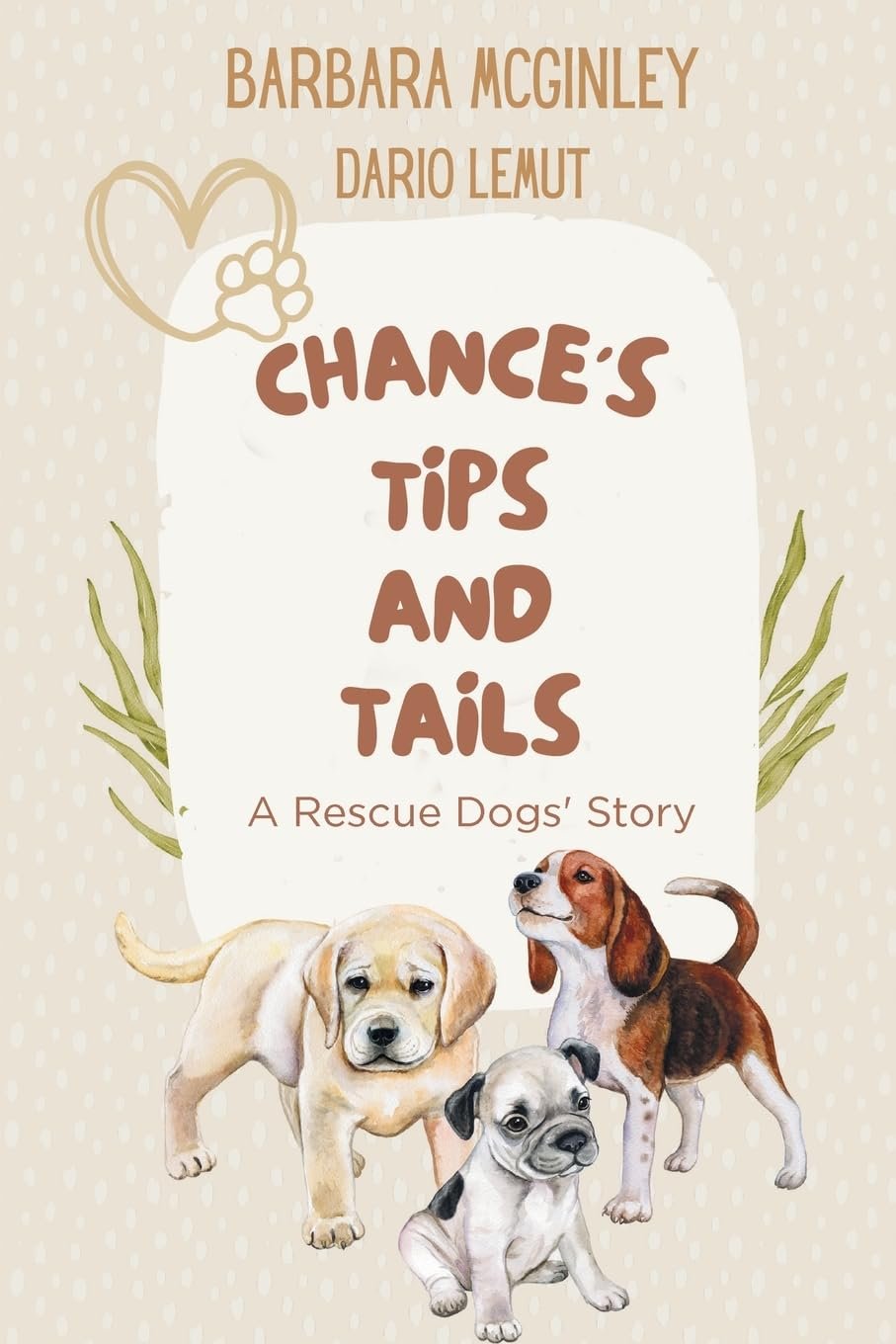
The queue credits Barbara McGinley and Dario Lemut, and the publisher’s description matches the rescue-dog story depicted on the verified cover. This research-based introduction has not assessed the whole book page by page. What it can affirm is the meaningful question at its centre: how does a rescued animal become not a symbol of kindness, but a companion whose life is respected in its own right?
About the book.
A rescue dog’s perspective on companionship, adoption and the work of earning trust. The purchase link preserves the original listing in the queue.
This is an independent research-based editorial introduction, not a claim to firsthand reading or a personal review of the full book. Sources comprise publicly available publisher, retailer or bibliographic descriptions and the verified queue and cover; detailed interior content has not been independently examined.
Found a book worth opening?
Books worth discovering. Authors worth knowing.
Return to the Journal →