
The Florence Sisters
A WWII story about Englishwomen in Florence, threatened art and a decision with lasting stakes.
Books worth discovering. Authors worth knowing.
A WWII story about Englishwomen in Florence, threatened art and a decision with lasting stakes.
Research-based literary perspective on a verified edition.
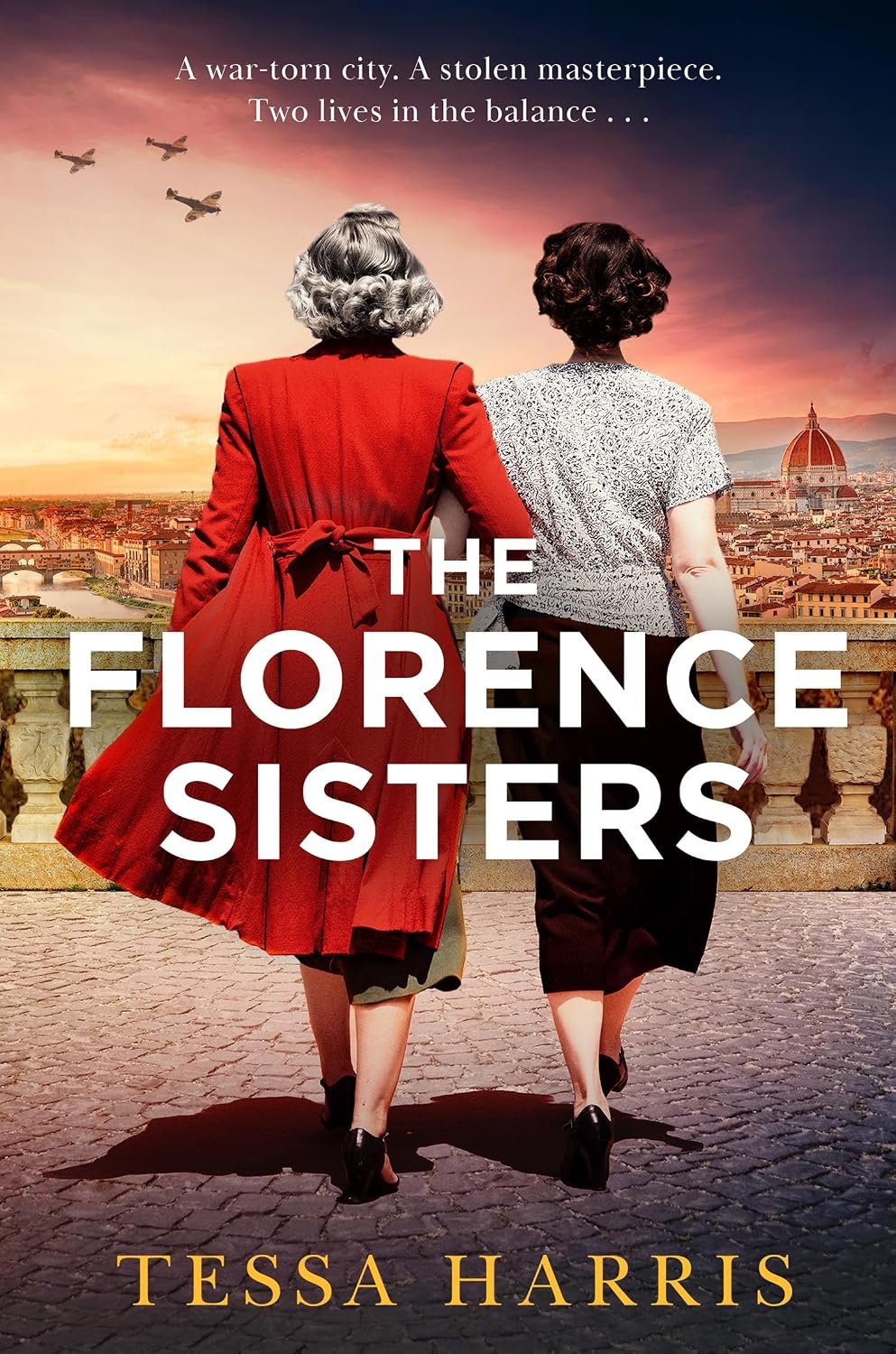
Florence is a city built partly from the visible memory of art, which makes it a powerful setting for a novel about the deliberate destruction of cultural belonging. In Tessa Harris’s The Florence Sisters, the year is 1940 and the lives of Englishwomen living in Italy are threatened by the onset of war and Fascist repression. The publisher’s account introduces Angelina Leone, an art historian who agrees to authenticate works taken from Jewish families in exchange for the safe passage of her Aunt Agatha. When she identifies a priceless portrait as a fake to prevent its theft, the decision risks consequences she cannot fully foresee. This is historical fiction built around an especially difficult moral collision: the obligation to protect loved ones and the duty not to help an oppressive system profit from stolen lives.
The fragile comfort of an established city life
The women’s society at the centre of the description is sometimes called Il Scorpione, and its members have created routines involving tea rooms, bookshops and the social spaces of Florence. Such details might appear gentle beside the violence of a world war, but that contrast is precisely their significance. Ordinary routines make a home recognizable. When Fascist restrictions close familiar places and make movement dangerous, the loss is not merely one of leisure. It is an attack on the small forms of freedom through which people sustain friendship and dignity.
Historical fiction can make large political events comprehensible by showing their effects on a familiar scale. A reader who encounters war only through armies and governments may struggle to imagine the daily erosion of security. A shuttered café or a threatening journey across town offers a more intimate measure. Harris’s public description clearly grounds the story in wartime Florence; it does not authorize an invented chronology of every event depicted. The opening situation is enough to emphasize how quickly the ordinary can become precarious when state power decides who may belong and who may move safely.
A woman’s expertise becomes dangerous
Angelina is an expert art historian. That professional identity gives her a particular kind of agency in the plot: she can recognize and authenticate works whose value makes them targets. Yet the circumstances under which she is asked to use that expertise are coercive. She wants her aunt protected, while the people demanding authentication are connected to a system of theft. The dilemma is not simply whether she knows the answer. It is whether telling the truth in one context might help criminals achieve an injustice.
By making a declaration of authenticity central to the story, the premise turns professional knowledge into a moral choice. An art historian may ordinarily regard accuracy as a duty. In a world where authorities exploit that accuracy to identify objects to seize, the relationship between truth and justice becomes more complicated. This is not an argument that deception is universally virtuous; it is an invitation to examine the conditions under which a person acts. The publisher’s description states that Angelina declares a portrait fake. Readers can discover from the novel how that decision reshapes the dangers around her.
The violence of stealing art
The novel’s premise identifies artwork stolen from Jewish families. That detail matters because the loss of art under Nazi persecution was not merely an economic theft. Objects carried family histories, spiritual significance, cultural identity and connections between generations. A painting seized from its owner can become an emblem of a larger process that sought to remove people from public and private life. Fiction has an ethical obligation to resist treating such losses as a glamorous treasure hunt detached from the people who suffered them.
Readers can therefore ask how The Florence Sisters keeps human lives in view while following the fate of a valuable portrait. Does the object stand for the history of those from whom it was taken, or become only a prop for intrigue? The publisher’s synopsis foregrounds both the Jewish family’s ownership and the danger posed by the Germans, which supplies an appropriate foundation for the question. The complete novel, rather than its jacket description, must be the place where its handling of wartime suffering is ultimately judged.
Why a false declaration can reveal the truth
Angelina’s decision to call the portrait a fake is an illuminating reversal. Ordinarily authenticity is a quality to be established, protected and celebrated. Under coercion, withholding a true assessment can become a refusal to lend expertise to theft. The scene described by the publisher suggests a moral world in which professional rules cannot be applied without considering who has power and what they intend to do with the answer. The reader is placed near a difficult question: when a system is organized around injustice, can a truthful statement become a tool of harm?
At the same time, deception has risks. A false declaration may mislead allies, provoke suspicion or generate consequences its maker did not intend. Historical fiction gains suspense by refusing to let its characters operate with the hindsight available to later readers. Angelina does not have the security of knowing how the war or her particular choice will end. She has a narrower set of options, each carrying danger. The promise of the novel lies in making readers feel that narrowing rather than treating resistance as an effortless act of certainty.
Women’s friendship as more than a comforting backdrop
The group of older Englishwomen is central to the book’s advertised identity. Fiction sometimes relegates older women to comic relief or sentimental advice, particularly when a younger protagonist drives the action. Here the threat to their social world forms part of the novel’s political stakes. Their community has value because it is something its members have made together, an informal institution that can offer companionship, memory and practical solidarity when formal institutions become threatening.
The title The Florence Sisters suggests a bond that may be chosen rather than biological. That does not mean every woman will necessarily behave heroically or agree on every risk. In fact, a convincing portrayal of solidarity may involve fear and disagreement as much as courage. The description mentions Aunt Agatha and the society’s members but does not supply a complete account of their individual actions. An attentive reading can ask whether the novel gives each woman agency, and whether their bonds help turn private survival into an ethical commitment to others.
Historical fiction and its boundaries
The book is marketed as historical fiction inspired by true events, and its publisher places it in wartime Florence. Those labels do not mean every character, conversation or sequence can be treated as documentary record. Historical fiction often uses invented personal narratives to illuminate real political conditions. The useful reading distinction is between the broader historical fact of Fascist and Nazi persecution and the novel’s individual plot, which belongs to the author’s reconstruction. Readers who want to learn more about wartime art theft should also consult historical scholarship and museum provenance research.
Harris’s background in historical writing may encourage confidence that she has sought a convincing setting, but the feature does not independently verify every historical detail inside the novel. The publisher identifies the story’s core predicament and the place where it occurs. What matters for an editorial introduction is preserving the moral seriousness of that setting without using fictional scenes as evidence that particular undocumented acts occurred.
Who may want to read it
The Florence Sisters should appeal to readers drawn to World War II historical fiction, women’s friendships and stories that place individual courage within larger systems of danger. Art history gives the central conflict a distinctive shape, while the elderly Englishwomen’s threatened social world promises a perspective different from a battlefield narrative. It is particularly suitable for readers interested in choices made under coercion rather than straightforward victory plots. Those sensitive to stories of wartime persecution and dispossession should be aware of the described themes before choosing the book. The publisher’s synopsis is detailed enough to establish the situation, not to guarantee the tone of every scene or the treatment of its ending. This sponsored feature is an invitation to consider the work, not a claim of personal historical or literary verification.
Tessa Harris is credited as author, and the publisher identifies the April 2025 paperback edition linked to the listed work. At its heart, the verified premise offers a pressing question: when a priceless object can be saved only through a dangerous lie, what is the true value being defended—the painting, the people it belongs to, or the moral refusal to surrender either?
About the book.
A WWII story about Englishwomen in Florence, threatened art and a decision with lasting stakes. The purchase link preserves the original listing in the queue.
The book is designated as a sponsored feature in the MarketAnyBook queue. This article is an original research-based introduction, not a firsthand review; editorial interpretation is identified as such. Sources comprise publicly available publisher, retailer or bibliographic descriptions and the verified queue and cover; detailed interior content has not been independently examined.
Found a book worth opening?
Books worth discovering. Authors worth knowing.
Return to the Journal →