
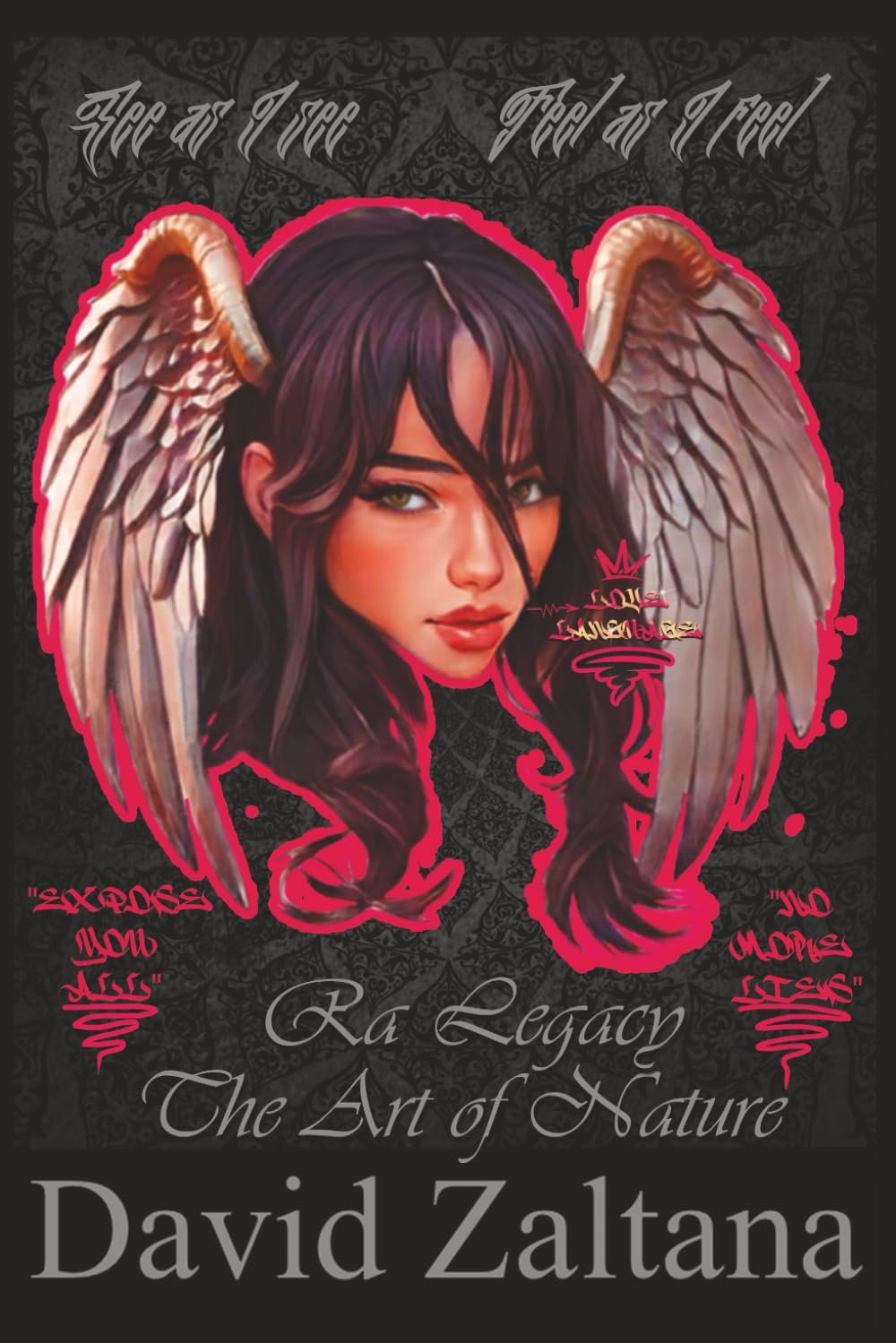
Ra Legacy: The Art of Nature
David Zaltana follows Ra into a speculative struggle involving nature, technology, spiritual forces and the power to shape tomorrow.
Books worth discovering. Authors worth knowing.
David Zaltana follows Ra into a speculative struggle involving nature, technology, spiritual forces and the power to shape tomorrow.
Original editorial introduction, grounded in the verified book edition and public descriptions.
A future shaped by human choices may sound like a promise of control. David Zaltana's Ra Legacy: The Art of Nature places that hope beside a warning about manipulation, spiritual conflict, and the unpredictable forces of technology and nature. The author describes the novel as Ra's journey through a world of change, presenting artificial intelligence, angels, demons, and the search for inner freedom among its concerns. This is a broad and deliberately visionary premise, closer to a speculative meditation on responsibility than to a narrowly technical forecast of tomorrow.
A protagonist inside a changing world
Zaltana's own book description invites readers to follow Ra while insisting that the future is something people create together. The importance of a named central figure is that an immense theme can be experienced as a personal journey. A narrative about technological power, nature, and competing spiritual forces could become abstract if it remained a list of arguments. The idea of Ra making choices against a mutable background gives that material an emotional point of entry. The public author description does not document a complete sequence of scenes or the precise rules of the fictional world, so no such sequence is invented here.
The subtitle The Art of Nature can be read as a challenge to the assumption that people stand outside their environment, shaping it with no consequences for themselves. Nature has its own force in the promotional account, and the future depends on understanding our relationship to change rather than denying that change will occur. The book's language is explicitly hopeful, but hope is not presented as a guarantee that threats will disappear. The more demanding idea is that communities must decide what to protect and what kind of progress is worth pursuing. That is the frame within which Ra's journey appears to operate.
Technology as a force that requires interpretation
The published synopsis attributes a kind of spirit or nature to artificial intelligence and warns that it can understand or influence people in unsettling ways. Within this feature, those are the author's imaginative and philosophical propositions, not independently established claims about real AI systems. The artistic question is what happens when a person gives too much authority to an entity, process, or institution whose motives are not fully visible. Science fiction has long used unfamiliar intelligence to make ordinary human choices look strange. Zaltana's premise extends that concern toward self-knowledge: resisting manipulation may begin with knowing what matters to oneself.
This emphasis shifts the apparent conflict away from a simple humans-versus-machines binary. A technological tool may magnify existing vulnerabilities rather than create them from nothing. When desire, fear, and convenience become openings for control, a society must confront its habits as well as its inventions. That is a possible critical reading of the described themes, not a claim about a specific machine or plot revelation in the novel. Readers interested in philosophical speculative fiction may find this tension more significant than the question of whether a particular futuristic device is scientifically plausible.
Angels, demons and the language of struggle
Zaltana's synopsis includes angels and demons struggling around human beings. Such figures can operate literally within fantasy while also inviting symbolic reflection on choices, temptation, and fear. The author uses emphatic moral language about those who pretend to help while attempting to control others. A careful introduction can explain this thematic position without representing spiritual claims as verifiable accounts of the world. The question is how a fictional person identifies trustworthy allies, especially when apparent reassurance may conceal coercion or a desire for power.
A story that combines these elements risks becoming crowded, yet the conjunction is what distinguishes the project from a purely ecological allegory or a purely technological thriller. Nature, artificial intelligence, and spiritual conflict are different ways of asking what human agency means. They address forces outside individual control while insisting that response still matters. The author repeatedly links freedom to understanding oneself, suggesting that the inward and outward struggles belong together. Whether the narrative fully resolves that complexity is not something an editorial spotlight based on descriptions can judge as though the entire novel had been read.
Resilience without easy certainty
The author's promotional language emphasizes resilience, unity, love, and possibility. Those terms are familiar enough to feel generic unless connected to the book's less comfortable premise: shadows come into view, uncertainty persists, and manipulation can wear a friendly face. In that context resilience means continuing to make choices when clarity is imperfect. It is not invulnerability. The novel appears to ask whether communities can respond to danger without adopting the same controlling habits they oppose. That interpretive question makes the promised hopeful conclusion more demanding than simple reassurance.
The title's attention to legacy reinforces the time scale of responsibility. A legacy is not only what a protagonist inherits but also what choices leave for others. A sustainable future cannot be evaluated solely through the immediate comfort of a single generation. Zaltana's language invites readers to think in terms of shared consequence, even as the story uses a fantastical struggle to express the conflict. Readers may find it productive to ask how Ra's search for freedom relates to her obligations toward others and toward the natural world depicted in the novel.
Who is this book for?
Ra Legacy: The Art of Nature is likely to interest readers who enjoy speculative fiction with overt philosophical and spiritual questions. Its public description foregrounds a central figure named Ra, a contested future, artificial intelligence, supernatural forces, and an ethic of love and unity. Readers who want world-building that functions as an argument about contemporary anxieties may be drawn to that combination. Those who prefer hard science fiction or restrained realism should understand that the author's language makes room for angels, demons, and explicitly visionary ideas. Exact pacing, character relationships, and plot twists cannot be responsibly inferred from the available promotional summary. The supported recommendation is for audiences comfortable with a blend of imaginative narrative and reflection on humanity's choices.
An unfinished world as a literary invitation
The most interesting question raised by the description is not whether the future can be predicted. It is who gets to shape it, and by what values. Ra's presence gives the question a narrative center; technology and spiritual conflict widen the stakes; nature provides the condition on which all other plans depend. This feature is an original interpretation of the author's published account, not a report of having read every scene. The invitation to readers is to enter a novel that insists uncertainty need not cancel responsibility. Whether the book's imagined world persuades them will depend on how its choices and consequences are developed on the page.
About the book.
David Zaltana follows Ra into a speculative struggle involving nature, technology, spiritual forces and the power to shape tomorrow. Public bibliographic details have been distinguished from editorial interpretation.
Sponsored book feature: the MarketAnyBook queue lists this book as sponsored. This original research-based editorial article is not a firsthand reading or an independent endorsement. Bibliographic descriptions and author or publisher statements are interpreted with clear source limits. The original purchase URL remains unchanged; WordPress cover media is added later by the owner’s publisher.
Found a book worth opening?
Books worth discovering. Authors worth knowing.
Return to the Journal →