
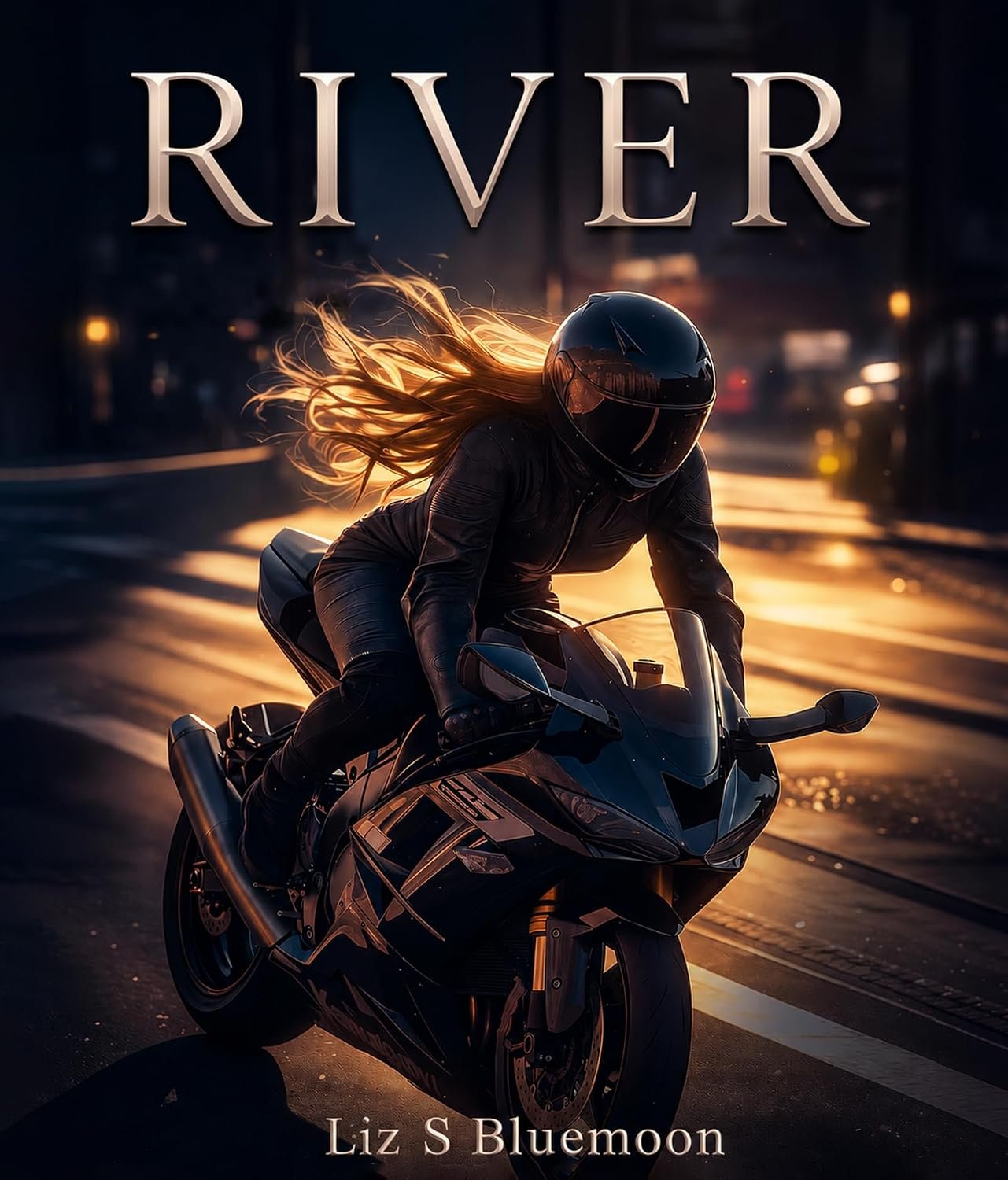
River
A longtime friendship meets the uncertainties of college when River Barlowe encounters a new romantic possibility.
Books worth discovering. Authors worth knowing.
A longtime friendship meets the uncertainties of college when River Barlowe encounters a new romantic possibility.
Original editorial introduction, grounded in the verified book edition and public descriptions.
At the edge of high school and adulthood, a longstanding friendship can look like the safest part of life. Liz S. Bluemoon's River sets its romantic tension at the point when that safety begins to change. Public bookseller descriptions identify River Barlowe, her best friend Zach Grey, their move from a Texas community near Houston to college, and the arrival of football player Alec Madden. Those details establish a recognizable but potent triangle: a friendship shaped by years of familiarity meets the attraction and uncertainty of a new social world.
A friendship before the campus begins
The published synopsis says Zach has had romantic feelings for River since elementary school, while River has not recognized them in the same way. That asymmetry is crucial. It means the characters arrive at college carrying different interpretations of the bond they share. For Zach, the relationship is already charged with longing. For River, the old friendship may feel like a dependable foundation on which to build a new life. Neither interpretation is necessarily malicious, and a nuanced romance can draw emotional tension from the gap between them without turning one character's expectations into the other's obligation.
The move to college also enlarges the cast of possibilities. River and Zach go with other friends, but the familiar group does not guarantee that familiar dynamics will survive. New schedules, new peers, and a social hierarchy in which nobody knows their history can give a person opportunities to reconsider how others see them. The synopsis introduces an early party as the place where River encounters Alec. It does not justify inventing dialogue, private motivations, or subsequent campus incidents. What it does provide is a clear pivot from the protective world of old friendship to an environment where attraction can complicate a long-standing connection.
The triangle is also a question about agency
The source material contrasts Zach's enduring affection with Alec's immediate appeal. Such premises can easily be described as a competition between two men. River's decision, however, is the meaningful center of the story's setup. Whether the person who has known her longest is the right partner is not settled simply by duration. Nor does a compelling first impression establish a new relationship's worth. Romance becomes more interesting when readers consider how the heroine understands her own wants rather than simply calculate which suitor seems more deserving.
The book description asks whether friendship will endure and which relationship River might choose. Those are questions, not outcomes. This feature does not present a guaranteed ending, a betrayal, or a hidden twist that the verified synopsis does not contain. Instead, it invites readers to consider the tension between emotional security and discovery. A familiar friend may offer trust built over years; a new acquaintance can reveal parts of a person's identity that home never called forth. Neither is a moral verdict. The novel's interest appears to lie in what River learns when those possibilities can no longer be kept separate.
Parties, pressure and the beginning of independence
The public synopsis explicitly describes peer pressure around a fraternity party shortly before classes begin. That detail grounds the college setting in more than lecture halls and romantic encounters. The passage uses troubling language about how new arrivals may be treated; it is a reminder that social spaces can expose young people to unwanted attention, sexual pressure, and reputational judgments. It should not be converted into claims about an assault or particular harm unless the text of the book confirms them. A responsible feature can acknowledge the warning embedded in the description without sensationalizing unverified events.
For an emerging adult, attending a gathering because friends insist is a small decision with larger implications. The pressure to belong can make consent, boundaries, and independent judgment more complicated than they appeared from home. The contrast between what a character chooses freely and what she does to satisfy a group may matter just as much as the romance. That possibility gives the premise a social dimension. River's encounter with Alec happens in an environment already marked by expectation; readers can remain attentive to how her comfort, perspective, and sense of self are represented as the narrative unfolds.
Love stories and the trap of hindsight
Best-friends-to-lovers fiction often invites readers to see past moments as evidence that a romance was inevitable. Yet a friendship can matter deeply even if it never becomes a partnership. River's synopsis leaves open whether Zach's longstanding feelings will be returned, and there is value in preserving that uncertainty. If his affection has been unspoken, River cannot reasonably be expected to make decisions based on knowledge she does not have. If attraction grows elsewhere, the changing friendship may be painful without being an act of betrayal. These distinctions can shape the ethical texture of a love triangle.
Alec's role likewise deserves restraint. A popular athlete is a familiar romantic-fiction figure, but the public description does not establish his inner character or ultimate behavior. Calling him either an ideal partner or a villain before supporting evidence would reduce the story to a formula. The more promising reading question is how first impressions meet subsequent knowledge. Attraction and understanding rarely develop at the same speed. A reader might watch for whether the story allows its characters to complicate the stereotypes through which they are initially introduced.
Who should consider reading River?
This book's premise fits readers drawn to contemporary new-adult romance, college transition stories, best-friend affection, and triangular emotional choices. The Houston-area background and early campus move suggest a bridge from adolescence toward adult independence, while the synopsis foregrounds friendship and attraction rather than a fantasy or thriller mechanism. Readers sensitive to party-related social pressure should be aware that the promotional description includes an uncomfortable warning about predators; the full text would be needed for precise content guidance. Anyone looking for a clear recommendation of which romantic partner wins will not get a fabricated spoiler here. The grounded appeal is the chance to see whether River's existing ties can survive a new chapter in her life.
More than a choice between two names
River's most meaningful decision may be the one that lets her define herself outside other people's expectations. That remains an editorial reading of the premise, not an assertion about the novel's final message. The verified description gives readers three named figures, a move to college, a pressured social encounter, and the question of what becomes of a friendship when romance enters it. It is enough to identify the story's central tension without claiming a firsthand reading of every chapter. A good approach is to watch how the book distributes sympathy and agency, and whether growing up is presented as choosing the familiar, the exciting, or a third possibility its early characters have not yet imagined.
About the book.
A longtime friendship meets the uncertainties of college when River Barlowe encounters a new romantic possibility. Public bibliographic details have been distinguished from editorial interpretation.
Independent editorial feature: this is a source-based introduction, not a firsthand review of the complete book. Bibliographic descriptions and author or publisher statements are interpreted with clear source limits. The original purchase URL remains unchanged; WordPress cover media is added later by the owner’s publisher.
Found a book worth opening?
Books worth discovering. Authors worth knowing.
Return to the Journal →