
Life on the Green: Lessons and Wisdom from Legends of Golf
An independent, source-based critical look at Life on the Green: Lessons and Wisdom from Legends of Golf, by Ann Liguori.
Books worth discovering. Authors worth knowing.
Ann Liguori's Life on the Green: Lessons and Wisdom from Legends of Golf begins from a proposition that sounds simple but is difficult to execute well: the habits developed in elite sport might illuminate the rest of life.
A critical assessment of the documented premise and the questions it raises.
Ann Liguori's Life on the Green: Lessons and Wisdom from Legends of Golf begins from a proposition that sounds simple but is difficult to execute well: the habits developed in elite sport might illuminate the rest of life.
When champions talk about ordinary disciplines
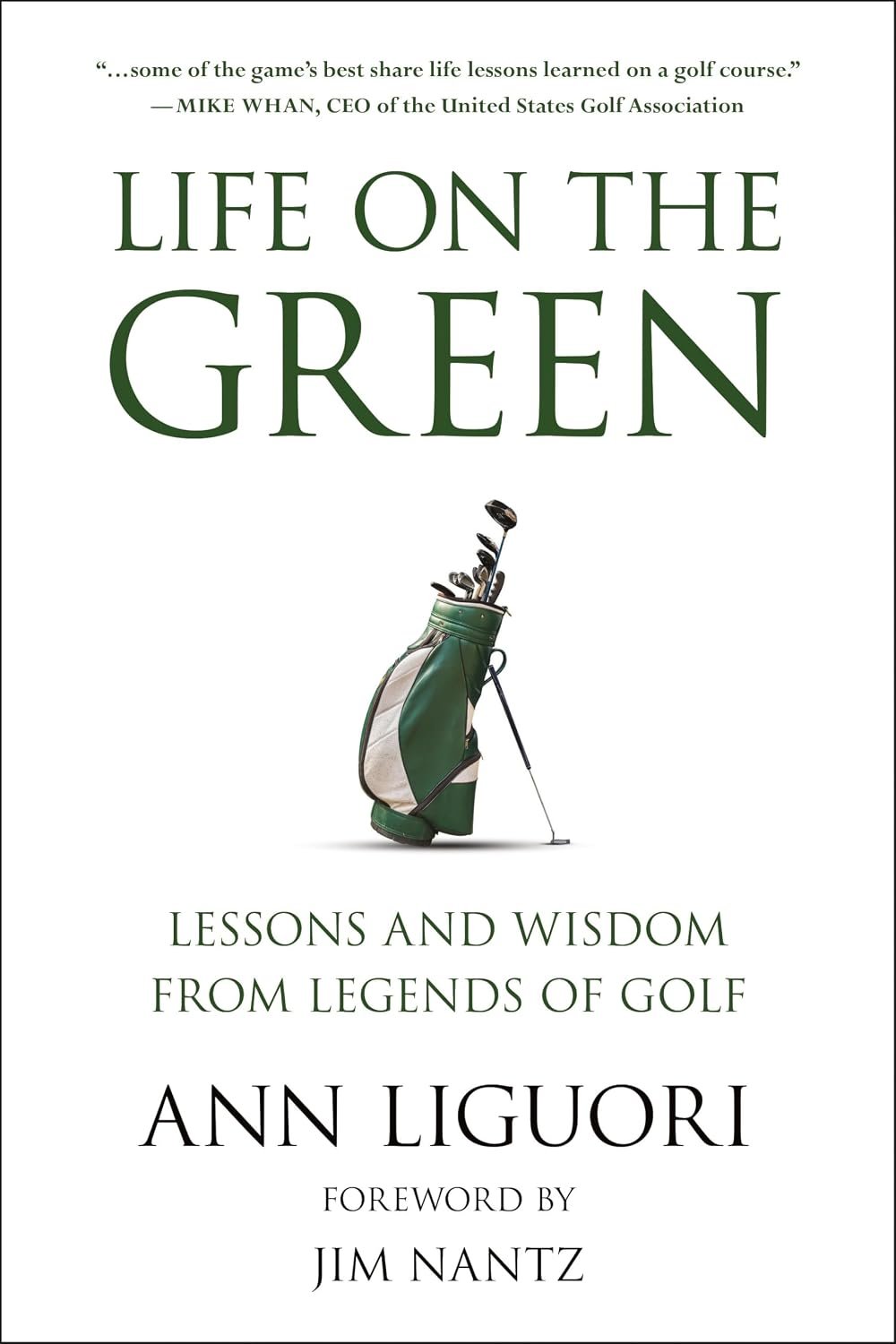
Ann Liguori’s Life on the Green: Lessons and Wisdom from Legends of Golf begins from a proposition that sounds simple but is difficult to execute well: the habits developed in elite sport might illuminate the rest of life. The book gathers interviews with twelve leading figures in golf and is presented as a collection of life lessons rather than a technical swing manual. Jim Nantz contributes a foreword. On the publisher’s account, the conversations concern patience, ambition, resilience, humility, and the long work of sustaining excellence. The central critical issue is whether the material lets each athlete remain a person with a distinctive history, or whether memorable careers are squeezed into reassuring slogans.
The interview is its own literary form
Liguori’s method matters. A collection built around interviews differs from a conventional sports biography because its authority is distributed among voices. The interviewer is neither an invisible recording device nor the single narrator of the entire account. She frames what can be asked, follows some answers rather than others, and chooses how a conversation will be presented. That editorial work can be as important as the prestige of the guests. The publisher identifies notable participants including Jack Nicklaus, Annika Sörenstam, Gary Player, Nancy Lopez, Tom Watson, and Pádraig Harrington. Such names attract readers, but recognizable names alone do not make an illuminating book. Its real test is whether readers begin to hear differences in temperament and outlook behind the shared vocabulary of practice and perseverance.
The danger of turning achievement into a formula
There is an understandable market for advice drawn from champions. Golf is unusually hospitable to this impulse: an individual must manage uncertainty, attention, frustration, repetition, and changing conditions in public, frequently for hours. Those demands can feel like an exaggerated version of ordinary working life. The comparison becomes weaker, however, when success is reduced to a list of transferable rules. Great competitors differ in personality and opportunity, and the conditions that produce one person’s excellence cannot necessarily be reproduced by another. A nuanced book about lessons from sport would leave those tensions visible. One athlete’s approach to risk may contradict another’s; patience may look different across stages of a career. What a reader most needs is not a guaranteed method for winning at life, but a more precise vocabulary for understanding effort and judgment.
A game whose drama is internal
Golf has a distinctive narrative shape. Its challenges are public, but many of its decisive encounters occur between attention and distraction. A player can make a brilliant shot and then face the task of doing something equally exacting under altered emotional conditions. It is therefore a natural setting in which to consider self-talk, confidence, anger, and the handling of setbacks. The publisher’s description emphasizes personal journeys and lessons gleaned from long careers. The interesting promise is that an interviewee can explain not merely what happened in a tournament, but what it felt like to keep making decisions under pressure. That is where sports writing crosses into reflection rather than statistics. The book’s title captures this overlap: “on the green” names a location, but also a way of thinking about everyday tests of composure.
Whose lessons become universal?
The range of interview subjects is relevant for another reason. Professional golf encompasses different generations and histories of access. A conversation about perseverance carries a different weight when a player’s institutional circumstances or public expectations have differed from those of a colleague. It would be a mistake to claim that the book gives any particular explanation of those differences without checking the interviews themselves. Nonetheless, readers should value a collection that keeps biography attached to wisdom. Advice sounds universal most convincingly when its original circumstances have been made specific. The question is not whether all twelve voices agree that effort matters. It is whether their experiences allow readers to see how effort takes different forms, and what that variety reveals about the game’s culture.
From the clubhouse to everyday work
The volume’s stated themes—goal setting, staying positive, treating people well, pursuing passions, humility—will sound familiar to anyone who reads leadership or self-improvement books. Their familiarity is both advantage and risk. Such themes allow a reader with little interest in golf to enter the conversations quickly. They also create the possibility of overgeneralization. In the strongest treatment, an apparently ordinary value acquires texture from a situation: a difficult choice, a changed goal, or a relationship that tested it. The publisher promises anecdotes and personal journeys, which suggests an effort to ground lessons in human experience. The reader can then decide which reflections are useful without mistaking the athlete’s extraordinary talent for evidence of universal expertise in every domain.
Who stands to benefit?
Life on the Green should have a ready audience among golf followers who enjoy hearing accomplished competitors speak in their own terms, especially readers who recognize several of the interviewees and want more than tournament summaries. It could also work for readers of reflective sports nonfiction who are interested in mental habits, aging, mentorship, and ambition. Readers looking for coaching drills, statistics, shot-by-shot reconstructions, or a single rigorous argument about performance psychology should understand that this is presented as an interview-based collection of perspective and experience. Its likely strength lies in plural voices. The book is best approached not as a certificate of success but as a gathering of people who have paid close attention to one demanding pursuit and can speak about the consequences of that attention.
The value of conversation
Based on the publisher’s account, Liguori has chosen a form that allows wisdom to remain conversational rather than doctrinal. That is a good instinct. Athletes rarely become interesting merely by repeating a lesson; they become interesting when an interviewer helps uncover the experiences that made a lesson necessary. The final judgment on pacing, range, and editorial handling requires the complete text, but the verified premise warrants a qualified recommendation. Readers seeking a reflective companion to golf’s competitive history will find much to investigate here, provided they are willing to listen for differences as carefully as for common ground.
About the book.
Review prepared from documented bibliographic material and attributed public descriptions; details of the full interior have not been independently assessed.
This review is not identified as sponsored in the source queue. It is based on the cited description and bibliographic sources, not on a claim of having read the complete book.
Found a book worth opening?
Books worth discovering. Authors worth knowing.
Return to the Journal →