
Magical Dreams and Sewing Machines
An atelier, an aging grandmother, and the craft of becoming yourself.
Books worth discovering. Authors worth knowing.
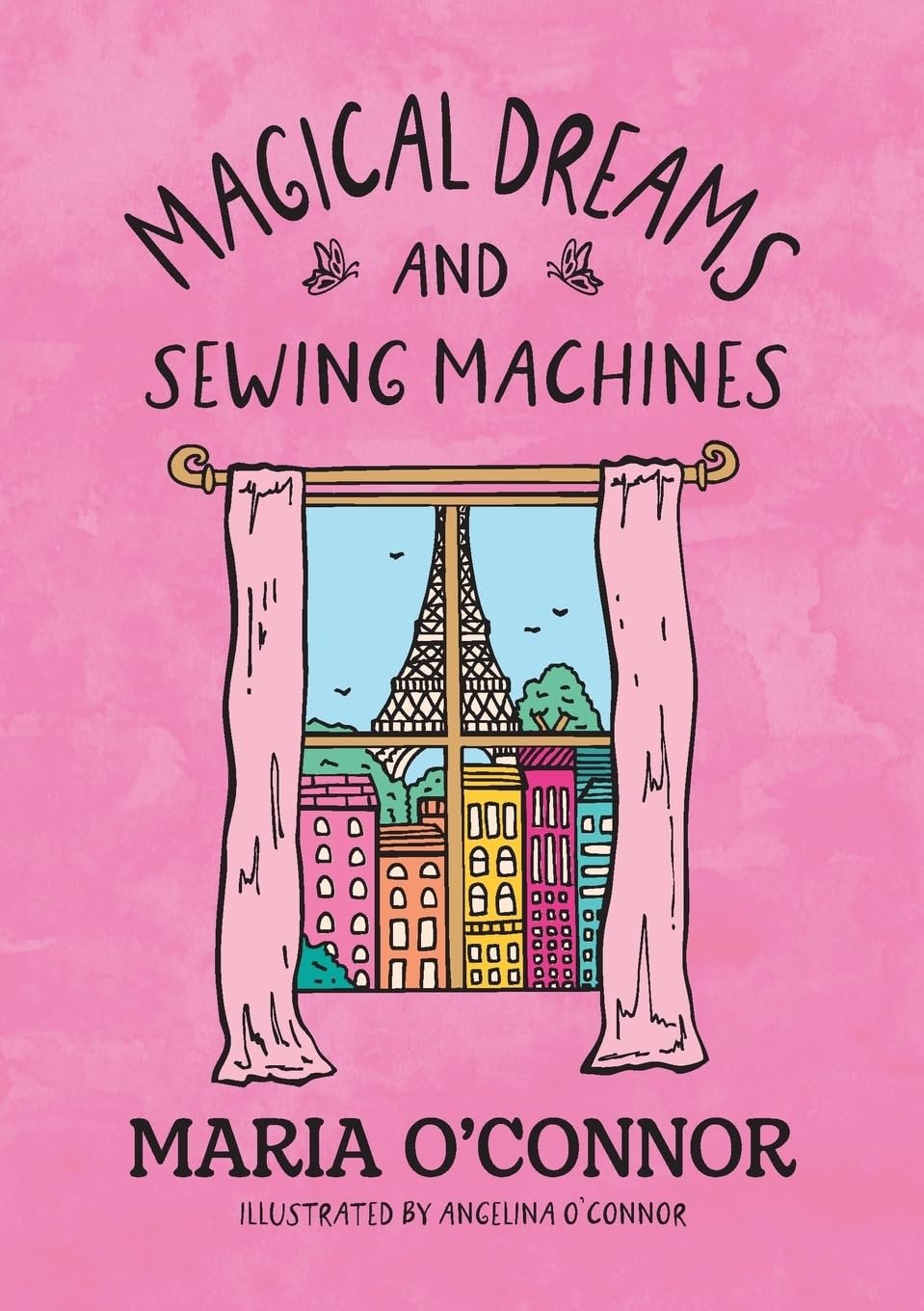
In the description of Magical Dreams and Sewing Machines, fourteen-year-old Elena grows up amid the fabrics, fairy lights and working rituals of her grandmother’s fashion atelier.
An original critical assessment, grounded in verified public book descriptions.
In the description of Magical Dreams and Sewing Machines, fourteen-year-old Elena grows up amid the fabrics, fairy lights and working rituals of her grandmother’s fashion atelier.
The atelier as a place of inheritance
In the description of Magical Dreams and Sewing Machines, fourteen-year-old Elena grows up amid the fabrics, fairy lights and working rituals of her grandmother’s fashion atelier. The setting matters more than an ordinary picturesque backdrop. A workshop is where an idea must eventually become something the hands can make; it is also where one generation’s knowledge becomes another’s possibility. Elena’s Nonna is lively and imaginative, yet her hands tremble and her recollections come less easily than they once did. That combination makes the book’s stated premise more complex than the title’s promise of uncomplicated enchantment. This is a story about learning to recognize change inside a beloved place, and perhaps about discovering that continuity does not mean preserving everything unchanged. The publisher’s synopsis establishes these relationships; it does not establish the book’s ending or exactly how Elena responds to each difficulty.
The meaning of things we make
Clothing carries a peculiar double life. It is functional and intimate, but it can also record occasions, ambitions, labor, sacrifice and taste. Making a garment demands patience, revision and attention to details that an onlooker may never see. For a growing child, those are rich metaphorical possibilities. The story’s advertised buttons, seams and cutting table suggest that the language of craft can give Elena a vocabulary for identity: not merely who she has been told she is, but what she might choose to make of herself. A critic should resist pretending to know whether those metaphors are woven subtly into the prose or supplied more overtly as lessons. What can be said is that the textile setting gives the book an appealingly concrete way to approach growth, care and intergenerational memory without reducing family connection to abstract sentiment.
A grandmother who is more than a symbol
The synopsis’s most promising detail is Nonna’s continued boldness even as signs of frailty emerge. Older relatives in middle-grade fiction are too often granted only a function: dispensing wisdom, creating nostalgia or prompting a young character’s sadness. The fact that Nonna is described as playful and spirited complicates that habit. A grandmother can possess authority and vulnerability at the same time; her life need not become a simple lesson for a child. The book’s critical test is whether Elena and Nonna are allowed to remain distinct people with differing desires, rather than merely representing youth and old age. That is an open question until the full text is read, but it is the right measure of the book’s apparent emotional ambition.
A family story with an important credit question
Available retail sources name both Maria O’Connor and Angelina O’Connor as contributors, whereas the MarketAnyBook queue credits Maria O’Connor alone. This is not evidence for a different book: the title and the linked product’s print identifier correspond. It is, however, a genuine attribution matter to resolve before publication. A review that seeks to take children’s literature seriously also needs to take its makers seriously. The marketing description suggests a family-centered narrative of creative independence, but it provides no reliable basis for praising particular dialogue, chapter structure or illustrative features. Its emotional effectiveness depends on those matters of execution. Readers should approach the premise as thoughtfully promising rather than automatically accomplished.
Where this book may belong
Magical Dreams and Sewing Machines seems well placed for young readers who enjoy emotionally warm family fiction, for children curious about fashion or making things, and for families who want to talk about a grandparent’s changing health without treating that person as defined by decline. It may also interest educators working with stories of personal voice, practical creativity and inherited traditions. The publisher’s age-category guidance should still be checked against the actual edition and a child’s sensitivities. The recommendation is qualified: its distinctive attraction is the close union of craft and family memory, while its unresolved question is how much psychological and stylistic depth the full narrative brings to those attractive materials. There is enough in the verified premise to make the book worth a closer look, not enough to certify every literary choice.
What a young reader learns about changing bodies
Nonna’s shaking hands are not simply a signal of sadness. They change what she can do within a space defined by physical skill. That is a potentially delicate way for younger readers to encounter aging: the person whose competence once seemed limitless is still inventive, funny and central, even while her working capacities shift. An imaginative novel can make that discovery moving without imposing a lesson about gratitude or loss. The important artistic question is whether Elena is allowed mixed feelings—fear, irritation, affection, embarrassment—and whether Nonna retains the right to her own moods. When fiction erases those tensions to maintain a cheerful surface, its warmth can become thin. The synopsis suggests the materials for something more honest. It makes a credible case for a story in which love is neither a refusal to notice change nor a promise that change will be easy.
A girl must eventually make something of her own
The phrase “finding your voice” in the publisher’s outline could describe a dozen novels. In this one, the expression gains a literal craft analogue. Sewing requires pattern and repetition, but creative work also requires a willingness to cut, alter, undo and choose. Elena’s relationship to her grandmother’s atelier can therefore become a question of inheritance: does she honor the past by reproducing it, or by using its tools to make a life that would not otherwise exist? That is a meaningful subject for readers negotiating family expectations. The title’s magic need not imply fantasy machinery to have force; an ordinary room becomes magical when it holds a history of care and possibility. The book will ultimately be judged on how specifically its prose inhabits that world. As a reading proposition, however, its way of joining an adolescent future to an older woman’s labor is distinctive.
About the book.
This review examines the documented premise and its critical implications; literary execution cannot be completely assessed without a full text.
Sponsored book review, identified according to the MarketAnyBook queue. Based on publicly accessible descriptions and bibliographic evidence; it is not a claim of full-book firsthand reading. Assessments of unverified interior craft are withheld.
Found a book worth opening?
Books worth discovering. Authors worth knowing.
Return to the Journal →