
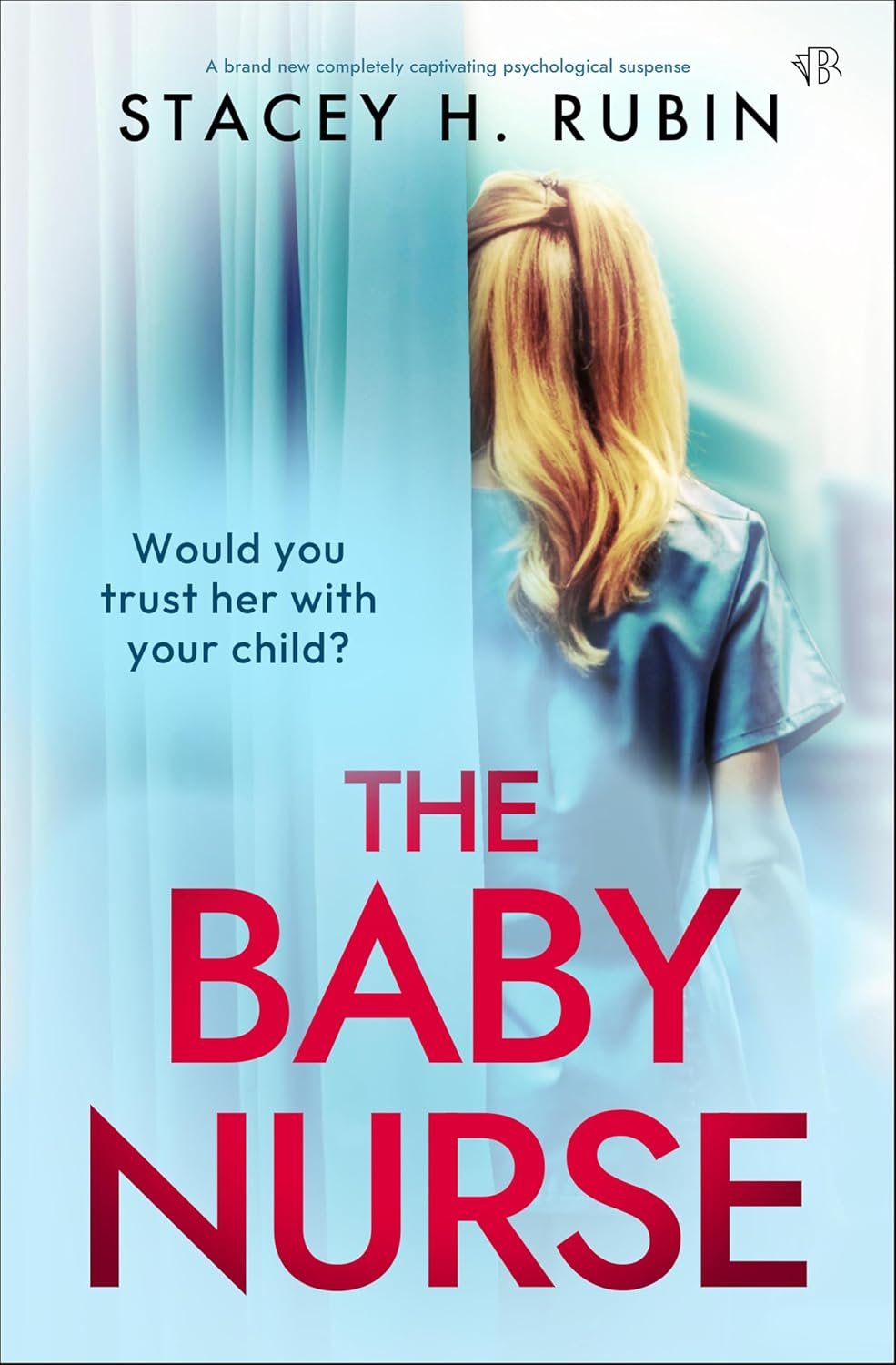
The Baby Nurse
A neonatal nurse takes a baby—and care becomes an ethical crisis.
Books worth discovering. Authors worth knowing.
In Stacey Rubin’s The Baby Nurse, the central transgression arises out of a professional virtue carried beyond its limits.
An original critical assessment, grounded in verified public book descriptions.
In Stacey Rubin’s The Baby Nurse, the central transgression arises out of a professional virtue carried beyond its limits.
A caregiver crosses the line she is meant to guard
In Stacey Rubin’s The Baby Nurse, the central transgression arises out of a professional virtue carried beyond its limits. Annabelle Kaplan works in a neonatal intensive care unit and is committed to protecting vulnerable infants. She is also grieving her stillborn daughter and hiding debts incurred through compulsive shopping. When a baby she knows, Olivia, is orphaned and placed with an aunt whom Annabelle comes to distrust, the nurse sees the child left alone in a car. She drives off with Olivia. The author’s synopsis supplies these facts directly. They create a strikingly uncomfortable thriller engine because the heroine’s decision can appear emotionally comprehensible and legally indefensible at once. The book asks readers not simply to fear for the baby, but to decide how to judge a person who confuses care with entitlement.
Grief does not cancel responsibility
A thriller about bereavement can easily shift the reader’s compassion into blanket absolution. Rubin’s premise offers a harder possibility. Annabelle’s loss illuminates the emotional force behind her identification with Olivia, yet the act of taking a child remains an act with consequences for guardianship, trust and safety. The interesting question is whether the story can sustain both truths rather than choosing one. Even a caregiver acting from fear may disregard the structures designed to protect a child. Conversely, formal custody is not itself proof of tenderness. Between these two positions lies the ethical pressure on which the novel depends. Its premise is most compelling when read not as a fantasy of heroic rescue but as a crisis of judgment.
A nursery is a natural pressure chamber
The NICU setting makes the stakes immediately tangible, although the novel should not be treated as a guide to medical practice. Nurses in such environments operate within elaborate professional boundaries; their vocation is to care under conditions of uncertainty, not to assume private ownership of the lives entrusted to them. Annabelle’s personal turmoil also undercuts the genre’s reassuring image of an always-capable professional. Her financial secrecy and marital strain imply that some of the danger may come from her divided life rather than from a single external villain. These strands offer the book an opportunity to connect domestic instability to a public breach of trust. Without reading the complete narrative, we cannot say exactly how successful or plausible each twist proves.
The escalation promised by the synopsis
The author’s description goes beyond the initial flight with Olivia: a threat later links the baby’s return to the safety of Annabelle’s husband, Peter. This change in scale introduces the recognizable machinery of psychological suspense—pursuit, deadlines, coerced choices—while leaving the earlier moral questions unresolved. Such escalation can add momentum, but it can also make the story’s original discomfort too easy to forget if danger from others excuses everything Annabelle has done. The strongest version of the setup would keep the reader attentive to multiple vulnerable people, not just to the heroine’s sense of mission. The available evidence establishes the narrative hinge, not the final balance of sympathy and accountability.
A recommendation with content cautions
Readers of domestic psychological thrillers, stories about morally compromised protagonists and narratives that turn parental care into an ethical dilemma have good reason to investigate The Baby Nurse. The author supplies content notes including infant death, stillbirth, kidnapping, adoption and grief; those topics are central, not incidental. Readers especially sensitive to such material may prefer another novel. What separates this premise from routine child-in-danger suspense is the question of whether love can become possessive while still calling itself protection. A source-based assessment can identify that strength and its accompanying risk, but cannot certify that the ending resolves the conflict persuasively. The book’s appeal lies in how uneasily its initial choice sits with the reader.
The reader’s divided loyalty
Rubin’s premise invites a special kind of identification because Annabelle knows how fragile a baby can be. Her professional competence makes her fears recognizable even as her decision removes Olivia from the legal care arrangement. The reader may wish that she had found a safer alternative while still understanding why she was overwhelmed in the moment. Psychological suspense is capable of sustaining this uncomfortable divided loyalty over many pages, but only if the story does not rush to reassure us that the heroine’s motivations settle the question of what was right. Annabelle’s grief for her daughter also complicates her need to protect Olivia: one child cannot ethically become the replacement for another. A full reading would ask whether the novel recognizes this boundary as part of her struggle or only as a temporary obstacle to the plot.
The institution beyond the individual
The child-protection context creates another layer that a lesser thriller might ignore. Care decisions involve relatives, legal processes, medical staff and institutions capable of both failure and necessary oversight. The description presents the aunt as neglectful and Annabelle as alarmed, but that does not make independent rescue by kidnapping a responsible policy model. Fiction need not propose a practical alternative at every turn; indeed, part of suspense is watching bad choices close off good ones. Still, an ethically attentive narrative should allow the various adults around Olivia to remain human and should take seriously how an infant’s vulnerability makes certainty dangerous. Rubin’s story begins with a question many readers can feel in their bodies—what if nobody protects this child?—and then forces the less comfortable companion question: who gets to decide what protection entitles them to do?
The question beneath the chase
A reader may initially ask whether Annabelle will be caught, but that question is less interesting than whether she will come to understand the full implications of what she has done. The nurse’s professional identity makes recognition especially difficult: the impulse to save lives is both a genuine virtue and, in this situation, the source of an extraordinary breach. The most satisfying suspense would require a change in self-understanding, not just a solution to the external danger. That is a demanding narrative task, because it resists the shortcut of treating fear for a child as automatic moral authorization. The author’s premise gives the novel a serious conflict that a chase alone could never supply.
About the book.
This review examines the documented premise and its critical implications; literary execution cannot be completely assessed without a full text.
Non-sponsored editorial review according to the MarketAnyBook queue. Based on publicly accessible descriptions and bibliographic evidence; it is not a claim of full-book firsthand reading. Assessments of unverified interior craft are withheld.
Found a book worth opening?
Books worth discovering. Authors worth knowing.
Return to the Journal →