
Superperformance
When exceptional performance becomes a method, not a mood.
Books worth discovering. Authors worth knowing.
George Pesansky’s Superperformance begins from a familiar frustration: individuals and teams have exceptional days, but cannot easily reproduce the conditions that made those days effective.
An original critical assessment, grounded in verified public book descriptions.
George Pesansky’s Superperformance begins from a familiar frustration: individuals and teams have exceptional days, but cannot easily reproduce the conditions that made those days effective.
The problem with the phrase “full potential”
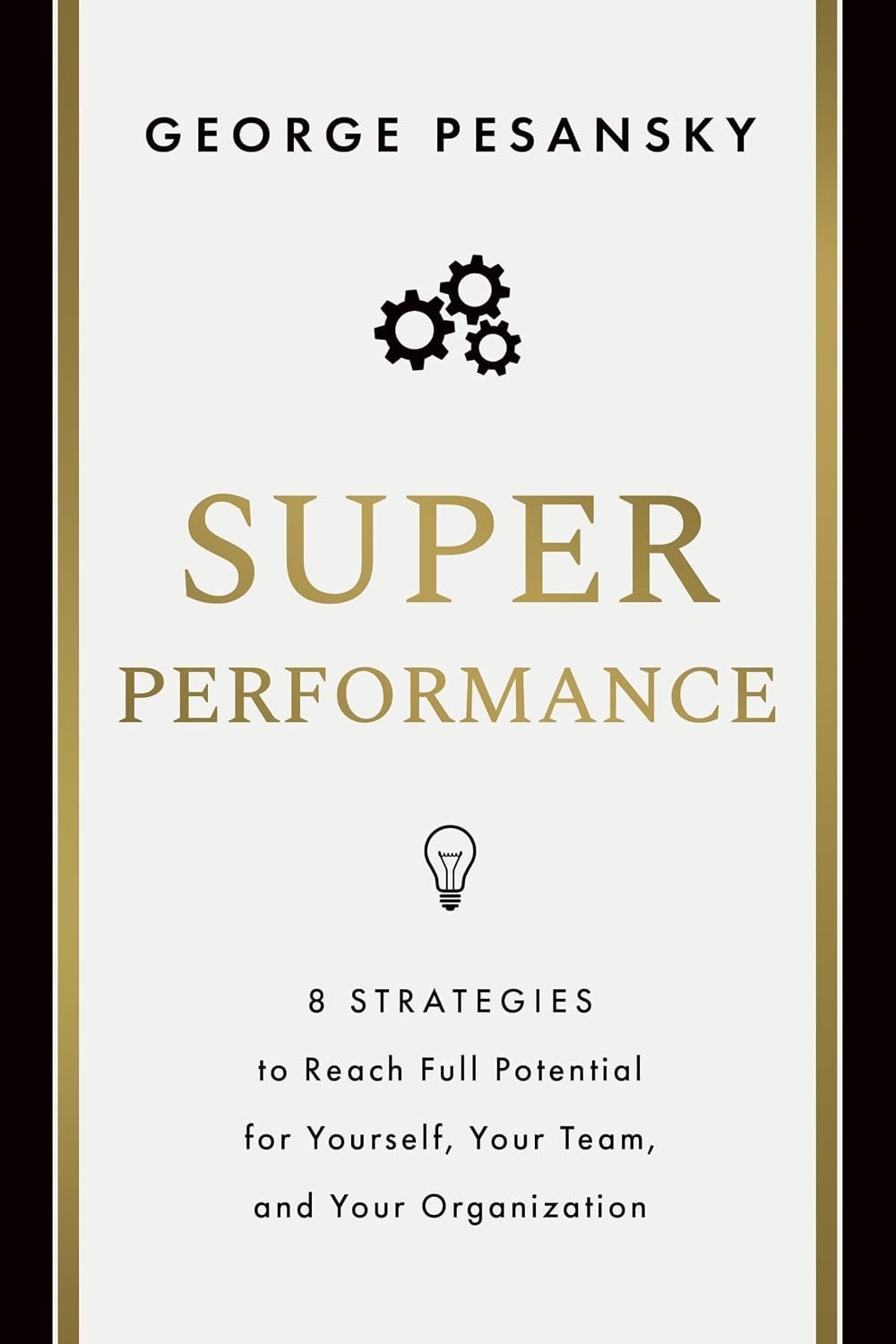
George Pesansky’s Superperformance begins from a familiar frustration: individuals and teams have exceptional days, but cannot easily reproduce the conditions that made those days effective. The book’s promise is to make improvement more deliberate through eight strategies aimed at clarity, collaboration and disciplined attention to causes. What distinguishes the proposition from ordinary motivational writing is its emphasis on systems rather than on constant intensity. Performance is treated as something to investigate and cultivate, not merely summon through confidence. The public materials refer to “golden hours,” moments when work seems to align, and to an “improvement factory” within organizations. Those phrases deserve both interest and scrutiny. A metaphor is valuable only if it helps readers name a real problem and choose a workable response.
A useful corrective to the heroic individual
Business literature often praises a rare, extraordinary performer while asking everyone else to imitate that person’s temperament. Pesansky’s advertised strategies take a more collective direction. Collaboration, attention to bottlenecks and learning from successful outcomes suggest that a team’s environment can be redesigned rather than simply demanding more from its members. The approach has obvious appeal to managers who spend too much time reacting to errors and too little examining what already works. It also requires careful application. The pursuit of efficiency can become a euphemism for surveillance or relentless productivity if an organization forgets that people have needs and limits outside a metric. A serious review should consider whether the book’s tools make work more humane as well as more productive.
Clarity is often harder than effort
The author’s catalogue of methods includes familiar continuous-improvement techniques, root-cause analysis, conflict models and tools for identifying waste. Such frameworks may appear technical, but they address an ordinary problem: teams often work very hard toward objectives nobody has defined in the same way. A diagram or a precise question can interrupt that confusion. What matters is not the novelty of every model, since many have established histories, but the intelligence with which they are assembled and applied. Readers should be cautious of claims that one process reliably produces exceptional performance in every setting. Different kinds of work involve different constraints, and creative or caregiving labor can resist the metrics that suit manufacturing. The book’s strongest potential lies in helping people decide which problem is worth solving.
From advice to repeatable practice
The phrase “improvement factory” is provocative because factories imply repeatability. Many organizational successes, by contrast, appear accidental, dependent on good timing or an unusually capable person. Pesansky’s proposed answer is to build a repeatable habit of observation, experiment and revision. If the method is grounded in clear cases and respects uncertainty, it could give managers an alternative to annual motivational campaigns. Yet the same idea can become oppressive if every human action is treated as a process to optimize. The available excerpts and summaries offer an account of the book’s framework but do not allow a comprehensive judgment about its evidence base, examples or limitations. The difference between an energizing management book and a durable reference is often found in those details.
Who will find the argument useful?
Superperformance is best approached by team leaders, operations professionals, coaches and readers already engaged with process improvement who want a structured vocabulary for enhancing results. It may be less useful to someone seeking a narrow technical manual for a single framework, or to readers who distrust performance language that never discusses workload and trade-offs. Its identifiable strength is a move from exhortation toward practice: ask what made a success possible, remove obstacles, and repeat what can be learned. The verdict remains qualified because the quality of the evidence and case studies needs direct reading. There is a plausible, professionally useful argument here, but its worth depends on how faithfully readers translate the framework into circumstances where people, not only outcomes, matter.
The false comfort of best practices
One difficulty in management writing is the temptation to turn a successful example into an instruction for everyone. A technique that helps a manufacturing team may be unsuitable for an emergency department or a research group; a meeting structure that clarifies priorities in a small firm may become ritual overhead in a larger one. Pesansky’s array of tools is valuable to the extent that it teaches selection and adaptation rather than conformity. The published materials emphasize questions, diagnosis and iteration, which offer some reason for optimism. A manager using the book well would ask what problem a tool addresses, which assumptions it carries and what unintended work it creates. This kind of practical skepticism is not hostility to performance. It is precisely what makes improvement sustainable.
Success deserves as much analysis as failure
Organizations often investigate breakdowns with great seriousness while treating a good day as luck or the natural product of talent. Pesansky’s decision to study successful conditions reverses that habit. What did the team understand? Which obstacles disappeared? What did it stop doing? Such questions can reveal resources that already exist but remain unrecognized. There is a danger of overfitting to a small number of exceptional episodes, so the search for repeatable success must be paired with honest testing. A book that helps readers separate causal factors from pleasant coincidence could be practically valuable even if its slogans do not survive repeated use. This is the point at which Superperformance may distinguish itself: not through the promise of endless peak experience, which is unrealistic, but through a disciplined curiosity about how ordinary work gets better.
The practical value of a smaller promise
The phrase superperformance may invite expectations of extraordinary achievement, yet the most credible benefit could be thoroughly ordinary: fewer misunderstandings, better cooperation and the ability to see which efforts create genuine value. A system that helps a team make those incremental gains does not need to transform every employee into a prodigy to matter. This narrower ambition also provides a way to judge the book fairly. Its strategies should be assessed for transferability, cost and the quality of the questions they produce. When improvement is understood as a practice open to revision, rather than a permanent state of excellence, Pesansky’s proposition gains both realism and potential usefulness.
About the book.
This review examines the documented premise and its critical implications; literary execution cannot be completely assessed without a full text.
Sponsored book review, identified according to the MarketAnyBook queue. Based on publicly accessible descriptions and bibliographic evidence; it is not a claim of full-book firsthand reading. Assessments of unverified interior craft are withheld.
Found a book worth opening?
Books worth discovering. Authors worth knowing.
Return to the Journal →