
Rooted HEIR
A candid memoir about the painful search for selfhood after abuse.
Books worth discovering. Authors worth knowing.
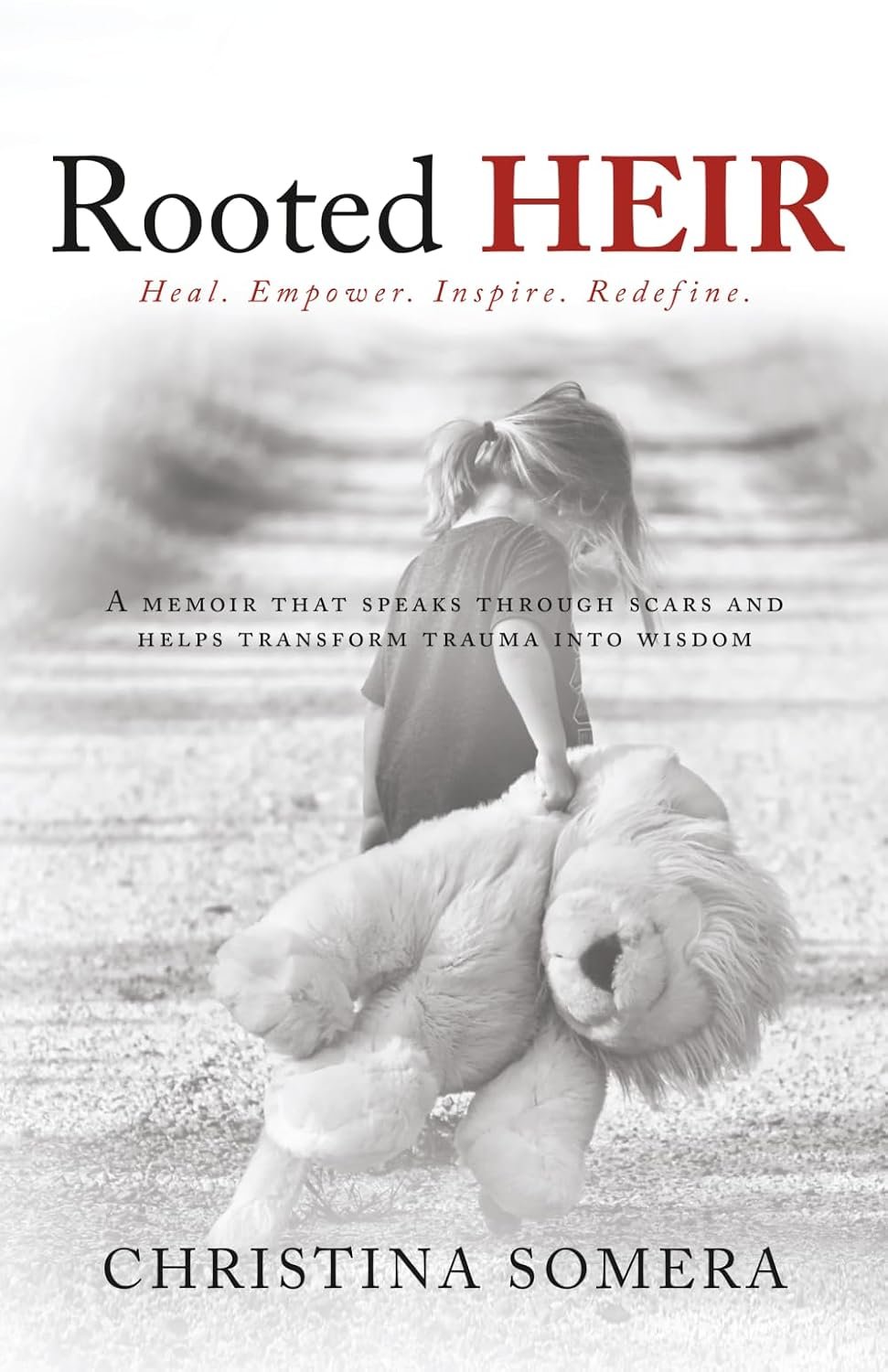
Christina Somera’s Rooted HEIR is presented as a memoir of abuse, shame, self-destructive patterns and the difficult pursuit of a different life.
An original critical assessment, grounded in verified public book descriptions.
Christina Somera’s Rooted HEIR is presented as a memoir of abuse, shame, self-destructive patterns and the difficult pursuit of a different life.
Scars as testimony rather than branding
Christina Somera’s Rooted HEIR is presented as a memoir of abuse, shame, self-destructive patterns and the difficult pursuit of a different life. The description places an important turning point after years of avoiding painful truths, when Somera begins asking who she is beyond the roles through which others have defined her. The book’s language is deliberately raw rather than genteel, and its proposed movement from trauma toward wisdom makes it more than a chronology of suffering. The central challenge for such a memoir is to preserve the truth of hurt without making it the only truth about the person narrating it. Readers should approach the work as testimony from a particular life, not as an interchangeable guide to everyone’s recovery.
The burden of the mirror
The memoir’s description uses the idea of holding up a mirror and beginning to unearth earlier experiences. That is a powerful but complicated metaphor. Introspection can reveal connections between past and present, yet seeing a pattern does not make changing it effortless. A convincing recovery narrative has to acknowledge repetition, mixed loyalties, shame and the fact that understanding oneself is not always immediately liberating. Somera’s stated journey includes childhood abuse and later attempts to forgive and redefine her life. These elements create a serious narrative arc, but a respectful critic should resist demanding that an author turn trauma into a polished lesson on command. The value of testimony may lie as much in its uncertainties as in its resolutions.
The acronym and the individual
The title HEIR is explained in available critical material as Heal, Empower, Inspire, Redefine. Its sequence signals a desire to make one person’s experience useful to others. That ambition has emotional force, especially in a subject where silence can deepen isolation. It also brings a formal risk: an inspirational framework can compress complex experience into neatly ascending stages. Healing may not proceed in a straight line; forgiveness may be refused, delayed or understood differently by different survivors. A strong memoir leaves room for those possibilities. The review cannot determine from summary alone how Somera balances candor and encouragement on the page. It can identify the tension as central to her stated project and refrain from treating the acronym as proof of a universal method.
The ethical position of the reader
Memoirs of abuse demand a different kind of critical attention from a light entertainment review. The reader has an obligation to treat testimony seriously while retaining the right to ask literary questions about arrangement, voice and the distance between experience and reflection. Expressing skepticism about a narrative technique is not the same as questioning the reality of a person’s pain. Conversely, honoring an author’s courage does not require declaring every sentence formally accomplished without examination. Publicly available descriptions and responses indicate that this book deals frankly with difficult family experiences. Nothing in this research justifies inventing conversations or quoting scenes the reviewer has not read. An exacting but humane approach is the most respectful form of literary criticism here.
For readers who need candor more than comfort
Rooted HEIR may resonate with memoir readers, people seeking personal accounts of resilience, and those interested in the relationship between identity and surviving abuse. It includes material involving childhood harm and other traumatic experiences; reader sensitivity is important. It should not be substituted for professional mental-health care, and its lessons cannot be presumed to apply equally to every survivor. The premise is distinctive for the force with which it rejects silence and asks who may speak after years of being defined by others. That is worth taking seriously. A full review must still examine its structure and language directly, but this draft can fairly identify the emotional stakes and the limits of any easy inspirational reading.
The right to refuse a perfect ending
Memoir is not obligated to prove that suffering was worthwhile because wisdom later emerged from it. Such an expectation can burden survivors with an additional demand: turn what happened into a story that comforts others. Somera’s public description instead begins in anger and hurt, a tone that resists easy prettification. That bluntness may be a necessary corrective to self-help narratives that make recovery look serene. A responsible reader should allow the author to describe struggle without insisting on an evenly distributed set of uplifting revelations. The deeper literary interest is in how a person changes the terms of her own story—moving from a life explained through other people’s actions toward one in which she can speak about choices and limits. The distinction matters even when the past remains painful.
Voice as an achievement in itself
The title’s emphasis on scars makes memory something that has marked the body and the mind. The memoir’s stated purpose is also explicitly communicative: the author describes a desire for others to know they can speak. That gives writing a practical significance beyond publication or personal catharsis. The book seeks to interrupt isolation by making a once-silenced account available to strangers. Yet testimony and therapeutic instruction are not identical. The experiences that bring one person a measure of peace may not function for another. Its credibility will be strongest where it honors that difference and resists prescribing a universal route from trauma to empowerment. The public evidence supports the seriousness of the attempt; a close reading is needed to judge how the language carries it.
Beyond the language of overcoming
The word “overcoming” can make trauma sound like an opponent defeated once and for all. Somera’s emphasis on unearthing long-buried experiences suggests a less tidy process in which memories and reactions may have to be encountered repeatedly. A memoir can do important work simply by refusing to present this difficulty as unusual or shameful. The narrative’s aspiration to inspire is strongest when encouragement emerges from the particular texture of one person’s choices, rather than from a rule that every survivor must forgive or emerge stronger. Respect for that individuality should guide both its reading and its recommendation, particularly to people who may recognize their own injuries in the subject.
About the book.
This review examines the documented premise and its critical implications; literary execution cannot be completely assessed without a full text.
Non-sponsored editorial review according to the MarketAnyBook queue. Based on publicly accessible descriptions and bibliographic evidence; it is not a claim of full-book firsthand reading. Assessments of unverified interior craft are withheld.
Found a book worth opening?
Books worth discovering. Authors worth knowing.
Return to the Journal →