
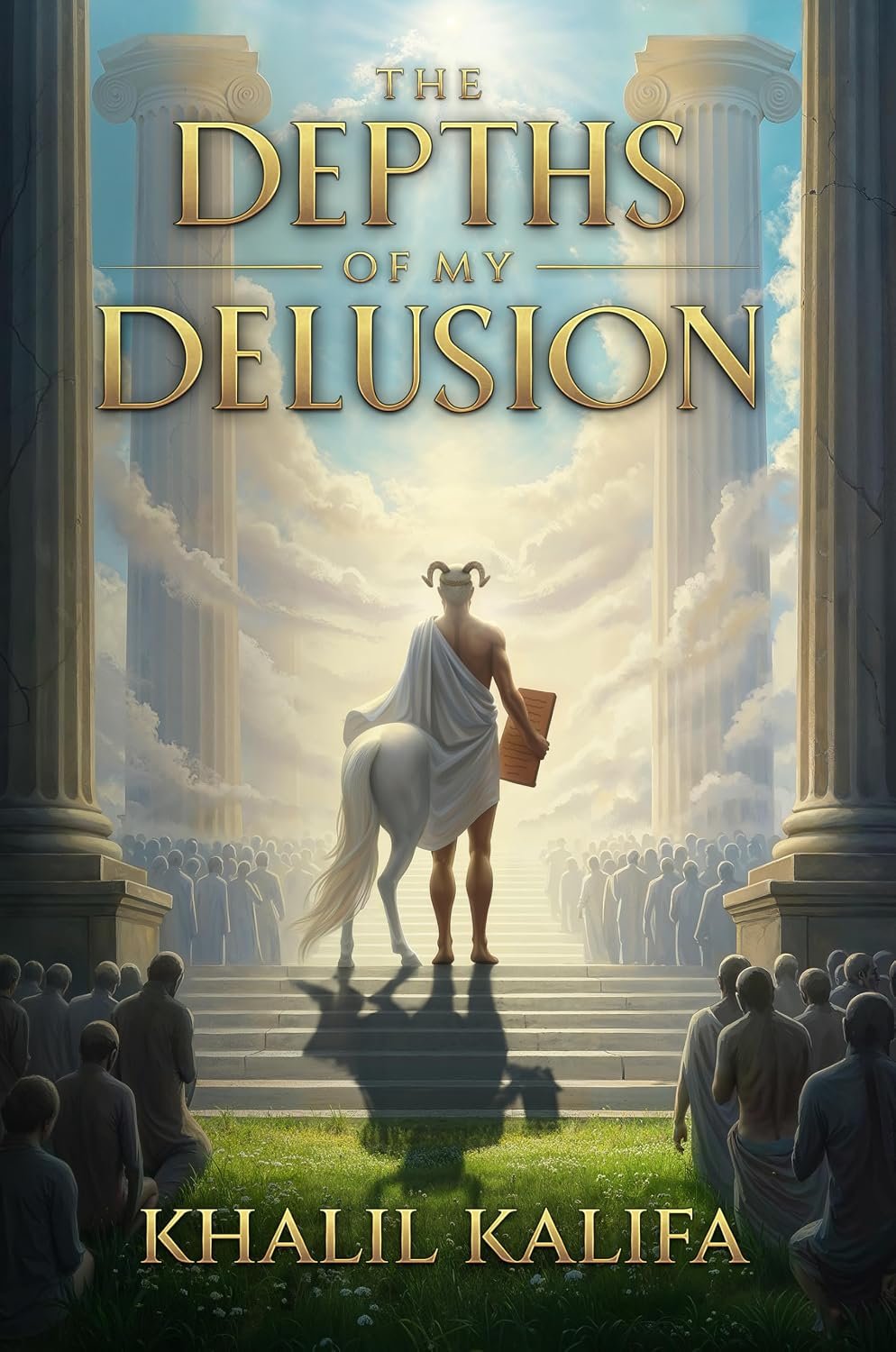
The Depths of My Delusion
Public library cataloguing describes this work as a blend of memoir, letters, essays and philosophical meditation. Kalifa writes about his own perceptions and psychological trials while addressing prophecy…
Books worth discovering. Authors worth knowing.
Public library cataloguing describes this work as a blend of memoir, letters, essays and philosophical meditation. Kalifa writes about his own perceptions and psychological trials while addressing prophecy, myth, imperial power, faith and the possibility of collective justice. The range is unusually broad: intimate self-accounting and world-historical…
Carefully sourced literary criticism and book-specific interpretation.
Public library cataloguing describes this work as a blend of memoir, letters, essays and philosophical meditation. Kalifa writes about his own perceptions and psychological trials while addressing prophecy, myth, imperial power, faith and the possibility of collective justice. The range is unusually broad: intimate self-accounting and world-historical explanation are asked to share a single project.
Private testimony, public claims
What gives such an undertaking its urgency is the tension between first-person experience and claims that reach far beyond one life. A memoir may be authoritative about the feeling of a particular encounter, but it cannot by itself establish assertions about history, divinity or politics. Readers have to keep those registers separate, even when a writer’s conviction is fierce and genuine.
What the title asks us to doubt
The title’s use of “delusion” is provocative because it appears to invite scrutiny of perception itself. Is the book asking readers to mistrust the account, or treating apparent delusion as a route toward revelation? The catalog description’s references to prophecy and extraordinary gifts make that an essential question. The actual argumentative method, and whether contrary explanations are entertained, cannot be judged without the text.
The rewards and risks of a hybrid form
There is a literary attraction to the essayistic hybrid: fragments and meditations can represent a mind refusing easy compartments. There is also a risk. When an argument moves quickly among trauma, ancient belief and present conflict, associations may take the place of evidence. A professional review should weigh coherence and verifiability as carefully as emotional intensity, particularly for claims about psychological experience and large political causes.
Reading with critical independence
The likely audience is readers of personal spiritual inquiry who welcome contested claims and are willing to distinguish testimony from demonstrated fact. This is a research-based critical introduction rather than endorsement of supernatural, historical or medical claims. The queue also lists MAB-1096 with the same title and author; the different sales format should not trigger a second article.
When personal experience becomes world explanation
A person can speak with genuine authority about the force of an experience without possessing equal authority over its ultimate cause. That is the central difficulty of a work that combines spiritual autobiography with large claims about history and empire. Kalifa’s described project invites the reader to move between episodes from an individual life and arguments about centuries of collective belief. The temptation is to let the urgency of one register confirm the truth of the other. A careful reader should resist that shortcut while remaining receptive to the emotional significance of the narrative.
The combination of letters, reflections and essays may be especially effective at representing a searching mind. Different forms can hold different kinds of uncertainty: a letter may address a particular relationship, while a meditation can step outward toward unanswered questions. But genre flexibility does not eliminate responsibility. A claim that something happened, a claim that it signifies a spiritual pattern, and a proposal about political justice are not the same type of statement. A rigorous review would look for the points where the author distinguishes them and the moments where the transitions become less secure.
The unsettled word in the title
“Delusion” is an unusually risky word to place on a book of personal testimony. It may operate as confession, accusation, irony or philosophical challenge. Each possibility implies a different relationship between narrator and reader. The title could invite scepticism of the perceptions described or seek to overturn a conventional distinction between ordinary belief and revelation. Nothing in the public synopsis permits a critic to diagnose the author, and a responsible response should neither validate extraordinary claims automatically nor dismiss a person’s interior life as pathology.
Instead, the question is literary and argumentative: how does the narrator make an unfamiliar experience legible? Does metaphor clarify its emotional importance? Are other readings of events acknowledged? When a passage moves toward cosmic conclusions, does it supply reasons a reader can examine? These criteria do not require a reviewer to share the author’s worldview. They require taking the text seriously enough to distinguish what it states from what it demonstrates.
The scale of justice and the scale of a life
The catalogue description returns repeatedly to justice, unity and the consequences of empire. Those themes can give spiritual reflection a public horizon, suggesting that private meaning cannot be separated from collective suffering. Yet writing at planetary scale risks losing the specific lives whose hardship motivates its urgency. The strongest philosophical writing often moves from the particular outward and then returns, testing expansive claims against the demands of ordinary experience. Whether this book manages that movement is an essential question for a full critical reading.
Readers drawn to visionary memoir may be the most receptive audience, while readers seeking a conventional, source-documented history should know that the work is presented as a hybrid of testimony and reflection. Its value cannot be measured by an enthusiastic endorsement of beliefs the reviewer has not verified. The better invitation is to read attentively, examine each proposition on its own terms and notice the distinction between a person’s search for meaning and the claims made in the course of that search.
The unusually ambitious subject range also gives the book a question about audience. Is the author primarily addressing readers who share his spiritual vocabulary, or inviting sceptical readers into an account that is willing to be examined? Those are different rhetorical tasks. The former may rely on recognition; the latter requires translation, evidence and patience with disagreement. Without direct access to the full argument, it would be inappropriate to grade its success in either mode. The published synopsis establishes a passionate search for coherence between private experience and collective history. That search is worth describing precisely, while neither treating every conclusion as established nor reducing sincere conviction to an aesthetic curiosity.
The review’s scope
This assessment is based on the identified bibliographic records and available author, publisher and bookseller descriptions. The interpretive claims above are editorial judgments about the documented premise and genre choices, not testimony to having read every chapter or inspected every illustration. The published text may answer, complicate or contradict the critical questions raised here. A finished review would assess the language, structure and ending directly.
About the book.
The title, author/contributor record, source URL and matching cover file ID come from the current MarketAnyBook Journal Queue and its Drive asset folder. The review considers memoir, spiritual reflection and historical argument through verified available descriptions rather than firsthand full-book reading. MAB-1096 has the same underlying title and author in another format; retain earlier MAB-1067, require final format/cover identity check before excluding MAB-1096. Sponsorship flag differs between the two rows.
Sponsored book review: the source queue marks this book as sponsored. Editorial analysis remains independent and is based on the publicly accessible sources noted in the companion metadata. The same underlying title appears later in the queue; a separate review is not warranted solely for another format.
Found a book worth opening?
Books worth discovering. Authors worth knowing.
Return to the Journal →