
Because of Jane
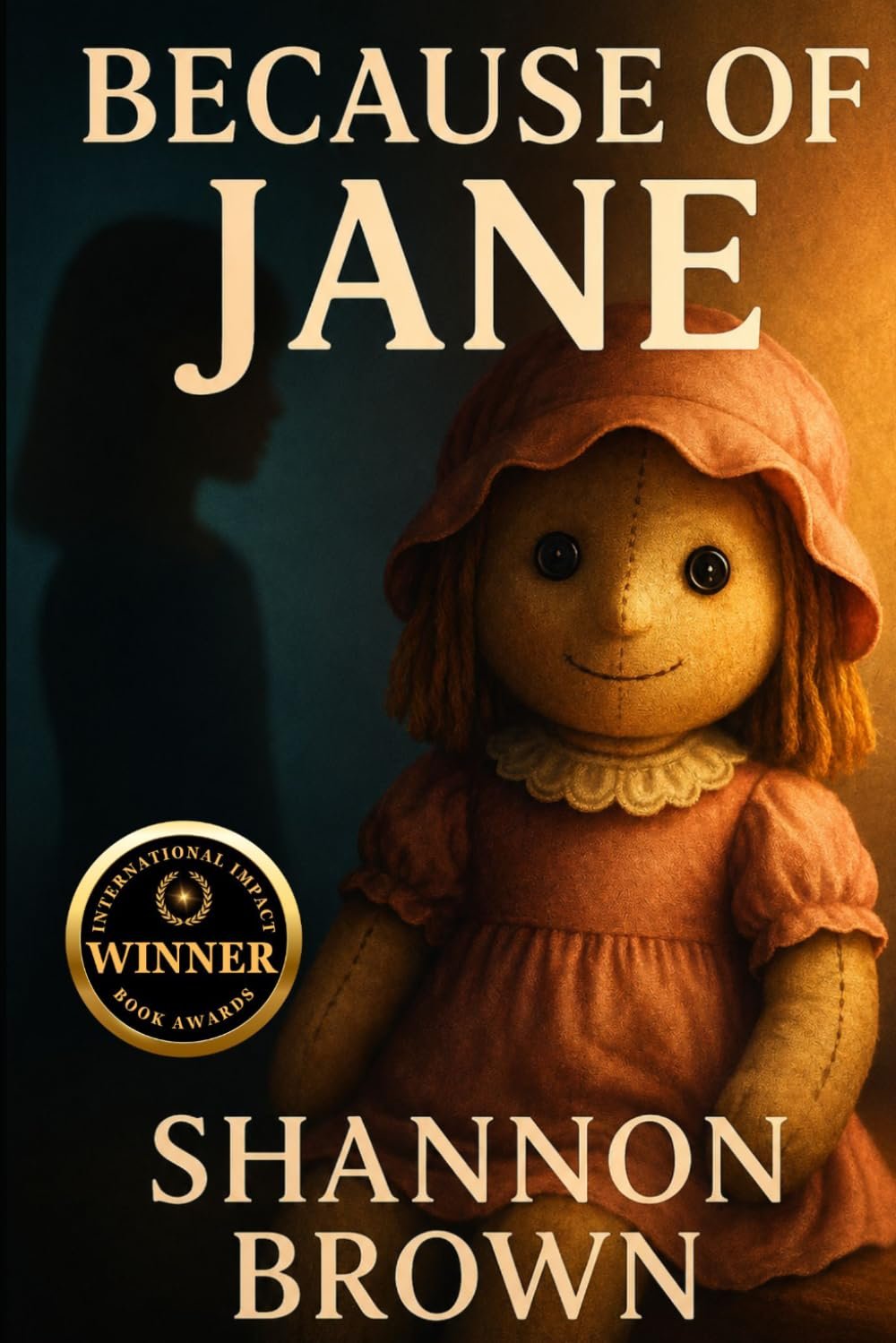
Told through the perspective of a stitched doll named Jane, the book presents the childhood of Maddie in a home where affection and fear occupy the same rooms. The author describes it as grounded in real…
Books worth discovering. Authors worth knowing.
Told through the perspective of a stitched doll named Jane, the book presents the childhood of Maddie in a home where affection and fear occupy the same rooms. The author describes it as grounded in real experiences of childhood abuse and survival. Jane becomes both witness and symbolic protector; the adult Maddie later seeks to help children exposed to…
Carefully sourced literary criticism and book-specific interpretation.
Told through the perspective of a stitched doll named Jane, the book presents the childhood of Maddie in a home where affection and fear occupy the same rooms. The author describes it as grounded in real experiences of childhood abuse and survival. Jane becomes both witness and symbolic protector; the adult Maddie later seeks to help children exposed to similar danger.
The witness who cannot intervene
The most striking choice is the narrative witness. A doll cannot intervene physically, but it can remain beside a child when the adults who should protect her fail. The premise allows an object of comfort to observe what may be too overwhelming for a child to narrate in a conventional first person. It also risks softening harsh material through an emblem of innocence; the balance would have to be tested on the pages.
The danger of a simple triumph
Accounts of survival can be crowded by the expectation that suffering must lead to an uplifting lesson. Brown’s synopsis offers hope, but the review-worthy question is whether the story permits the length, confusion and recurrence of pain to remain visible. The doll perspective might preserve such contradictions more honestly than a chronology arranged entirely around eventual triumph. That is a possibility arising from the form, not a report of reading the finished book.
What responsibility belongs to adults
There is also an ethical reason to distinguish this account from a generic motivational title. When a child is unsafe, courage alone is not an adequate answer; responsibility lies with families, institutions and bystanders. The narrative’s promised movement toward advocacy is strongest when understood as a demand for protection, rather than a claim that every survivor must become an exemplar.
A difficult but significant subject
This is for adults ready for emotionally difficult material about childhood harm, especially those interested in how unusual narrators can mediate painful testimony. Its value should not be reduced to the promise of inspiration, and potential readers deserve a clear content warning.
Why an inanimate witness can matter
To place a child’s doll at the centre of a traumatic life story is to select a witness who cannot verify facts or alter what happens. That limitation might at first seem a weakness. Yet it captures a disturbing feature of childhood harm: those closest to a child may be the objects that accompany them, while people with the authority to protect them fail to see or act. Jane’s continued presence can therefore stand for emotional continuity without becoming an implausible rescuer. Such a narrative choice also creates an ethical distance between the adult author and the child whose distress is being represented.
There is a risk of turning that distance into aesthetic comfort. A doll may lend a story tenderness, but tenderness must not replace clarity about the responsibility of people who cause harm. A perceptive critic would ask how much the reader is allowed to know, whether the doll’s perspective shields a child from invasive scrutiny and whether it also limits the reader’s ability to understand the child as more than an innocent figure. The book’s public synopsis establishes the witness as a premise; it does not give grounds for a decisive claim about how that technique is executed.
What a hopeful ending owes its beginning
The adult Maddie’s decision to assist other children provides an arc toward purposeful action. That future orientation is understandable, particularly in writing that seeks to offer solidarity to survivors. But retrospective purpose can also distort an account by making earlier suffering seem necessary for later moral growth. It was not necessary. A good survival narrative must be able to recognize meaning created afterward without implying that the original harm served a hidden good. The distinction is crucial when readers may bring their own painful histories to the page.
Equally, healing is not a single achievement accomplished once and then narrated from a safe distance. A responsible book should allow strength to coexist with vulnerability and celebrate advocacy without requiring everyone who survives to become an advocate. Jane’s role as a quiet companion may help hold that complexity because she does not demand visible progress. Whether the finished narrative provides such space is uncertain; the public description’s emphasis on hope makes it a central evaluative concern.
Literature, testimony and protective responsibility
This book’s basis in personal experience complicates the usual division between fiction and memoir. Readers may be moved by its narrative choices while also wanting to know which details belong to recollection and which to artistic arrangement. No literary review should attempt to decide that question without the author’s explanation or the text itself. The more respectful approach is to assess the work as presented, note its stated autobiographical basis and decline to turn the author’s life into material for speculative verification.
Above all, the book points toward a public as well as private responsibility. Child safety does not depend on a child’s resilience or capacity to imagine protection. It requires attentive adults, institutions that respond and communities unwilling to normalize fear. A story told by a doll may sound unusual; its possible achievement is to make visible the ordinary failure of being unheard. Readers should approach Because of Jane with compassion and a willingness to encounter difficult experience, not with an expectation of easy uplift.
A memoir grounded in real pain also asks something of a reader who has never lived through comparable circumstances. It asks for care in how we talk about credibility, silence and recovery. The narrated child need not supply neat explanations, and the adult author need not make every memory comfortable. The strongest reason to seek out this book is not the promise that hope will overcome every hurt, but the possibility that a distinctive witness can help readers attend to a child whom ordinary language has failed to protect.
The review’s scope
This assessment is based on the identified bibliographic records and available author, publisher and bookseller descriptions. The interpretive claims above are editorial judgments about the documented premise and genre choices, not testimony to having read every chapter or inspected every illustration. The published text may answer, complicate or contradict the critical questions raised here. A finished review would assess the language, structure and ending directly.
About the book.
The title, author/contributor record, source URL and matching cover file ID come from the current MarketAnyBook Journal Queue and its Drive asset folder. The review considers memoir-based literary narrative through verified available descriptions rather than firsthand full-book reading.
Unsponsored editorial book review based on publicly available bibliographic and descriptive evidence, with critical interpretation distinguished from verified book details.
Found a book worth opening?
Books worth discovering. Authors worth knowing.
Return to the Journal →