
Izol: The Illumination
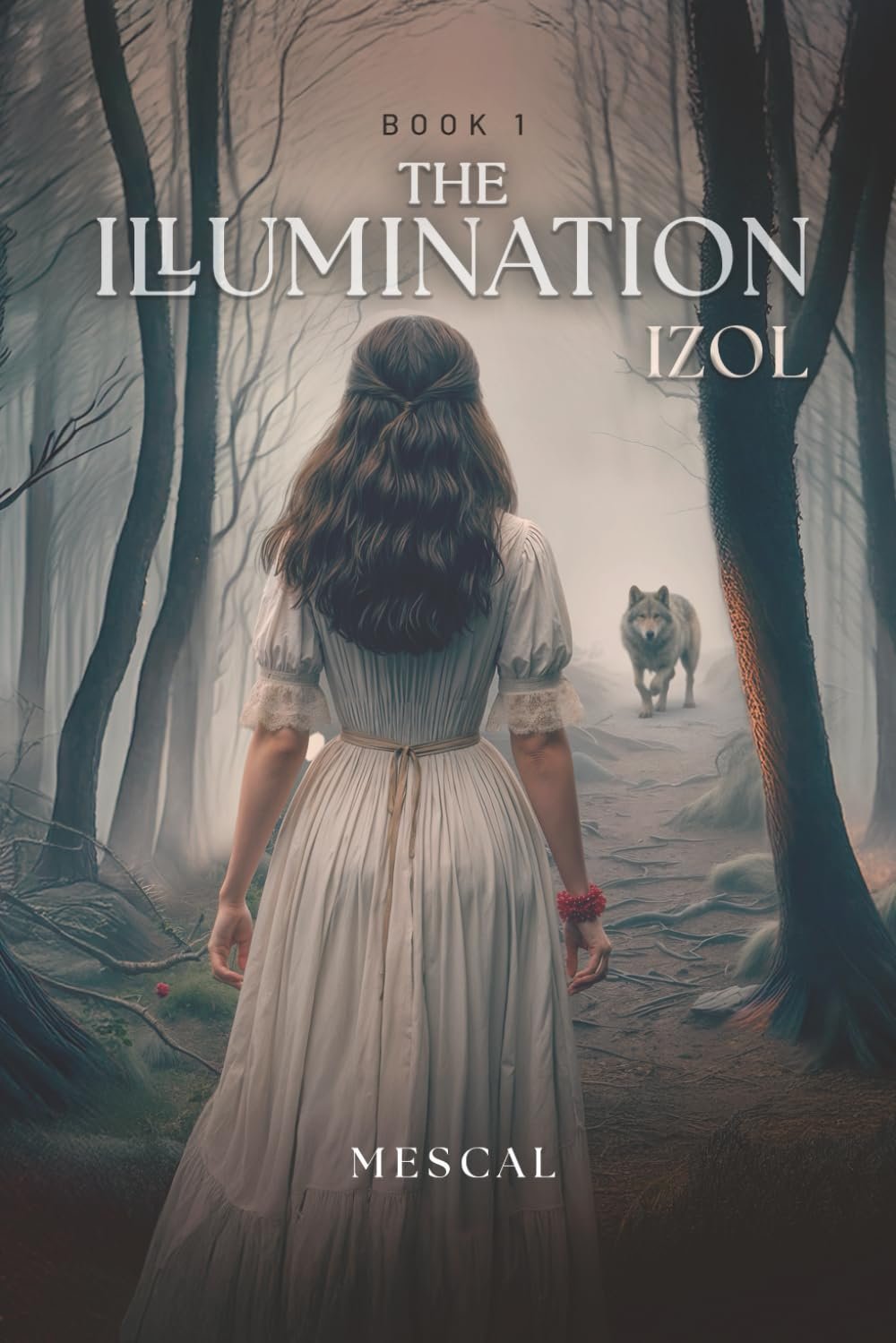
Izol enters a forbidden forest as an ordinary young woman and survives an encounter she should not have escaped. A mysterious messenger tells her that her family, her people and her role in the world are not…
Books worth discovering. Authors worth knowing.
Izol enters a forbidden forest as an ordinary young woman and survives an encounter she should not have escaped. A mysterious messenger tells her that her family, her people and her role in the world are not what she believed. Returning injured and changed, she meets suspicion within the keep as powerful interests respond to the implications of her…
Carefully sourced literary criticism and book-specific interpretation.
Izol enters a forbidden forest as an ordinary young woman and survives an encounter she should not have escaped. A mysterious messenger tells her that her family, her people and her role in the world are not what she believed. Returning injured and changed, she meets suspicion within the keep as powerful interests respond to the implications of her awakening.
A revelation that makes life harder
The most interesting aspect of the chosen-one premise is not that Izol receives a revelation, but that revelation makes her less safe. Knowledge carries a political cost: if existing authority depends on one accepted version of reality, the newly informed person becomes a threat. A fantasy that explores that price can make destiny feel like a burden of responsibility rather than a convenient permission to wield power.
Crossing the forbidden threshold
The forest works as a classic threshold, a landscape where ordinary prohibitions and familiar social rankings cease to provide security. It is possible to interpret Izol’s return as a second threshold: after the physical danger, she must face the more ambiguous danger of those who know her. The synopsis supports that contrast, though it cannot tell us how consistently the novel’s imagery develops it.
Devotion, betrayal and power
Promotional descriptions describe awakening, devotion and betrayal. These are significant promises for a series opener, but their value depends on the particularity of loyalties. A supposed betrayal feels meaningful only if readers understand what affection, belief or necessity made it possible. The plot’s mythology needs emotional texture as well as an expanding map of names and factions.
A new fantasy world to assess
Readers who enjoy high-stakes fantasy led by a woman negotiating spiritual authority and community opposition should find an inviting framework here. The public account suggests a deliberately intimate emotional dimension; whether that dimension balances the epic scale is the central question for a full-text review.
Why the return home may be the real beginning
Chosen-one stories often treat the encounter with a supernatural messenger as the event that changes everything. Yet the more difficult event may be the return to familiar people afterward. Izol can no longer fit comfortably inside the version of herself they expect, while those around her may have political or emotional reasons to refuse what she says. The public description places her injured and transformed among people who are not ready for her new status. That is potentially more interesting than the forest encounter alone because it translates an abstract destiny into relationships that can break.
When a community defines the proper limits of belief and belonging, a person who claims revelation faces several simultaneous tests. She must decide how much she trusts the message, how to present it to others and what to do when their response is hostile. The story’s emotional possibilities arise from uncertainty, not merely from confirmation that a protagonist is special. A convincing heroine ought to question herself and the messenger, even while remaining capable of brave action. The available synopsis does not show how much doubt the novel allows, so this remains a critical expectation.
Power among those who can lose it
The introduction of dangerous interests within the keep gives the fantasy a political shape. If Izol’s new role threatens existing structures, some individuals may fear the loss of authority or legitimacy. Their opposition could be motivated by self-preservation as much as cruelty. Such complexity would give the fantasy world a stronger social foundation, but there is no basis for assigning particular motives or naming factions that the sources have not documented.
Fantasy revelation is most persuasive when it changes the story’s institutions as well as its hero. A new metaphysical truth may unsettle old laws, religious habits or alliances. The narrative challenge is to make those changes specific enough that readers understand the costs to people who are not at the centre of the prophecy. Izol’s destiny should matter because it reorganizes real relationships, not because a narrator repeatedly announces her significance. That is a standard the premise invites but does not yet prove the novel meets.
Intimacy inside epic scale
Descriptions of the work emphasize an intimate emotional dimension alongside broad mythic ambition. That combination has genuine appeal. A fantasy series can introduce a history of gods, promises and rival powers, but its lasting hold often comes from the small question of whom the protagonist can still trust. The forbidden forest offers spectacle; the keep offers familiarity turned uncertain. The dramatic movement from one to the other can keep the mythic scale connected to human consequence.
As the first volume in a series, Izol: The Illumination must also deliver a satisfying unit of change without resolving every mystery of its larger world. Readers may welcome unanswered questions when the central emotional movement feels deliberate. They are less likely to forgive withholding used merely to postpone an ending. The public description offers an evocative starting point for readers of woman-led epic fantasy; direct assessment of its pacing and resolutions remains the next step.
A fantasy heroine marked by destiny can become oddly passive if her role is treated as an order from a higher power. Izol’s premise is more promising when considered as the beginning of a choice. Having received a frightening revelation, she must still decide whose claims are trustworthy and what responsibilities she will accept. The surrounding community’s response matters because a destiny with no social consequences is merely ornament. The book should be assessed on the friction between inward change and outward resistance, and on whether it allows a heroine to remain uncertain without making uncertainty a weakness. That is a specific reason for readers to follow its unfolding mythology.
The review’s scope
This assessment is based on the identified bibliographic records and available author, publisher and bookseller descriptions. The interpretive claims above are editorial judgments about the documented premise and genre choices, not testimony to having read every chapter or inspected every illustration. The published text may answer, complicate or contradict the critical questions raised here. A finished review would assess the language, structure and ending directly.
About the book.
The title, author/contributor record, source URL and matching cover file ID come from the current MarketAnyBook Journal Queue and its Drive asset folder. The review considers epic fantasy through verified available descriptions rather than firsthand full-book reading.
Unsponsored editorial book review based on publicly available bibliographic and descriptive evidence, with critical interpretation distinguished from verified book details.
Found a book worth opening?
Books worth discovering. Authors worth knowing.
Return to the Journal →