
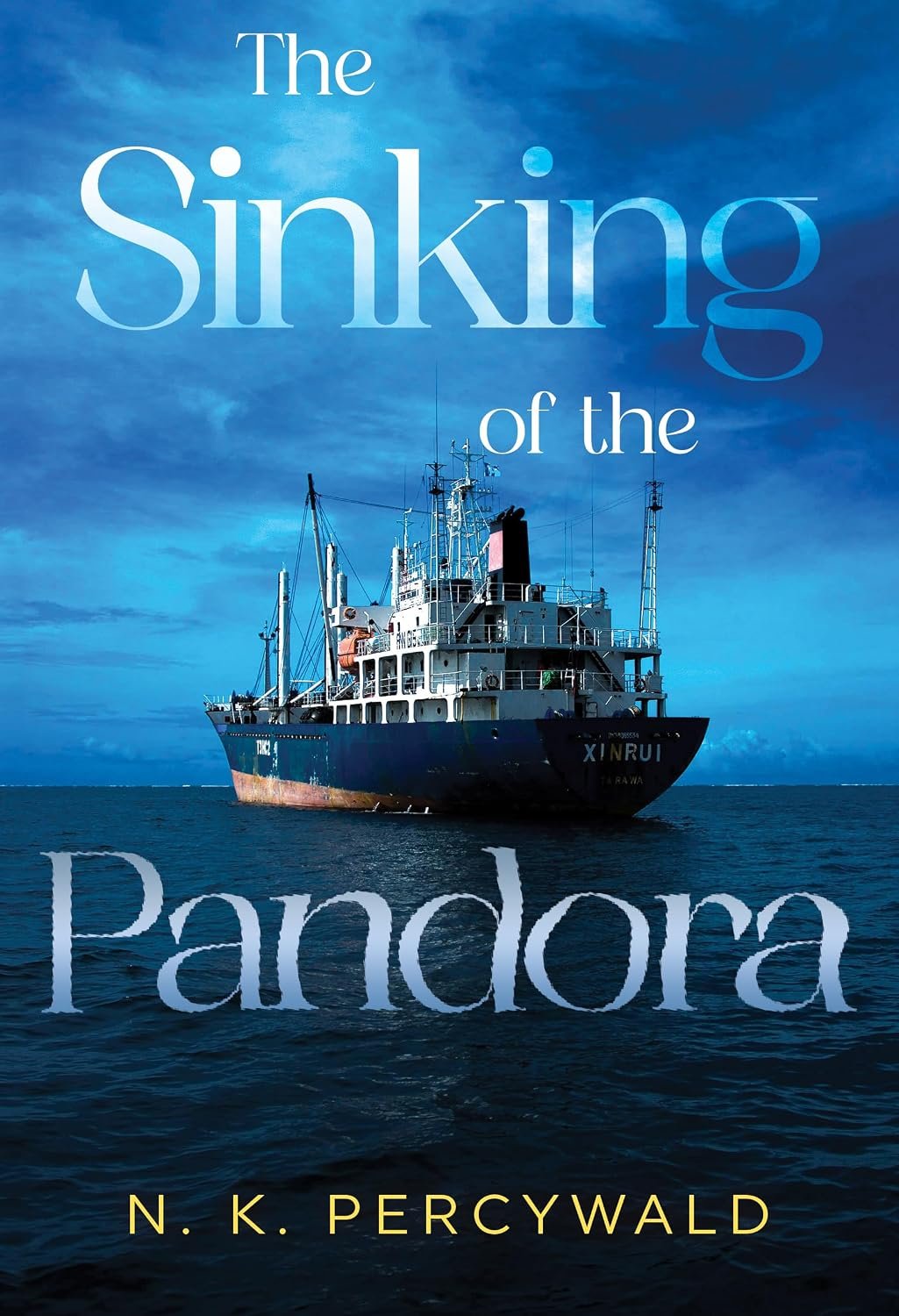
The Sinking of the Pandora
Captain Jack Brennan takes command of the Pandora, a neglected cargo ship preparing to sail from Southampton toward America with a rendezvous in Cobh. His second-in-command Rick Doyle remains difficult to…
Books worth discovering. Authors worth knowing.
Captain Jack Brennan takes command of the Pandora, a neglected cargo ship preparing to sail from Southampton toward America with a rendezvous in Cobh. His second-in-command Rick Doyle remains difficult to read. Among the ship’s passengers are a young American woman, her companion and a guarded Austrian doctor. The publicly supplied plot stops at the…
Carefully sourced literary criticism and book-specific interpretation.
Captain Jack Brennan takes command of the Pandora, a neglected cargo ship preparing to sail from Southampton toward America with a rendezvous in Cobh. His second-in-command Rick Doyle remains difficult to read. Among the ship’s passengers are a young American woman, her companion and a guarded Austrian doctor. The publicly supplied plot stops at the accumulation of strange company and secrets.
A ship is a locked room
Ships make a natural stage for suspense because they turn movement into confinement. The voyage promises distance and escape, yet the passengers and crew cannot simply walk away from one another. A port departure also creates a useful threshold: on land, an identity can be adjusted or abandoned; aboard, the same people must continue to inhabit their roles while information travels slowly and rumours quickly.
The captain and what he cannot know
The most promising aspect of the setup is the relationship between the captain’s authority and his incomplete knowledge. Jack is responsible for the vessel but may not control the truth about the people it carries. Rick’s enigmatic presence introduces an internal source of doubt, while the doctor and other passengers offer the possibility that the cargo ship’s official purpose is not its only one. These are grounded possibilities, not claims about a secret revealed later.
A title that forecasts disaster
The title hints at disaster, giving the reader an apparent destination while withholding its causes. That could make the suspense a question of how rather than whether, but an effective treatment must prevent its mystery from becoming a mere queue of suspicious characters. At roughly novella length in the publisher’s description, the story’s success would depend on controlled disclosure and persuasive atmosphere. The ending is not available for assessment here.
A compact maritime promise
This may appeal to readers who like shipboard mysteries, period-flavoured maritime settings and the steadily narrowing options of a closed environment. Because the synopsis offers only the departure and initial tensions, the review remains a recommendation of the premise rather than a verdict on the solution.
Travel as a narrowing of possibilities
A sea voyage appears to promise distance from familiar obligations, but the practical reality of a ship is enforced proximity. Passengers share corridors, routines and authority structures; officers must work together regardless of private misgivings. In a maritime mystery, the setting can generate tension without a succession of elaborate coincidences. It is enough for characters to have incomplete reasons for their presence and no easy means of leaving. The Pandora’s route from Southampton toward Cobh and onward to America therefore matters as a progression through increasingly limited options rather than merely as geography.
Rick Doyle’s position is especially suggestive. A captain depends on his second-in-command for information and execution, and that dependence is difficult to suspend at sea. If Rick seems guarded, Jack’s practical authority may coexist with personal uncertainty. The synopsis does not tell us whether Rick is a danger, ally or distraction, so criticism must resist identifying him as any of those things. The stronger observation is structural: a mystery becomes more compelling when even trusted systems of command cannot supply certainty.
History, atmosphere and the suspicious stranger
The enigmatic doctor and the young American passenger draw on a long tradition of enclosed-space mysteries in which strangers carry private histories into shared danger. That tradition can be pleasurable precisely because every person seems to offer both a clue and a possible false lead. Yet there is also a danger of giving the characters too little existence beyond the mystery they conceal. A secret becomes meaningful only if disclosure changes our understanding of someone whose ordinary motives already seemed plausible. Without direct access to the prose, we cannot determine whether the passengers acquire that depth.
Atmosphere presents a similar problem. A misty port and a forgotten ship can become empty gestures if the environment does not bear on decisions. An effective maritime narrative makes weather, movement, maintenance and isolation influence how people behave, while an ineffective one uses nautical detail as decorative gloom. Percywald’s promotional description indicates suspicion and superstition, but leaves the means of evoking them open. A professional assessment should ask whether the physical vessel becomes an active pressure in the narrative or remains a picturesque container for secrets.
The promise and peril of a foretold sinking
The title carries a conspicuous promise of catastrophe. That can be a shrewd suspense device: the reader approaches ordinary preparations while knowing that some form of disaster has already been announced. It can also diminish suspense if too much of the interest rests on the fact of an eventual wreck. The real question becomes whether the narrative makes the causes of the outcome emotionally and ethically consequential. A voyage can fail through human choices, chance, concealed motives or forces a crew does not understand; the sources do not justify selecting among those possibilities.
The publisher describes a short work, which may suit a concentrated mystery. There is little room for digression, so the opening’s apparent economy—captain, officer, passengers, destination—is promising. But economy is not the same as thinness. A good novella allows each detail to earn its space, and each revelation to alter what came before. The Sinking of the Pandora earns a qualified invitation to readers who enjoy compact sea-bound intrigue. The critical verdict must await the text’s actual resolution, not the invented certainty of a reviewer who has only seen the departure.
Perhaps the most intriguing unanswered question is what the captain thinks he has been hired to command. A vessel has a manifest and a destination, yet neither document can account for the private intentions of everyone aboard. Maritime suspense works well when professional competence cannot erase interpersonal doubt. This opening, as described, gives Captain Brennan an apparently practical undertaking that may demand judgments beyond navigation. The novel’s success will depend on whether its eventual disclosure respects that distinction between knowledge and suspicion.
The review’s scope
This assessment is based on the identified bibliographic records and available author, publisher and bookseller descriptions. The interpretive claims above are editorial judgments about the documented premise and genre choices, not testimony to having read every chapter or inspected every illustration. The published text may answer, complicate or contradict the critical questions raised here. A finished review would assess the language, structure and ending directly.
About the book.
The title, author/contributor record, source URL and matching cover file ID come from the current MarketAnyBook Journal Queue and its Drive asset folder. The review considers maritime mystery and suspense through verified available descriptions rather than firsthand full-book reading. Same exact title, author and retail URL recur in MAB-1435; treat MAB-1435 as same-work duplicate unless new edition/content evidence emerges.
Sponsored book review: the source queue marks this book as sponsored. Editorial analysis remains independent and is based on the publicly accessible sources noted in the companion metadata. An identical book listing is present elsewhere in the queue.
Found a book worth opening?
Books worth discovering. Authors worth knowing.
Return to the Journal →