
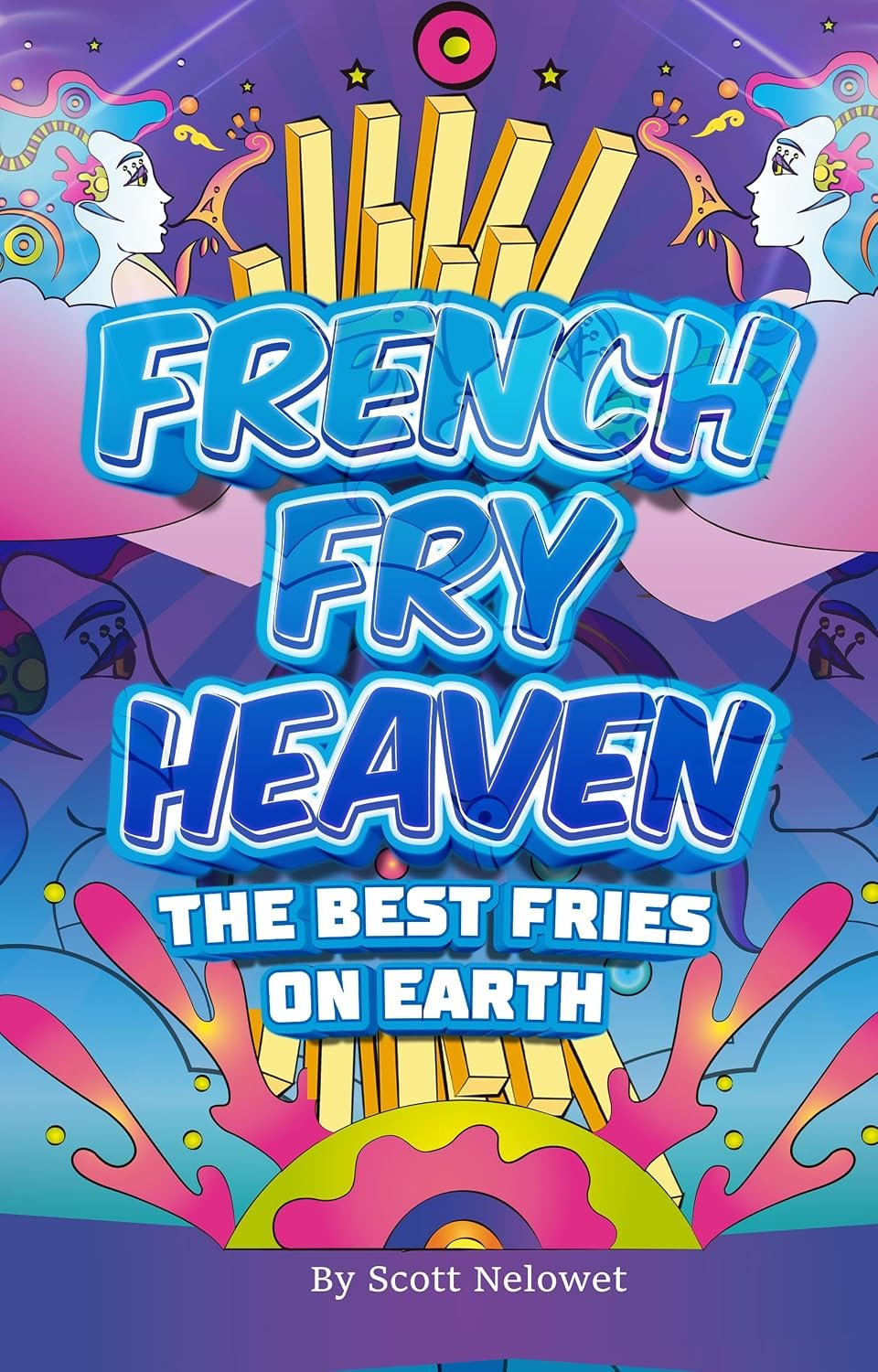
French Fry Heaven
A conspiracy involving french fries sounds like a joke designed to collapse under its own absurdity. In Scott Nelowet’s French Fry Heaven, the incongruity is the opening gambit rather than the whole…
Books worth discovering. Authors worth knowing.
A conspiracy involving french fries sounds like a joke designed to collapse under its own absurdity. In Scott Nelowet’s French Fry Heaven, the incongruity is the opening gambit rather than the whole proposition. The author’s site identifies Huey, a skateboarder trying to navigate high school, as the centre of a story in which food becomes a vehicle…
Book-specific criticism, grounded in what the available sources support.
A conspiracy involving french fries sounds like a joke designed to collapse under its own absurdity. In Scott Nelowet’s French Fry Heaven, the incongruity is the opening gambit rather than the whole proposition. The author’s site identifies Huey, a skateboarder trying to navigate high school, as the centre of a story in which food becomes a vehicle for an attempted global takeover. The broader description introduces her extreme-sports friends, a perilous pursuit and a group of young outsiders whose solidarity may matter more than any exceptional power.
Comedy with something at stake
A comic premise is useful precisely because it can smuggle serious decisions past an audience’s resistance to solemnity. Teenagers are accustomed to being told that global crises are beyond their control; an absurd threat brings those crises down to the scale of a choice between friends. The reference to a cartel and an apocalyptic conspiracy could produce frantic farce. The stronger possibility is that the ridiculous surface leaves room for real consequences. The question is not whether french fries are plausible instruments of empire but whether the novel persuades us that these particular young people have something human to defend. That distinction separates energetic genre play from novelty sustained beyond its natural life.
The politics of the outsider
Nelowet describes The Peace Strain as a hopeful series about unlikely agents of peace. His advertised crew of “Brohemians” suggests a makeshift community formed from people insufficiently celebrated by the ordinary hierarchy of school life. The risk of that framing is sentimentality: outsiders become interesting not simply because others have undervalued them, but because they disagree, make errors and have to earn one another’s trust. An adventure about rebellion should also examine what the rebels wish to build when resistance is no longer enough. The synopsis’s emphasis on multicultural friendship invites a reading attentive to the difference between merely gathering diverse characters and giving them genuinely different reasons to act.
Hopepunk under pressure
There is an appealing contradiction between the book’s high-speed thriller machinery and the author’s declaration that peace is chosen rather than granted by supernatural privilege. Action stories routinely reward spectacular victory. A story aligned with that philosophy has a harder assignment: to make restraint, negotiation or mutual aid feel as consequential as escape from an enemy. The title’s exuberance and the promised chase sequences may help younger readers enter the argument without feeling instructed by it. Yet humour will need pace and variation. The premise can sustain adventure only if its accumulating dangers change Huey rather than merely repeat a joke with a larger explosion.
A useful test of tone
The public descriptions establish a road-trip and coming-of-age design but do not let us judge the dialogue, transitions or ending. The reviewer’s decisive question is whether the comedy makes the characters more vulnerable or shields them from the cost of events. Both choices are possible within young-adult speculative fiction. A deliberately improbable antagonist can sharpen a moral picture; it can also make the outcome feel preordained. The story’s most distinctive promise, on the evidence currently available, is the friction between its mischievous invention and its sincere interest in collective courage.
Who gets to be heroic?
Huey’s identification as a skateboarder is not an interchangeable detail. Skateboarding is often associated with improvisation, rehearsal and the willingness to fall in public. These habits can supply a convincing basis for an unorthodox adventure hero: skill is acquired incrementally rather than inherited from an institution, and public spaces become environments to read quickly rather than to control. If the story makes meaningful use of that background, Huey’s eventual decisions would follow from the way she already understands risk. This remains a critical possibility, not a claim about scenes that the available synopsis does not reveal. The question matters because hopeful speculative fiction is most persuasive when the protagonist’s ordinary experience proves useful under extraordinary conditions. Otherwise the declaration that misfits can save the world functions as a slogan disconnected from the actual people it celebrates.
A conspiracy and its audience
The french-fry device also raises the question of how apparently innocuous systems become pervasive. Fast food is an everyday habit, marked by repetition, convenience and familiarity. Recasting that ordinary commodity as a tool of manipulation permits a satirical observation about how control can hide inside pleasures that seem too trivial to question. The most interesting approach would not need to convert the story into an economic treatise. It could simply make the reader conscious of the difference between choosing something and having a choice engineered. Yet such satire requires discipline: a conspiracy so comprehensive that no resistance is imaginable makes the youthful protagonists’ agency implausible. A balance between absurd invention and legible cause and effect would turn the book’s central joke into an effective narrative engine.
Peace without surrender
A third point of interest is whether this imagined rebellion understands peace as the absence of conflict or the creation of better relationships. A group pushed together by an emergency may cooperate temporarily while still carrying prejudices and rival expectations. If the author’s intended hopepunk ethic is to mean anything, the friendships should have to survive a dispute in which neither participant is wholly right. Action can demonstrate that people need one another; deliberation can demonstrate what respecting them requires. The public positioning of the series makes that distinction worth testing in a complete reading. In the meantime, French Fry Heaven deserves a provisional assessment for attempting a delicate tonal feat: making a reader laugh at the threat without laughing away the vulnerability of those forced to confront it.
Who will find value here
Readers drawn to young-adult genre hybrids, found-family dynamics and irreverent adventure have an unusually specific premise to investigate here. Those who need an immediately realistic threat or a restrained tone may find the central conceit too eccentric. French Fry Heaven is best approached as an invitation to see how far a comic apocalypse can carry an earnest argument about friendship and resistance; this is a qualified assessment of the described work, not a claim to have read the full novel.
What this review can establish
This is an independent, research-based editorial assessment of the identified book, informed by the listed publisher, author and bibliographic materials. The analysis identifies documented premises, meaningful genre expectations and open critical questions. It is not a firsthand claim to have read every chapter or inspected the entire illustrated edition; judgments about the quality of prose, plot resolution and any unverified interior material are reserved for a full-text review.
About the book.
A limited-source, independent editorial evaluation of young-adult speculative adventure. Facts are drawn from the listed book record and separately identified public descriptions; speculative editorial questions are not presented as plot facts.
This is an unsponsored editorial review based on verified public descriptions and bibliographic materials, not a claim to firsthand reading of the complete book.
Found a book worth opening?
Books worth discovering. Authors worth knowing.
Return to the Journal →