
The Magical World Of Dragor
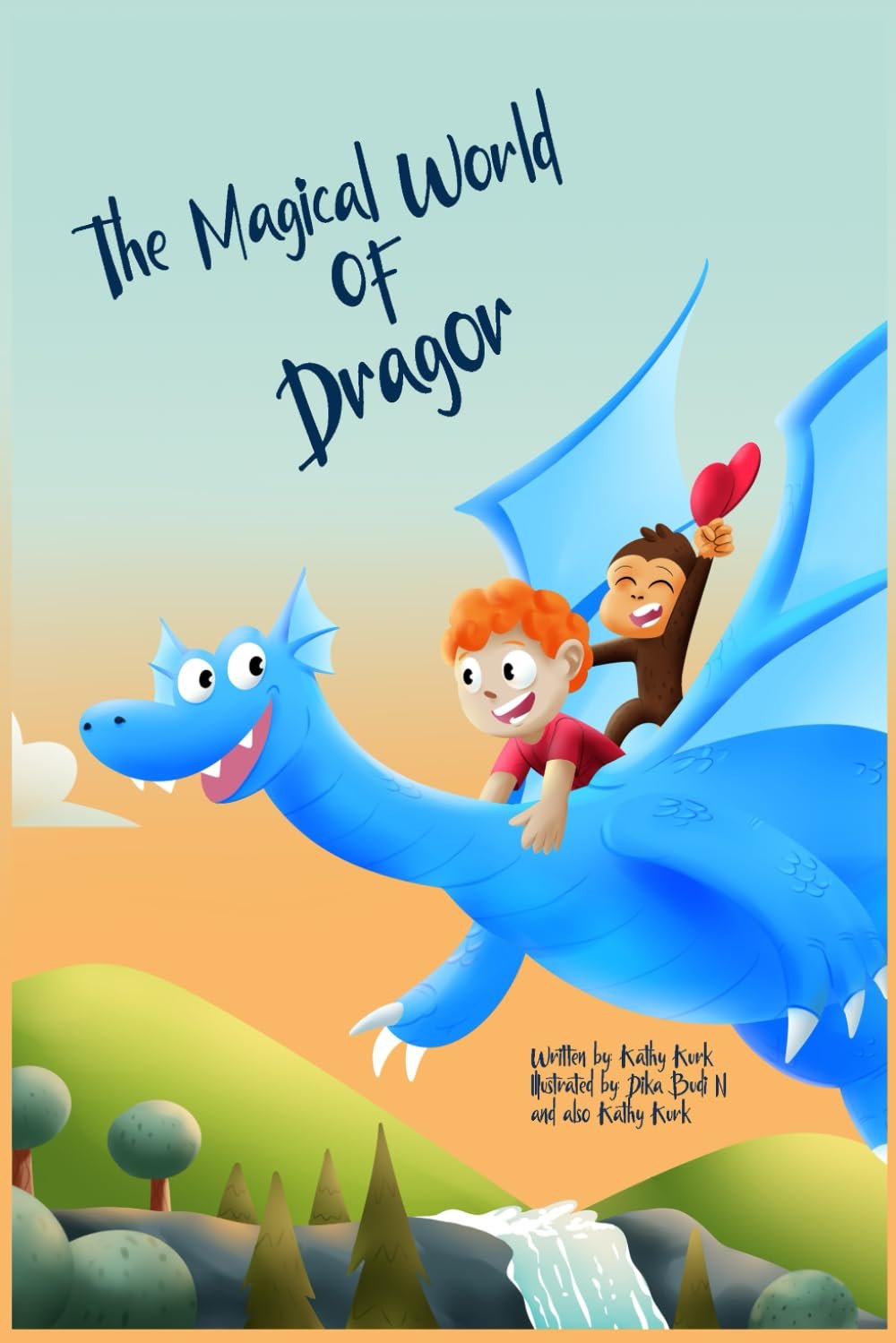
Kathy Kurk’s The Magical World Of Dragor gives an ordinary childhood resource—the power to imagine—a practical moral task. Its publisher description introduces Ryan, a boy whose imagination takes him into a…
Books worth discovering. Authors worth knowing.
Kathy Kurk’s The Magical World Of Dragor gives an ordinary childhood resource—the power to imagine—a practical moral task. Its publisher description introduces Ryan, a boy whose imagination takes him into a magical world where friendship and the courage to face fear and bullying become central. That is a modest but useful premise: rather than treating…
Book-specific criticism, grounded in what the available sources support.
Kathy Kurk’s The Magical World Of Dragor gives an ordinary childhood resource—the power to imagine—a practical moral task. Its publisher description introduces Ryan, a boy whose imagination takes him into a magical world where friendship and the courage to face fear and bullying become central. That is a modest but useful premise: rather than treating fantasy as an escape from social difficulty, the book seems designed to make a child’s internal life a rehearsal space for confronting it.
Why fantasy can make fear legible
A bullied child often faces an impossible demand: respond bravely while also managing the anxiety of being singled out. Fantasy can change the scale of such feelings. Monsters, strange places and companions allow danger to be spoken about indirectly, with less threat of embarrassment than a direct lecture about school behaviour. Dragor’s existence does not by itself guarantee this transformation; the specific moral value will depend on what Ryan chooses when he is uncertain, and whether the narrative respects his uncertainty as much as his eventual resolve. The description offers an invitation to that inquiry, not evidence of how particular confrontations unfold.
Friendship without an easy cure
The available synopsis promises friendship as part of the adventure. A thoughtful children’s narrative should distinguish the solidarity of friends from a magical cure for bullying. Friends can witness harm, challenge isolation and make it possible to ask for adult help; none of these actions places responsibility for a bully’s conduct on the targeted child. The concern matters because confidence-building books sometimes imply that fear disappears once the protagonist discovers a hidden reserve of courage. A more generous model allows courage to coexist with vulnerability. It is especially welcome if friendship is reciprocal rather than a reward handed to the hero for becoming brave enough.
The discipline of simplicity
The book’s publicly listed length places it in the territory of relatively short children’s fantasy, where each episode has to carry a high share of the emotional work. Such a format can make a direct, reassuring arc effective, but it leaves little space for wandering detours. Any invented world must be vivid enough to matter and clear enough not to bury the concern that prompted the story. We cannot assess the illustrations or the pacing from the available description. What can be said is that the author’s stated desire to make a reader smile sits productively alongside a subject that is often treated with unnecessary solemnity.
What the journey should leave behind
Stories about courage have a tendency to finish at the instant the protagonist succeeds. Their more durable effect can lie in the questions they leave for a child and caregiver: Which fear was real? Who helped? Was asking for assistance brave? Did someone learn to behave differently? Dragor’s premise makes these questions natural topics for a shared reading rather than prescribing their answers in advance. The most persuasive measure of the finished book will not be the size of its magical realm but the honesty with which it links an imaginative adventure to Ryan’s ordinary relationships.
Who will find value here
The Magical World Of Dragor may suit independent young readers and families looking for a conversation about bullying that does not begin in the language of correction. Its accessible imaginative frame is a strength at the level of premise; a verdict on its effectiveness needs the actual scenes and visual design. Recommended provisionally for its clearly stated emphasis on courage, care and companionship, not as a substitute for adult support when bullying occurs.
What this review can establish
This is an independent, research-based editorial assessment of the identified book, informed by the listed publisher, author and bibliographic materials. The analysis identifies documented premises, meaningful genre expectations and open critical questions. It is not a firsthand claim to have read every chapter or inspected the entire illustrated edition; judgments about the quality of prose, plot resolution and any unverified interior material are reserved for a full-text review.
About the book.
A limited-source, independent editorial evaluation of children’s fantasy about bullying and imagination. Facts are drawn from the listed book record and separately identified public descriptions; speculative editorial questions are not presented as plot facts.
This is an unsponsored editorial review based on verified public descriptions and bibliographic materials, not a claim to firsthand reading of the complete book.
Found a book worth opening?
Books worth discovering. Authors worth knowing.
Return to the Journal →